High-efficiency standby energy storage, modular uninterruptible power supplies, and heavy-duty generators targeted for export to Osaka’s telecom, automation, and infrastructure sectors.
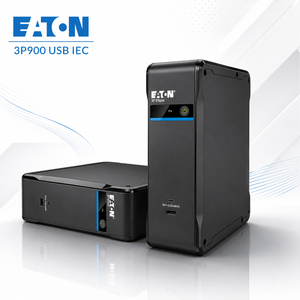
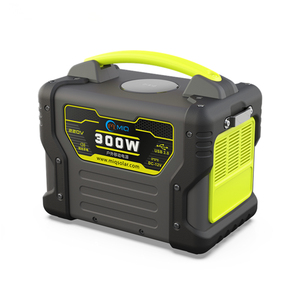
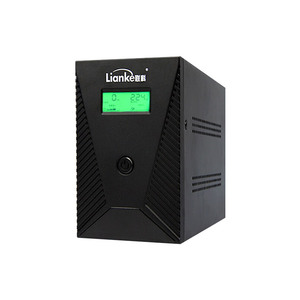
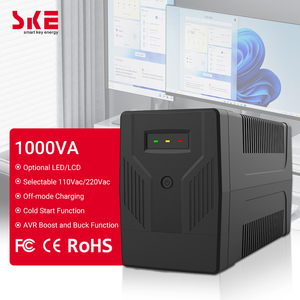
As the economic engine of Western Japan, the Greater Osaka Metropolitan Area (encompassing the Keihanshin industrial zone) represents one of the world's most sophisticated yet demanding power infrastructure markets. Ranging from high-density cellular rooftop base stations in Umeda and Namba to automated manufacturing lines in Higashiosaka and waterfront data centers around Osaka Bay (Yumeshima and Sakishima), the region’s reliance on continuous, high-fidelity electric power is non-negotiable. Exporters and systemic integrators seeking to supply Tower Power Exporter & Exporters for the Osaka market must navigate a uniquely complex environment defined by the Kansai Electric Power Company (KEPCO) 60Hz utility frequency, stringent JIS/PSE safety compliance, aggressive decarbonization mandates, and heightened seismic resilience requirements under Japan's Nankai Trough earthquake preparedness guidelines.
Modern power architecture in Osaka has migrated far beyond basic energy delivery. Today's commercial, telecom, and industrial procurement teams actively search for integrated standby systems, intelligent DC power plant shelves, modular online double-conversion tower UPS systems, and mobile LiFePO4 emergency exporters capable of seamless telemetry integration. Providing high Information Gain requires evaluating not merely power density, but total operational resilience: low-latency switching under 2 milliseconds, harmonic distortion mitigation (THD < 2%), real-time SNMPv3/Ethernet remote circuit switching, and hot-swappable N+1 module replacement that eliminates planned downtime.
Key Engineering Insight for Osaka Buyers: Electrical equipment exported to Western Japan operates on a 60 Hz utility frequency (unlike Eastern Japan's 50 Hz Tokyo grid). Power conversion systems, online tower UPS units, and standby diesel generators must feature dual-frequency autosensing or dedicated 60 Hz transformer configurations alongside local PSE (Product Safety of Electrical Appliance & Materials) certification to ensure seamless grid compliance and thermal stability.
The rapid expansion of 5G microcell towers, public safety Land Mobile Radio (LMR) networks, and IoT edge nodes across Osaka Prefecture has created a micro-space deployment bottleneck. Telecom engineers and municipal contractors require compact tower power units and DIN-rail DC distribution shelves capable of fitting into weatherized outdoor cabinets (IP65 rated) or standard 19-inch/23-inch relay racks.
Furthermore, upcoming mega-infrastructure developments—including the Osaka-Kansai Expo 2025 infrastructure upgrades and smart city initiatives in Yumeshima—demand energy exporters equipped with smart battery management systems (BMS) that support temperature-compensated charging, active load-shedding, and automated remote battery health reporting over HTML or SNMP protocols.

Exporting power systems to Osaka requires matching technical topology with exact industrial and urban application scenarios. Below are the primary deployment environments where advanced standby equipment and tower power exporters deliver high operational value across the Kansai area:
Rooftop antenna sites and macro towers across downtown Osaka require 48VDC intelligent power shelves with hot-swappable rectifiers. Integrated low-voltage disconnects (LVD) protect battery autonomy during typhoons or grid brownouts.
Precision robotics and CNC machinery in Higashiosaka industrial zones mandate online double-conversion tower UPS systems (1-3KVA) to eliminate voltage sags, phase shifts, and high-frequency noise from KEPCO industrial feeds.
Municipal emergency hubs and medical centers across Osaka Prefecture deploy mobile LiFePO4 battery power stations and standby diesel generators to guarantee non-stop 220V/100V power during seismic emergency scenarios.
Hyperscale and edge computing installations in Nanko and Sakishima leverage high-efficiency dual bus power distribution panels and pure sine wave inverters. Dual bus architectures enable maintenance on Feed A without dropping critical IT workloads on Feed B.
Rail networks and automated distribution hubs around Kansai International Airport (KIX) utilize compact DIN-rail DC power supplies with integrated battery chargers to keep trackside signals and SCADA systems active 24/7/365.
Choosing the correct exporter platform requires matching site load profiles, space restrictions, and power quality sensitivities. The following matrix provides engineering specifiers with a comparative blueprint of standby architectures suitable for deployment in the Osaka market:
| Architecture Type | Nominal Bus / Voltage | Transfer Time | Efficiency Rating | Target Application in Osaka |
|---|---|---|---|---|
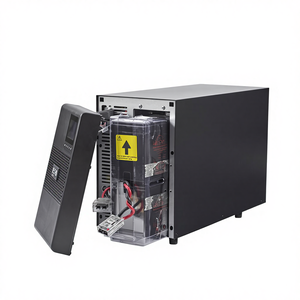
| Online Double-Conversion Tower UPS | 100V / 200V AC (60 Hz) | 0 ms (Continuous) | 92% - 95% | Medical instruments, critical server racks, semiconductor monitoring. |
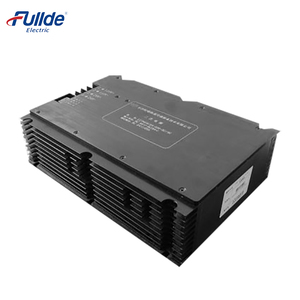
| Modular Hot-Swap Rectifier Shelves | 12V / 24V / 48V DC | 0 ms (Battery Floating) | 96% - 97.5% | 5G cell towers, Land Mobile Radio (LMR), fiber distribution nodes. |
| Offline / Standby Line-Interactive UPS | 100V / 110V / 220V AC | 2 ms - 6 ms | 97% - 98% | Commercial office computers, CCTV monitoring, access control systems. |
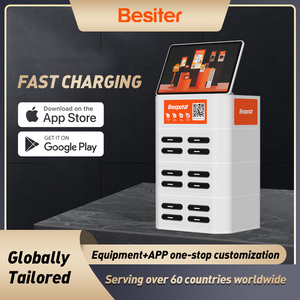
| Mobile LiFePO4 Energy Exporters | 12.8V / 25.6V / 220V AC Output | < 10 ms (EPS Mode) | 95% | Field emergency crews, mobile broadcast units, disaster relief hubs. |
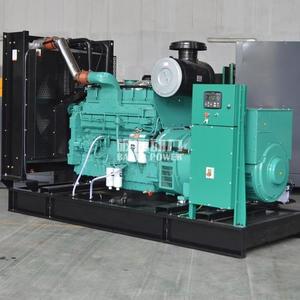
| Industrial Diesel Backup Generators | 200V / 400V 3-Phase (60 Hz) | 8 s - 12 s (Auto-Start) | Fuel Dependent | Heavy manufacturing plants, commercial towers, water treatment sites. |
Supplying power conversion hardware to Japanese enterprise buyers requires strict adherence to local operational standards. When preparing Tower Power Exporter shipments for Osaka, global manufacturers and exporters must prioritize four critical compliance and design vectors:
While Eastern Japan operates at 50 Hz (Tokyo, Tohoku), Osaka and the entire Kansai region operate strictly on a 60 Hz AC grid network. Equipment featuring inline transformers or AC-to-DC rectifiers must be factory-tuned for 60 Hz operation. Furthermore, Japanese commercial building power often utilizes single-phase 100V AC or 3-phase 200V AC. Exporters must ensure that UPS power supplies and power stations feature wide input voltage windows (e.g., 85V-270V AC) to absorb grid fluctuations caused by summer peak air conditioning loads across Kansai.
Following Japan’s stringent earthquake mitigation standards (such as JEC-2504), power racks installed in Osaka telecom shelters must endure high horizontal and vertical G-forces. Integrated DC shelves and tower UPS cabinets require reinforced steel chassis, low center-of-gravity battery trays, and pre-drilled anchor flange points suitable for seismic mounting on concrete floor slabs.

Osaka’s smart utility grid emphasizes zero-trust network architecture. Power conversion equipment must incorporate secure remote power management modules. Embedded web servers providing HTML5 visualization, SNMPv3 encrypted alarms, and TLS-secured remote circuit control allow Osaka-based network operations centers (NOC) to monitor bus voltage, battery state of charge (SoC), ambient temperature, and individual circuit current draw without dispatching service vehicles (eliminating costly "truck rolls").
The market in Osaka is transitioning rapidly from traditional Valve-Regulated Lead-Acid (VRLA) batteries to Lithium Iron Phosphate (LiFePO4) chemistry due to LiFePO4’s superior cycle life (3,000+ cycles at 80% DoD), compact footprint, and thermal stability. Power exporters built with internal LiFePO4 packs must feature intelligent Battery Management Systems (BMS) with multi-stage over-current, short-circuit, over-charge, and thermal cutoff protections verified by UN38.3 and PSE transportation certificates.
Rooted in North American engineering excellence since 1986, Innovative Circuit Technology (ICT) has established an international reputation as a leading designer and manufacturer of intelligent DC power systems, hot-swappable rectifiers, dual bus distribution panels, DIN-rail supplies, and pure sine wave inverters. For buyers and integrators in Osaka seeking high-reliability power exporters, our engineering heritage delivers tangible performance advantages:
Our modular rectifier shelves accept multiple hot-swappable power modules that share load current automatically. Adding an additional module delivers true N+1 redundancy, allowing field technicians in Osaka to replace a faulted module live without dropping site loads.
Since 1986, ICT hardware has been specified by public-safety agencies, wireless ISPs, and industrial automation firms worldwide. Our products are engineered for continuous 24/7/365 mission-critical operation under harsh environmental conditions.
Unlike unmanaged commodity power supplies, ICT intelligent systems expose telemetry down to individual load circuits. Engineers can remotely power-cycle locked-up routers or radios from any web browser, drastically lowering operating expenses.
All design, hardware assembly, firmware development, and technical support reside at our North American headquarters. Osaka integrators receive direct access to application engineers for load budget calculations and single-line diagram reviews.
Below are authoritative responses to common technical inquiries raised by Japanese procurement directors, system integrators, and power exporters serving the Kansai industrial cluster:
Engage directly with our senior power application engineers. We provide comprehensive single-line diagram reviews, custom voltage tuning, and expedited export support for the Kansai market.
Inquire Now