High-reliability power conversion, emergency battery systems, offline/online UPS, and rugged generator backup for uninterrupted operation across Kazakhstan.
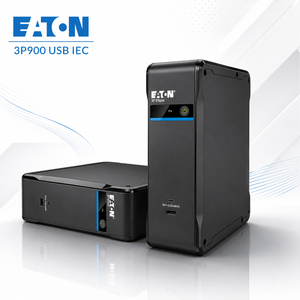
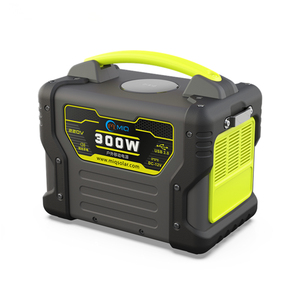
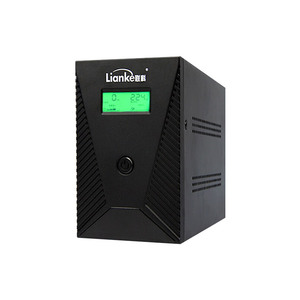
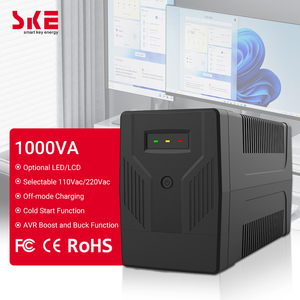
As the economic powerhouse of Central Asia, the Republic of Kazakhstan is undergoing a historic energy transformation. Under its flagship national initiative—the "Concept for the Transition of the Republic of Kazakhstan to a Green Economy"—the nation has set ambitious mandates to derive 15% of its total electricity generation from renewable energy sources by 2030, climbing to 50% by 2050 and reaching total carbon neutrality by 2060. However, realizing this potential presents complex engineering challenges unique to the Eurasian steppe.
Kazakhstan possesses exceptional solar potential, particularly across its southern, central, and western oblasts (such as Turkestan, Kyzylorda, Zhambyl, Almaty, and Mangystau), where annual solar radiation reaches between 1,300 to 1,800 kWh/m² per year—yielding over 2,200 to 3,000 peak sunshine hours annually. Despite this massive solar yield, industrial operators, telecommunications infrastructure, mining complexes, and municipal grids face severe operational bottlenecks driven by intense seasonal temperature swings, remote geographic isolation, and aging legacy grid connections.
Unlike standard temperate solar deployments, industrial photovoltaic equipment in Kazakhstan must endure extreme ambient temperatures ranging from winter lows of -40°C in Astana and Karaganda to summer highs exceeding +45°C in the Caspian basin. Equipment failure in these regions is rarely due to panel efficiency loss, but rather inverter thermal shutdown, battery electrolyte freezing, and voltage spikes caused by unstabilized transmission lines. Our engineered power solutions integrate high-efficiency online UPS topologies, LiFePO4 thermal-managed storage, and wide-range AVR (Automatic Voltage Regulation) to guarantee mission-critical continuous power.
Deploying solar power and backup energy systems in Kazakhstan requires deep customization aligned with local industrial requirements. Below are four primary deployment scenarios where integrated solar, UPS, and standby generator systems deliver maximum operational continuity:
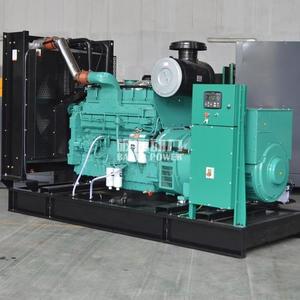
Kazakhstan leads global production of uranium, copper, zinc, and ferroalloys. Remote mining operations in the Karaganda, East Kazakhstan, and Aktobe regions operate far from the primary utility grid. Off-grid solar PV arrays coupled with heavy-duty diesel generator backup systems and high-capacity LiFePO4 battery banks ensure 24/7 power for heavy machinery monitoring, site lighting, and worker residential camps without fuel-transport bottlenecks.
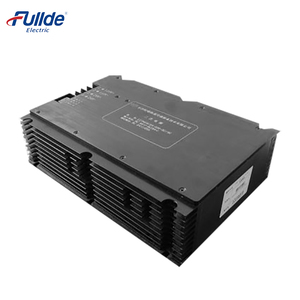
Connecting vast geographical distances demands robust cellular infrastructure (Kcell, Beeline, Tele2). Unattended telecom repeater towers installed across sparse Kazakh steppes require continuous 48V/24V DC power. Solar-PV hybrid platforms integrated with Ethernet-managed single and dual-bus DC power supplies allow remote telemetry monitoring, preventing costly technician truck rolls across hundreds of kilometers of unpaved terrain.
Upstream and midstream installations across Atyrau and Mangystau oblasts require explosion-proof, highly regulated standby power systems for SCADA monitoring, cathodic protection, and valve controls. Hybrid off-grid power solutions withstand saline coastal air, high summer heat, and heavy dust storms while delivering unconditioned power failure standby via online tower UPS modules.
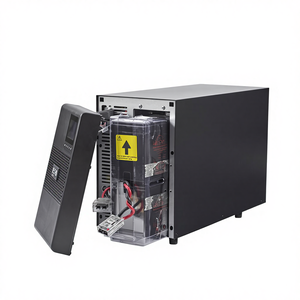
In rapidly expanding urban centers like Almaty, Astana, and Shymkent, commercial enterprises, smart retail kiosks, and emergency services utilize compact offline and online UPS systems (1-3KVA) equipped with replaceable internal batteries. These units prevent data corruption and hardware failure caused by localized voltage brownouts during peak winter heating cycles.
Choosing the correct equipment specification is critical to achieving lower Levelized Cost of Energy (LCOE) and maximum Mean Time Between Failures (MTBF) in Central Asia. The matrix below outlines operational parameters across core product categories:
| System Architecture | Primary Voltage Range | Thermal Operating Range | Optimal Kazakhstan Application | Key Performance Advantage |
|---|---|---|---|---|
| On-Grid Solar Inverters | 230V / 400V AC (3-Phase) | -25°C to +60°C | Commercial roofs in Almaty & Shymkent | High conversion efficiency (>98.5%), Grid-tied synchronization |
| Off-Grid Solar + LiFePO4 Storage | 12V / 24V / 48V DC & 220V AC | -35°C to +55°C (Heated enclosure) | Remote Steppe Telecom & Mining Camps | Zero fuel dependency, 6,000+ thermal cycle lifespan |
| Online Double-Conversion UPS | 1000VA - 3000VA (Pure Sine Wave) | -10°C to +45°C | Data Centers, SCADA & Hospital Equipment | Zero transfer time (0ms), AVR line noise filtration (<25dB) |
| Heavy Duty Diesel Standby Generators | 400V 3-Phase Industrial | -40°C to +50°C (Pre-heated block) | Factories & Heavy Industrial Plants | Continuous multi-megawatt emergency fault fallback |
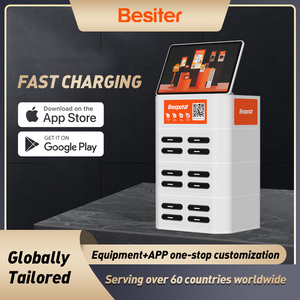
| Portable Power & Rental Stations | 220V AC / 22.5W Fast Charge | -10°C to +40°C | Field Services, Emergency Responders & Kiosks | Plug-and-play mobility with multi-slot smart charging |
Sourcing solar and power backup equipment for Kazakhstan demands more than simply buying off-the-shelf components. As a pioneer in intelligent DC power systems and standby solutions with direct manufacturing roots back to 1986, our engineered products incorporate critical architectural safeguards:
Addressing regulatory, logistics, and engineering inquiries common to Central Asian commercial and industrial procurements.
In regions like Astana, Kostanay, and North Kazakhstan, solar installations are engineered with steep tilt angles (typically 45° to 60°) to encourage natural snow shedding. Additionally, our outdoor power enclosures feature IP65/IP66 weatherproofing, anti-condensation internal heating strips, and sub-zero rated LiFePO4 battery chemistries that operate reliably down to -40°C without capacity collapse.
All electrical energy storage, inverters, and UPS products imported into Kazakhstan must comply with the Eurasian Economic Union (EAEU/CU) technical regulations. Essential certifications include TR CU 004/2011 (Low Voltage Equipment Safety) and TR CU 020/2011 (Electromagnetic Compatibility). Our products are supplied with comprehensive EAC declaration documentation for streamlined customs clearance through Almaty and Khorgos entry ports.
Yes. Our intelligent DC power systems and UPS units featuring embedded HTML web servers and SNMP interfaces integrate seamlessly with standard industrial 4G/5G cellular routers. They support local network operators including Kcell, Beeline Kazakhstan, and Tele2/Altel, allowing NOC operators to remotely execute power cycling, load shedding, and diagnostic alarms from any web browser.
In hot southern oblasts like Turkestan and Kyzylorda, ambient temperatures inside unconditioned shelters often exceed +40°C, causing traditional VRLA lead-acid batteries to fail within 1.5 to 2 years due to thermal runaway. In contrast, our premium LiFePO4 systems deliver 3,500 to 6,000 deep discharge cycles (over 10 years of service life) while enduring elevated operating temperatures with built-in intelligent cell balancing.
In many industrial zones, utility grid voltage fluctuates dramatically between 160V and 270V. An Offline UPS only activates during complete blackouts, leaving sensitive electronics exposed to intermediate voltage sags and surges. An Online Double-Conversion UPS continuously regenerates incoming AC power into clean DC, then converts it back to precise pure sine wave AC—delivering 0ms transfer time and complete isolation from grid noise, perfect for mission-critical monitoring and SCADA servers.
We offer flexible multimodal logistics strategies tailored for Central Asian delivery. Standard air freight shipments to Almaty International Airport (ALA) or Astana International Airport (NQZ) typically arrive within 7–12 business days. Bulk containerized sea-rail multimodal shipments via China-Europe / Central Asia freight corridors reach key industrial hubs (Almaty, Karaganda, Aktau) within 20–35 days with full transit tracking.
From custom system engineering and single-line diagram reviews to direct regional export logistics—our engineering team is ready to support your next power project in Kazakhstan.