Engineered for high reliability, remote telemetry, and flawless continuous operation across tropical and harsh industrial environments.
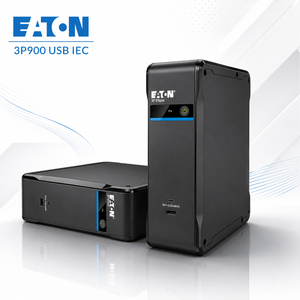
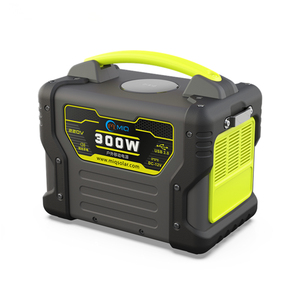
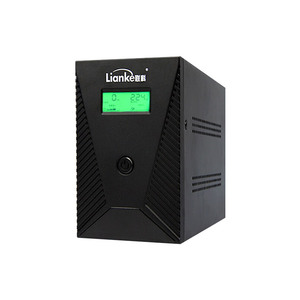
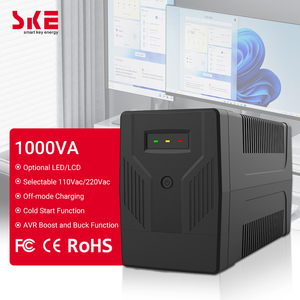
Satellite communication networks in Brazil—ranging from Low Earth Orbit (LEO) ground gateways to remote Very Small Aperture Terminal (VSAT) nodes across the Amazon basin—demand an unprecedented standard of power resilience. As a premier Satellite Communication Power Systems Exporter, our engineering philosophy addresses the severe operational challenges inherent to tropical environments, severe lightning flash density, and regional AC grid instabilities.
Deploying mission-critical ground stations across Brazilian territory requires navigating vast geographic disparities. Infrastructure in urban centers like São Paulo and Rio de Janeiro faces industrial grid noise and transient surges, whereas remote deployments in Pará, Amazonas, and Mato Grosso rely heavily on weak rural feeders, solar hybrid microgrids, or localized generator sets. A power interruption at a satellite earth station does not merely degrade signal-to-noise ratios; it drops critical cellular backhaul, halts offshore oil platform telemetry, and disrupts emergency public-safety communications.
To eliminate single points of failure, modern telecommunication specifiers in South America are moving away from legacy AC uninterruptible power supplies toward intelligent, modular DC power architectures. Operating natively at 12VDC, 24VDC, or 48VDC bus configurations, these systems integrate current-sharing rectifiers, active temperature-compensated battery charging, and intelligent Ethernet monitoring to guarantee uninterrupted network availability.

How specialized DC power conversion, standby UPS, and Intelligent remote power distribution solve real-world operational challenges in Brazil.
Off-grid telecom huts in Northern Brazil depend on satellite backhaul powered by solar-PV hybrid systems. Our wide-input 48VDC hot-swappable rectifier shelves deliver stable floating charges to LiFePO4 battery banks, maintaining continuous transmission even during extended monsoon cloud cover.
FPSO vessels and deep-water rigs require ruggedized, vibration-resistant DC-DC converters and pure sine wave inverters. Isolated voltage rails prevent ground loops between satellite tracking dish positioners and sensitive navigation telemetry systems.
Large-scale agricultural enterprises in Mato Grosso utilize private satellite networks to coordinate autonomous machinery. Compact DIN-rail DC power supplies and PDUs provide reliable 12V/24V power to field repeaters under extreme ambient heat conditions.
System integrators importing power hardware into South America must evaluate efficiency, thermal endurance, and maintenance overhead.
| Design Parameter | Intelligent Modular DC Systems (12V / 24V / 48V) | Traditional Double-Conversion Online AC UPS | Standard Standby / Offline Power Units |
|---|---|---|---|
| System Architecture | N+1 Hot-Swappable Parallel Rectifier Shelves | Single or Dual Monolithic Inverter Stack | Single Transformer-based Standby Circuit |
| Efficiency (Typical Load) | 95.5% – 97.0% (Direct DC Bus Conversion) | 88.0% – 92.0% (Double Inversion Losses) | 82.0% – 90.0% (Varies with line quality) |
| Tropical Ambient Tolerance | -40°C to +75°C Operation; Active Thermal Management | 0°C to +40°C; Rapid battery degradation above 25°C | 0°C to +35°C; High risk of thermal shutdown |
| Fault Resilience & MTBF | No single point of failure; live module hot-swap | Bypass switch dependency; full system shutdown on failure | Transfer relay failure triggers site outage |
| Remote Telemetry (NOC) | Per-circuit SNMPv3, HTTPS Web Server, Individual Load Shedding | Basic SNMP Traps (Global alarms only) | Dry contacts or no remote connectivity |
| ANATEL & INMETRO Fit | Fully compliant with Brazilian telecom bus standards | Requires external step-down transformers for 127V/220V | Frequent switching triggers utility penalties |

Exporting high-reliability satellite communication power hardware into Brazil requires more than just manufacturing capabilities—it demands a deep understanding of local compliance, logistical challenges, and field engineering reality.
Since 1986, our North American engineering team has designed, tested, and manufactured intelligent power conversion equipment specifically for unattended sites that cannot go dark.
Our modular rectifiers, DC-DC converters, pure sine wave inverters, and intelligent distribution panels share a common architecture and software stack, streamlining spare-parts management for importers.
Embedded web servers allow engineers in São Paulo or Brasília to monitor individual branch currents, cycle power to locked-up satellite modems, and alter charge profiles across remote Amazon sites seamlessly.
Navigating grid diversity, ANATEL certification expectations, and environmental extreme protection.
Brazil’s national grid features an unusual mix of nominal AC voltages depending on the state and municipality (e.g., 127V single-phase in Rio de Janeiro vs. 220V in Brasília). Our power conversion rectifiers incorporate ultra-wide power factor corrected (PFC) inputs ranging from 90VAC to 300VAC, preventing internal component stress during severe grid brownouts.
Continuous relative humidity levels exceeding 90% in Northern Brazil cause rapid salt-spray corrosion and fungal growth on unprotected circuit boards. Our exported satellite power platforms undergo heavy-duty conformal coating and feature IP54-rated enclosure options to guarantee long service life.
Brazil experiences some of the highest cloud-to-ground lightning strike frequencies globally. Power systems installed at exposed tower bases or high-altitude satellite tracking dishes require multi-stage Class II/III surge arresters integrated directly into the DC distribution bus to safeguard sensitive RF receivers.
As lead-acid batteries fail prematurely under tropical heat, Brazilian network operators are rapidly upgrading to Lithium Iron Phosphate (LiFePO4). Our intelligent power platforms support custom programmable float/absorption charge curves, low-voltage disconnect (LVD) thresholds, and SMBus/CANbus battery management communication.
Direct answers from our application engineering team regarding international shipping, customization, and deployment.
Our dedicated application engineering team will analyze your site load profile, battery backup autonomy requirements, and environmental parameters to design an optimized, redundant power solution.
Contact Us