
Engineered for continuous 24/7 uptime, high electrical efficiency, and remote IP telemetry. Recommended for telecommunications, emergency standby, and industrial automation across South Korea.
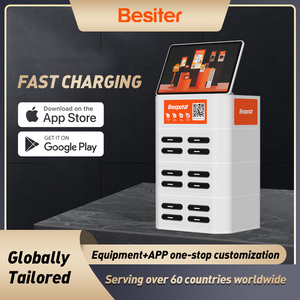
Integrated 10.1" digital screen, universal USA plug interface, high-density Li-Polymer battery array. Ideal for public venues, enterprise hubs, and commercial fleet remote power distribution.
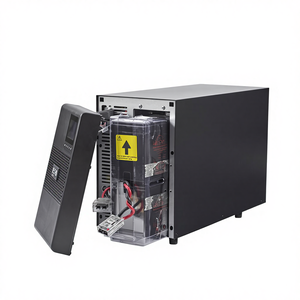
True double-conversion online topology with zero transfer time. Provides clean, zero-harmonic power protection for Korean server racks, industrial SCADA nodes, and telecom control hardware.
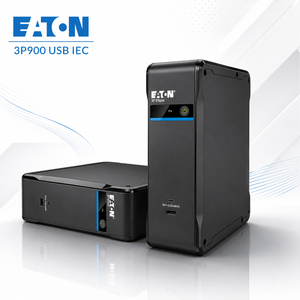
Single-phase 12V 9Ah user-replaceable battery design achieving 97% operational efficiency with ultra-quiet <25dB acoustic noise level. Designed for sensitive IT workstations and edge devices.
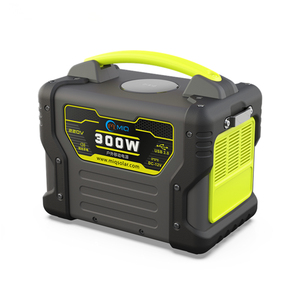
Industrial-grade Lithium Iron Phosphate battery storage delivering pure 220V AC output. Features rapid recharging, extended life cycles, and high thermal stability for field response operations.
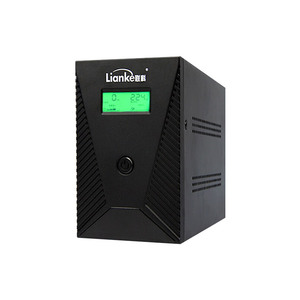
Compact line-interactive voltage control engineered specifically for CCTV surveillance monitors, security gates, automated access panels, and distributed remote monitoring enclosures.
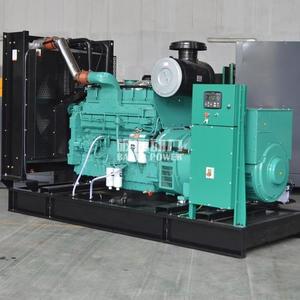
Industrial heavy-load backup generator engineered for manufacturing plants, data centers, and multi-tenant commercial facilities. Features acoustic attenuation and auto-transfer switching (ATS).
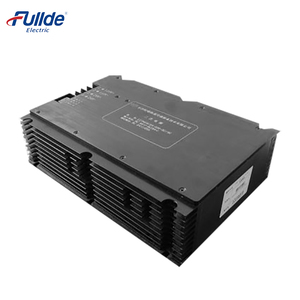
Customized high-voltage DC standby power plant designed for defense communications, severe-environment off-grid installations, and mission-critical land mobile radio (LMR) repeaters.
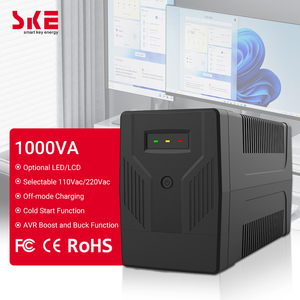
Integrated Automatic Voltage Regulation (AVR) with 12V 9Ah battery back-up. Protects sensitive electronics against severe voltage sags, surges, and brownouts across unstable regional feeds.
An in-depth engineering assessment of power delivery challenges across Korean telecommunications, smart grid integrations, and high-density industrial corridors.
South Korea stands as a global benchmark for network connectivity, pioneering hyper-dense 5G standalone (SA) deployments, expansive fiber-to-the-home (FTTH) networks, and automated industrial smart manufacturing. However, this hyper-connected architecture imposes unprecedented demands on site power reliability. A power interruption lasting only a few milliseconds can disrupt automated semiconductor fabrication lines in Yongin, blind emergency response communications in mountain ranges, or sever remote IoT data streams across urban smart grids.
As an established global Remote Power Manufacturer & Supplier, we deliver engineered direct-current (DC) power systems, high-efficiency hot-swappable rectifiers, intelligent power distribution units (PDUs), and battery backup systems optimized specifically for the Korean market's electrical parameters and environmental conditions.
In remote telecom sites and industrial cabinets across Korea, traditional central AC UPS systems introduce multiple single points of failure, lower thermal efficiency, and complex phase balancing requirement. Direct Current (DC) architectures present superior engineering advantages:
Combining North American design heritage since 1986 with direct factory engineering support and localized deployment experience.
Specialized in DC power conversion, distribution, and remote telemetry since 1986. Over three decades of continuous innovation focused strictly on low-voltage DC reliability.
Modular rectifier shelves allow field technicians to replace or add power modules on an active live bus without taking down vital network communications or sensor networks.
Embedded HTML web servers and secure SNMP v3 protocols enable system engineers to monitor individual branch currents, reset stuck hardware, and manage low-voltage load shedding.
Designed and manufactured to stringent ISO 9001 quality controls, fully aligned with KC safety standards, electrical isolation specs, and electromagnetic immunity guidelines.
Quantifiable engineering excellence delivering lower Total Cost of Ownership (TCO) for remote facility managers across South Korea.
From mountainous public safety radio repeaters to coastal industrial ports and dense metropolitan edge nodes.
High-density mmWave small cells installed on utility poles and building rooftops require ultra-compact, pole-mountable DIN-rail DC power units. Our systems deliver high power density in weather-proof enclosures, featuring automated remote reboot capabilities to reset frozen radios without sending site maintenance vehicles into urban traffic congestion.
48VDC / DIN-Rail PDUPolice, fire, and emergency response radio repeaters located on isolated mountain peaks experience severe winter sub-zero temperatures and lightning risk. Our hot-swappable 12V and 24V DC systems include temperature-compensated battery charging, low-voltage disconnect (LVD) protection, and surge immunity built for harsh off-grid resilience.
12V / 24V N+1 Hot-SwapAutomated manufacturing floors require extremely low harmonic noise and zero-glitch power transition for programmable logic controllers (PLCs), robotic sensors, and automated guided vehicles (AGVs). Dual-bus DC power distribution panels provide A/B redundancy to preserve manufacturing telemetry.
Dual Bus Dual Circuit PDUKey technological, environmental, and regulatory shifts shaping procurement strategies across the Korean peninsula.
Driven by South Korea's stringent fire safety regulations and the domestic energy storage system (ESS) safety enhancements, network operators are rapidly phasing out traditional Valve-Regulated Lead-Acid (VRLA) batteries. Modern site deployments favor LiFePO4 batteries due to their non-combustible properties, 10-year operational life, and superior thermal tolerance. Our power rectifiers feature fully customizable float, absorption, and equalization voltage settings matched precisely to advanced Lithium BMS communication protocols.
The rapid adoption of Artificial Intelligence and autonomous smart city networks has caused a surge in localized micro data centers throughout South Korea. These decentralized edge nodes cannot rely solely on traditional grid AC feeds. Integrating high-efficiency rack-mounted 48V DC power distribution with real-time Ethernet circuit metering allows facilities managers to monitor micro-watt level power variations and automate environmental shutoffs before hardware failure occurs.
Under South Korea’s national net-zero sustainability framework, telecom carriers and industrial utility providers are integrating localized solar photovoltaic (PV) array inputs directly into remote DC power plant buses. Hybrid solar-DC systems reduce grid reliance by up to 40% in rural installations, while intelligent low-voltage disconnect (LVD) logic safeguards critical battery reserves during extended periods of low sunlight.
As remote IP-connected power supplies become standard, cybersecurity at the power layer has become a critical requirement for Korean critical national infrastructure (CNI). Basic unencrypted HTTP interfaces are being replaced by SNMP v3 encrypted authentication, TLS 1.3 HTTPS security, and strict role-based user access controls to prevent unauthorized remote power cycling of essential government and defense radio channels.
A detailed technical comparison helping system integrators and engineers select the optimal power topology for Korean infrastructure projects.
| Architecture Type | Transfer Time | System Efficiency | Scalability / Redundancy | Remote IP Control | Primary Best-Fit Application |
|---|---|---|---|---|---|
| Hot-Swap Modular DC System (48V / 24V) | 0 ms (Instant) | 95% - 97% | N+1 Modular Hot-Swap Shelves | Full HTML5 / SNMP v3 Per Circuit | 5G Telecom, LMR Repeaters, Fiber Huts |
| Online Double-Conversion AC UPS | 0 ms (Instant) | 88% - 92% | Parallel Redundant Racks | Optional Network Card | Indoor IT Racks, Server Rooms, Medical |
| Line-Interactive Standby AC UPS | 4 - 8 ms | 90% - 94% | Single Standalone Chassis | Basic USB / RS232 Monitoring | CCTV Security, Desktop Terminals, Gate Control |
| Industrial Standby Diesel Generator | 10 - 30 Seconds | Mechanical Dependent | Dual-Generator ATS Transfer | Dry Contact Alarms / Modbus | Long-term Utility Grid Failure, Heavy Factory |
| DIN-Rail Compact DC Power Supplies | 0 ms (Instant) | 91% - 94% | Parallel Diode Redundancy Modules | Contact Closure Alarm Relays | Small Cell Enclosures, SCADA Cabinets, Traffic |
Direct answers from our senior power applications team regarding compliance, electrical specs, and shipping.
We manufacture and supply remote power systems across all standard nominal bus voltages: 12VDC, 24VDC, and 48VDC. Additionally, our intelligent rectifier platforms feature fine-grained adjustable output voltage control via digital software interfaces, allowing system integrators to calibrate precise float and charge profiles for specialized LiFePO4, Lithium Nickel Manganese Cobalt (NMC), or VRLA battery banks installed in local facilities.
Our Intelligent DC Power Systems and Distribution Panels feature an onboard Ethernet controller running an embedded secure web server (HTTPS) and full SNMP (v1, v2c, and v3) support. Engineers can remotely view system voltage, branch-level current draw, module status, and ambient cabinet temperatures. Crucially, each output circuit can be independently switched ON, OFF, or power-cycled over IP, enabling NOC engineers to remotely reboot unresponsive LTE/5G routers or radio transceivers without dispatching maintenance crews to mountain tops.
Yes. Our global products are engineered to conform with international safety and electromagnetic compatibility (EMC) standards including IEC/EN 62368-1, FCC Class B, and CE certifications, aligning with KC (Korea Certification) framework criteria. They accept wide AC input voltage ranges (100-240VAC nominal, 50/60Hz), making them fully compatible with KEPCO (Korea Electric Power Corporation) single-phase and three-phase utility power feeds across the peninsula.
N+1 redundancy ensures that your system includes at least one more rectifier module than is strictly required to power the active connected load. If a single rectifier unit experiences an electrical fault or thermal shutdown, the remaining active modules immediately assume the load current without any drop in DC bus voltage. Because our modules are hot-swappable, field technicians can pull out the failed module and slide in a fresh replacement unit in seconds while the entire site remains fully powered.
Every system includes an integrated Low Voltage Disconnect (LVD) circuit. When utility power fails and the site runs on battery power, the internal logic continuously monitors the battery terminal voltage. If grid power is not restored and the battery drops below a safe voltage threshold (e.g., 42V on a 48V bus), the LVD automatically disconnects non-essential or deep-discharge loads. This prevents permanent sulfation or BMS lock-out in lithium batteries, ensuring the battery string recharges properly once main grid power returns.
We maintain streamlined global logistics pipelines serving major Korean commercial logistics hubs including Incheon Port, Incheon International Airport (ICN), and Busan Port. Standard rack-mount rectifiers and PDU units are typically dispatched within short turnaround windows. Furthermore, our dedicated application engineering team provides single-line diagram reviews, load profile analysis, and remote commissioning support for Korean network integrators.
Send us your load specifications, runtime requirements, or single-line diagrams. Our engineering team will design a customized, high-reliability DC power system tailored for your specific site constraints.