+1 877 930 0717 (NA Toll Free) Langley, BC, Canada DC Power Engineering Since 1986
Engineering Whitepaper & Procurement Directory

Power Rectifier Factories & Supplier for Boston

Industrial-Grade High-Efficiency DC Power Conversion, Modular Hot-Swap Rectifiers, & Standby Energy Storage Systems Engineered for New England's Mission-Critical Networks.

Enterprise Procurement Catalogue

Industrial Rectifiers & Standby Power Systems for Greater Boston

Specified by systems integrators, telecom networks, and biotech facility engineers across Massachusetts. Select a model below to initiate an immediate RFQ or technical application review.

Besiter 12-Slot Fast Charging Portable Power Rental Station

Besiter 12-Slot 22.5W Fast Charging Portable Power Rental Station 10.1" Screen Li-Polymer Battery Universal USA Plug

Get a Quote
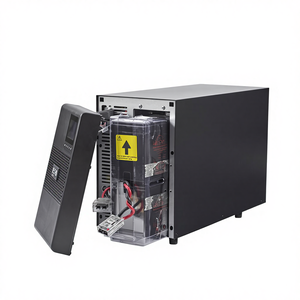
1-3KVA Online Tower Regulated Standby UPS

1-3KVA UPS Uninterruptible Power Supply 1000VA/900W Online Tower Regulated 9SX1000I Power Failure Standby

Get a Quote
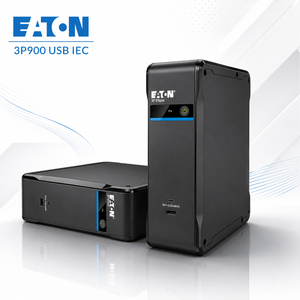
3P900UI Single Phase Standby UPS

For 3P900UI Single Phase Standby UPS for Computer-12V 9Ah Replaceable Battery 97% Efficiency <25dB Noise Level

Get a Quote
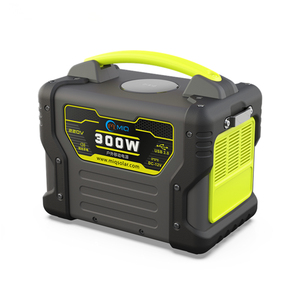
Emergency Standby LiFePO4 Power Supply

Emergency Standby Power Supply LiFePO4 Battery Mobile Power Supply 220V Portable Rechargeable Power Supply

Get a Quote
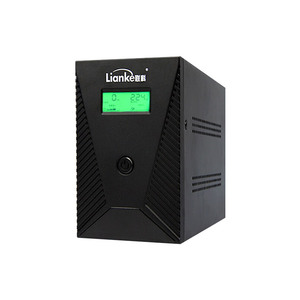
LK 800VA Offline Standby UPS

LK 800VA Offline UPS Uninterruptible Power Supply 480W Standby UPS For Computer Monitoring

Get a Quote
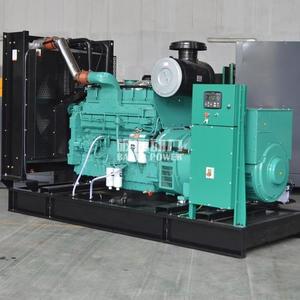
Heavy Duty Diesel Generator Standby Power Supply

Heavy Duty Diesel Generator Standby Power Supply for Factory Building

Get a Quote
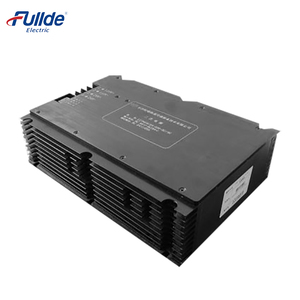
Standby Emergency Power Supply High Tech Special

Standby Emergency Power Supply High Tech Special Power Supply

Get a Quote
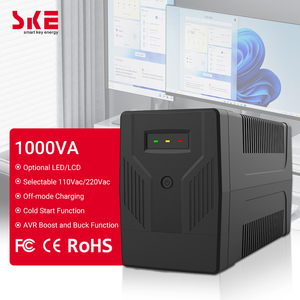
SKE Offline UPS 1000VA AVR Standby Power Supply

SKE Offline UPS 1000VA 600W AVR Standby Ups Power Supply 12V 9AH Battery Backup Energy Power Supply

Get a Quote
Industry Whitepaper Analysis

Critical Power Rectifier Infrastructure for Greater Boston’s High-Tech Economy

The Greater Boston metropolitan area—spanning Kendall Square in Cambridge, the Route 128 / I-95 technology belt, and the Boston Seaport Innovation District—represents one of the most densely concentrated high-tech, biopharmaceutical, and advanced manufacturing ecosystems in the world. For facilities operating within this corridor, power continuity is not merely a operational convenience; it is an absolute technical imperative.

Modern telecommunication nodes, subsea cable landing stations, automated bioprocess laboratories, and public safety emergency dispatch centers demand industrial-grade Power Rectifiers and direct current (DC) power plants that guarantee zero-millisecond transfer times, active load-sharing redundancy, and immunity against severe grid disturbances common to New England winters.

"In mission-critical power engineering, a failure in DC voltage rectification translates immediately to compromised data integrity, lost bio-cultures, or communication blackouts. Advanced switch-mode rectifiers deliver 97%+ energy conversion efficiency while isolating sensitive electronics from raw grid transients."

This whitepaper details the architectural requirements for sourcing, installing, and maintaining high-efficiency industrial power rectifiers, intelligent online UPS topology, and standby battery systems tailored to Boston’s rigorous environmental and regulatory standards.

Communication towers powered by ICT DC power conversion products
Deployment Matrix

Localized Application Scenarios Across Greater Boston

From Kendall Square biopharma facilities to remote coastal LMR towers, our power rectifiers and standby power plants deliver resilient DC energy architecture built for New England's regional challenges.

Biotech & Life Science Labs (Cambridge / Kendall Sq)

Boston’s world-leading biopharmaceutical hubs rely heavily on ultra-precise DC bus voltages for continuous automated gene sequencers, mass spectrometers, and cold-chain environmental sensors. Hot-swappable 48V and 24V rectifier shelves maintain uninterrupted DC float charge to LiFePO4 backup arrays, preventing sample loss during utility phase dropouts.

  • Zero RF interference with ultra-low noise levels (<25dB)
  • Hot-swappable N+1 module configuration for zero-downtime maintenance
  • SNMP v3 remote telemetry integrated into lab SCADA systems

Municipal Emergency Radio & Public Safety (P25 LMR)

First responder land mobile radio (LMR) repeaters, 911 dispatch centers, and transit communications across the Massachusetts Bay Transportation Authority (MBTA) network require bulletproof 12V and 48V DC power supplies. Rectifier systems with integrated Low Voltage Disconnect (LVD) protect battery banks from deep discharge during extended storm outages.

  • NFPA 1221 compliant backup power infrastructure
  • Industrial temperature tolerance (-40°C to +65°C)
  • Individual branch circuit switching & current monitoring

Harbor, Marine, & Offshore Infrastructure (Boston Seaport)

Maritime navigation control, port automation, and coastal radar stations operating along Boston Harbor face high humidity and corrosive salt air. Industrial power rectifiers featuring conformally coated PCBs, stainless steel enclosures, and high surge protection withstand severe coastal atmospheric conditions without thermal degradation.

  • Conformal coating for salt-fog corrosion immunity
  • Wide input AC range (90V AC to 300V AC) for unstable dock grid power
  • Galvanic isolation preventing grounding loops
Strategic Outlook

Regional Power Trends & Regulatory Compliance in Massachusetts

Understanding the shifting industrial, grid decarbonization, and engineering standards governing Greater Boston's critical electrical systems.

Intelligent DC Power Solutions Dashboard

1. Grid Modernization & MassCEC Decarbonization Mandates

Under the Massachusetts Clean Energy Center (MassCEC) guidelines and state net-zero goals, industrial manufacturers and commercial buildings across Boston are rapidly adopting localized microgrids, solar-plus-storage installations, and high-efficiency power electronics. Modern power rectifiers must feature Active Power Factor Correction (PFC > 0.99) to minimize harmonic distortion injected back into the Eversource or National Grid electrical distribution lines.

2. Extreme Winter Weather & Resilience Planning

New England's severe winter storms (Nor'easters) frequently cause utility brownouts, phase imbalances, and prolonged outages. Procurement managers are shifting from centralized single-UPS architectures to modular, decentralized DC power rectifier shelves paired with high-density Lithium Iron Phosphate (LiFePO4) battery modules that deliver rapid recharge cycles and superior cold-temperature performance.

3. Transition to Intelligent Ethernet Telemetry

With dispatch costs for field service technicians in urban Boston continuing to climb, facility directors now demand IP-enabled rectifiers. Embedded HTML web servers, SNMP monitoring, and automated load shedding enable engineers to remotely power-cycle locked network appliances, read individual circuit loads, and receive proactive alarm notifications before a site failure occurs.

Information Gain Matrix

Industrial Power Rectifier Architecture Comparison Guide

A comprehensive technical evaluation matrix designed for Boston electrical engineers, site managers, and OEM integration teams evaluating power conversion platforms.

Rectifier Architecture Nominal DC Bus Peak Efficiency Redundancy Topology Best Fit Boston Application
Modular Hot-Swap Rectifier Shelves 12V / 24V / 48V DC 96.5% - 97.5% N+1 / N+2 Hot-Swappable Load Sharing Telecom Base Stations, Public Safety Repeater Sites, Kendall Sq Biotech Labs
Online Double-Conversion Tower UPS 120V / 230V AC (Internal DC) 92.0% - 94.5% Single Unit / Parallel Redundant Server Racks, Medical Diagnostics, Modular Cleanroom Workstations
DIN-Rail Industrial Power Supplies 12V / 24V / 48V DC 89.0% - 93.0% External Diode Redundancy Modules SCADA Control Cabinets, MBTA Trackside Signals, Industrial Automation
High-Tech Special Standby Power Plants Custom Voltage (48V - 380V) 97.0%+ Dual Bus (A/B Isolation) Heavy Industrial Factories, Subsea Cable Terminals, Harbor Logistics
Portable LiFePO4 Emergency Units 12V / 110V / 220V Output 95.0% Standalone Backup Mobile Emergency Field Response, Rapid Bio-Lab Disaster Recovery Kits
Why Partner With Us

World-Class Power Engineering & Manufacturing Precision

Delivering field-proven reliability, modular scalability, and complete remote visibility since 1986.

38+ Years Engineering Heritage

Specialized focus exclusively on low-voltage DC power conversion, battery chargers, and monitored distribution panels designed to rigorous ISO 9001 standards.

Hot-Swap N+1 Modularity

Fault-tolerant power systems allowing hot insertion and removal of rectifier modules without dropping output power or interrupting live mission-critical loads.

Intelligent Ethernet Telemetry

Embedded HTTPS web servers, SNMP v1/v2c/v3 interface, and real-time per-circuit current measurement give complete off-site power control.

North American Quality Build

Domestic engineering, firmware development, assembly, and tech support provide short lead times, transparent revision tracking, and direct developer access.

Proven In Field Service

Empowering Critical Infrastructure Worldwide

Field data and rigorous testing back every rectifier module, inverter, and distribution panel we ship.

1986
Established Power Industry Specialist
97%+
Peak Electrical Conversion Efficiency
>300k
Hours Demonstrated Field MTBF
60+
Countries Supported Globally
Engineering FAQ

Frequently Asked Questions by Boston Procurement & Facilities Engineers

Direct technical answers from our senior power systems application team regarding installation, regional code compliance, and load calculations.

Q1: How do modern switch-mode power rectifiers improve energy efficiency in Boston commercial facilities compared to legacy phase-controlled rectifiers?

Modern switch-mode rectifiers utilize high-frequency Pulse Width Modulation (PWM) and MOSFET/IGBT semiconductor topology operating at frequencies above 100 kHz. This yields conversion efficiencies of 96% to 97.5%, compared to legacy SCR or ferroresonant rectifiers which typically operate at 80% to 85% efficiency. In high-density facility clusters like Boston’s Kendall Square or Seaport data centers, this efficiency differential significantly cuts internal heat dissipation, reducing HVAC cooling loads and delivering payback on capital expenditure within 18 to 24 months.

Q2: What localized electrical standards and codes apply to installing industrial DC power rectifiers in Massachusetts?

Installations across Greater Boston must comply with the Massachusetts Electrical Code (527 CMR 12.00), which adopts the National Electrical Code (NEC/NFPA 70) alongside state-specific amendments. Key provisions include Article 700 (Emergency Systems), Article 701 (Legally Required Standby Systems), and Article 480 (Stationary Storage Batteries). Additionally, power rectifiers installed in public safety or municipal buildings must meet UL 60950-1/UL 62368-1 safety standards and FCC Class A/B electromagnetic compatibility to avoid interfering with emergency radio frequencies.

Q3: Why is N+1 hot-swap modularity critical for mission-critical telecom and biopharma facilities?

An N+1 system architecture configures the total required DC load (N) across multiple parallel rectifier modules plus at least one redundant module (+1). If the total load is 1400 Watts, two 700W modules provide the power, and a third 700W module provides N+1 redundancy. If any single module fails, the remaining modules immediately absorb the load without bus voltage drop or interruption. Furthermore, hot-swap capability allows field engineers to replace the failed unit while the site remains live, eliminating the need to schedule maintenance downtime.

Q4: How does Ethernet-based IP remote power management reduce total cost of ownership (TCO) for regional networks?

Unattended equipment sites located along the Route 128 corridor or remote island communication nodes in Boston Harbor require costly field dispatching ("truck rolls") when network gear freezes. IP-enabled rectifiers and distribution panels integrate an embedded web server and SNMP agent. Engineers can remotely view system voltage, load current, and battery health, set automated email alerts, and execute remote power-cycling of individual DC circuits via a standard web browser or network management system (NMS), resolving over 80% of routine site lockups remotely.

Q5: Can these rectifiers handle the wide ambient temperature swings typical of New England installations?

Yes. Industrial-grade power rectifiers engineered for New England deployments feature extended operating temperature ranges from -40°C (-40°F) up to +65°C (+149°F), equipped with intelligent temperature-compensated battery charging algorithms. During cold winters, the rectifier automatically adjusts float voltage upwards to prevent battery undercharging; during hot summer spells, it lowers float voltage to prevent thermal runaway in sealed VRLA or LiFePO4 batteries.

Q6: What is the lead time and engineering assistance available for custom OEM power rectifier orders shipping to Boston?

Because our core engineering and manufacturing facilities are headquartered in North America, standard modular rectifier systems and power supplies ship within fast lead times. Our application engineering staff provides direct one-on-one single-line diagram reviews, battery autonomy sizing calculations, and rack layout consultation prior to purchase order issuance.

Ready to Optimize Your Boston Site Power Architecture?

Connect with our senior application engineers to review your load requirements, single-line diagrams, or request an immediate enterprise price quote.