
Specified for Sydney telecommunications, radio repeaters, data hubs, and critical industrial sites requiring continuous operating uptime.

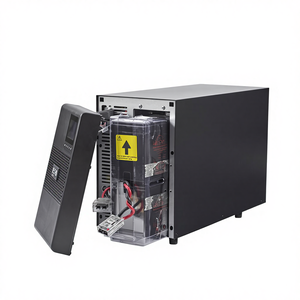
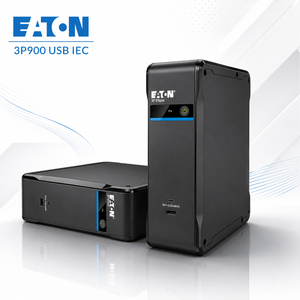
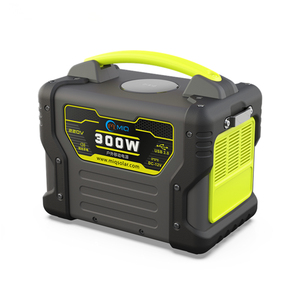
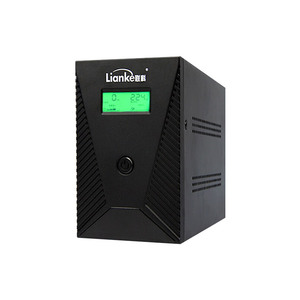
In modern industrial automation, mobile telecommunications, and high-density data infrastructure, total system availability is non-negotiable. As Sydney continues its rapid expansion across the Western Sydney Aerotropolis, the Macquarie Park technology corridor, and the South-Sydneysider logistics hubs, electrical utility constraints and harsh climate events place immense stress on site-level power conversion systems. As leading modular rectifier manufacturers serving Sydney, our engineering philosophy focuses on delivering fault-tolerant switch-mode power supply systems that remove single points of failure while drastically minimizing mean time to repair (MTTR).
Modular rectifiers transform incoming AC utility power (typically single-phase 230V or three-phase 415V across New South Wales distribution networks) into highly stable, ripple-free DC power. Operating primarily across 12VDC, 24VDC, and 48VDC busbars, these modular systems supply uncorrupted energy directly to sensitive Land Mobile Radio (LMR) repeaters, fiber-optic line terminals, remote telemetry units (RTUs), and cellular base stations, while simultaneously maintaining standby battery banks in optimized float or equalization states.

Historically, industrial sites relied on large monolithic power rectifiers. When a component inside a traditional single-chassis power supply failed, the entire site lost DC power unless a costly, redundant standby system was online. Modular DC power systems eliminate this systemic vulnerability through hot-swappable plug-in power modules housed within a common 19-inch or 23-inch rack shelf.
By deploying an N+1 redundant design configuration (where N represents the total modules required to support the maximum site load, plus 1 additional module for redundant backup), the power system seamlessly absorbs module hardware failures without output voltage fluctuations. If a individual 700W or 1500W rectifier module experiences an internal fault, internal solid-state decoupling diodes isolate the damaged unit, allowing remaining modules to share the load proportionately. Technicians can replace the failed unit hot while the site remains fully energized—reducing site repair cycles from hours to minutes.
Operating electrical equipment in Sydney requires localized engineering considerations. From salt mist corrosion in coastal sites like Botany Bay and Manly to extreme heat waves exceeding 45°C in Penrith and Parramatta, power systems must meet demanding environmental and operational criteria.
Deployments across Sydney CBD, North Sydney, and outer metro wireless sites demand compact, high-efficiency 48VDC power systems. Intelligent modular rectifiers power remote radio heads (RRHs) and optical switches, utilizing active Ethernet telemetry to allow remote rebooting and battery testing without dispatching service vehicles through Sydney traffic.
Rail signaling, passenger emergency communications, and tunnel telemetry systems along the Sydney Metro network demand zero-break power reliability. Dual-bus DC distribution panels paired with hot-swappable rectifier shelves ensure continuous A/B feed availability under heavy electromagnetic interference (EMI) environments.
Edge data centers and colocation centers in Sydney's primary industrial zones utilize high-power density modular rectifiers for auxiliary DC power networks, management switches, and out-of-band monitoring devices, protecting servers from line transients and neutral-ground voltage drift.
Critical Land Mobile Radio (LMR) towers operated by emergency services, SES, and police across Greater Sydney rely on 13.8VDC and 48VDC rectifiers. Integrated low-voltage battery disconnects (LVBD) safeguard sensitive valve-regulated lead-acid (VRLA) or Lithium (LiFePO4) battery banks during extended mains power outages during severe bushfire or storm seasons.
As Ausgrid and Endeavour Energy update Sydney's electrical grid with solar and battery energy storage system (BESS) microgrids, industrial DIN-rail modular rectifiers supply reliable low-voltage control power for protective relays, SCADA modems, and automated circuit breakers.
When specifying modular rectifier systems for Australian installations, procurement managers and electrical engineers must compare key electrical parameters against local standard requirements.
| Architecture Feature | Modular Rectifier System (ICT Class) | Legacy Monolithic Supply | Standard Off-line UPS |
|---|---|---|---|
| Redundancy Level | Scalable N+1 or N+2 Hot-Swap | 1+1 Parallel Unit (High Footprint) | Single Unit (No Internal Redundancy) |
| Mean Time to Repair (MTTR) | < 5 Minutes (Live Module Replacement) | 2 to 6 Hours (Requires Field Tech & Rewiring) | 3 to 8 Hours (Complete Unit Swapping) |
| Power Conversion Efficiency | Up to 96.5% (80 Plus Gold Equivalent) | 82% to 88% | 85% to 90% |
| Operating Temperature Range | -30°C to +70°C (Derating above 50°C) | -10°C to +45°C | 0°C to +40°C |
| Remote Management Protocol | Embedded HTML5, SNMP v1/v2c/v3, REST API | Basic Contact Closure Alarms | Optional SNMP Expansion Card |
| Compliance Standards | AS/NZS 62368.1, RCM, CE, CISPR 32 Class B | Standard IEC 60950 | Commercial AS/NZS 62040 |
Selecting an industrial power manufacturer serving Sydney requires understanding local market transitions. Renewable energy initiatives, regulatory updates, and urban development drive specific technical choices across NSW:
Australia has transitioned electrical safety standards from older IEC 60950-1 frameworks to AS/NZS 62368.1 (Hazard-Based Safety Engineering). Manufacturers supplying the Sydney region must supply equipment holding full Regulatory Compliance Mark (RCM) documentation. Modular rectifiers imported without RCM or appropriate EMC testing (AS/NZS CISPR 32) risk immediate grounding by local energy network inspectors.
Temperature records show Western Sydney frequently experiences summer ambient temperatures exceeding 42°C inside unconditioned outdoor equipment shelters, pushing cabinet interiors to over 55°C. High-performance modular rectifiers engineered for Australian conditions integrate intelligent thermal derating algorithms, forced-air cooling fans with pulse-width modulation (PWM) speed control, and high-grade solid aluminum capacitors to avoid premature degradation.

Sydney network operators are replacing traditional VRLA lead-acid batteries with high-density Lithium Iron Phosphate (LiFePO4) chemistry due to superior cycle life and thermal endurance. Rectifier systems must incorporate fully adjustable, multi-stage charge algorithms (float, bulk, equalization) with temperature compensation sensors and low-voltage disconnect circuits customized for lithium BMS communication protocols.
With NSW driving smart grid automation and remote asset management, power supplies can no longer act as isolated black boxes. System integrators require modular rectifiers featuring embedded TCP/IP Ethernet interfaces supporting SNMP v3 encryption. Network Operations Centers (NOCs) in Sydney CBD can remotely monitor real-time output currents, perform automatic battery discharge testing, and receive instant alerts prior to catastrophic power loss.
With over three decades of dedicated DC power design experience, our manufacturing ethos centers on high-reliability engineering, traceable quality management, and rapid project delivery for critical infrastructure.
Unlike unbranded catalogue resellers, all core power modules, firmware stacks, and enclosure designs are engineered and produced under stringent ISO 9001-certified processes. Traceable hardware revisions ensure complete long-term spare module availability.
Hot-swappable blind-mate connectors allow technicians to insert or extract rectifier modules from energized shelves without sparking, voltage dips, or interrupting adjacent running loads—drastically simplifying ongoing site maintenance.
Operating since 1986, our DC conversion, backup, and distribution products have been deployed across public safety networks, utility switchyards, and global telecom networks in over 60 countries.
Our dedicated technical support team works directly with Sydney electrical contractors and system integrators to review single-line wiring diagrams, load budgets, battery autonomy targets, and rack layouts prior to procurement.
Here are authoritative responses to technical queries frequently raised when specifying modular rectifiers and backup power systems in New South Wales.
Consult with our senior power application engineers to review your load requirements, single-line diagrams, and battery autonomy goals. Request a customized technical proposal today.
Get a Quote