
Engineered for mission-critical deployments across Uruguay's FTTH, GPON micro-nodes, and central telecommunications hubs.
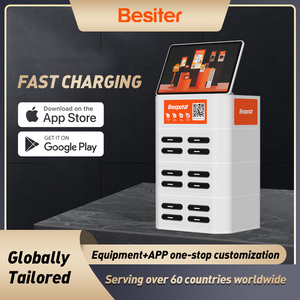
Multi-slot Li-Polymer modular power bank system ideal for field technician support and emergency site maintenance operations.
Get a Quote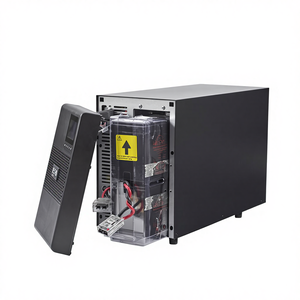
Precision voltage-regulated standby system providing zero-transfer-time AC power backup for sensitive fiber headends and server racks.
Get a Quote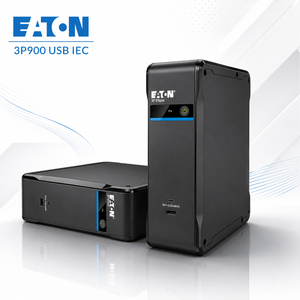
Ultra-quiet (<25dB) 97% efficiency power system with hot-swappable batteries, engineered for localized terminal equipment protection.
Get a Quote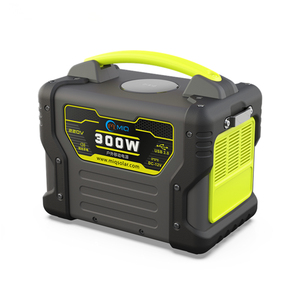
High-capacity lithium iron phosphate rechargeable power pack delivering instant 220V AC emergency backup for field fiber splicing teams.
Get a Quote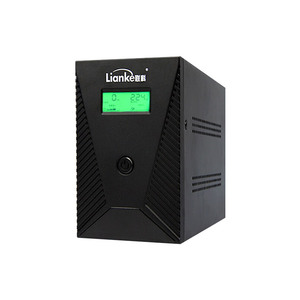
Ruggedized offline power unit specifically structured for optical monitoring systems, security CCTV, and lightweight access nodes.
Get a Quote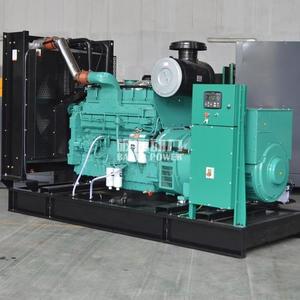
High-kW automatic transfer standby generator engineered for utility-grade facility backup, central optical switching hubs, and data centers.
Get a Quote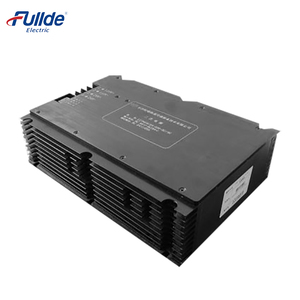
Advanced customized energy storage and DC-DC distribution cabinet tailored for harsh-environment outdoor telecommunications shelters.
Get a Quote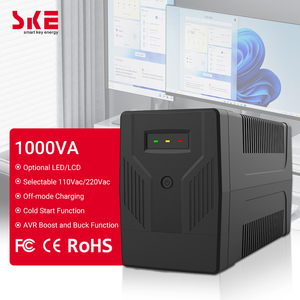
Automatic Voltage Regulation (AVR) standby supply offering line-interactive defense against voltage sags and blackouts in remote nodes.
Get a QuoteUruguay stands as a Latin American trailblazer in digital connectivity, boasting one of the highest Fiber-to-the-Home (FTTH) penetration rates across the continent. Driven by national infrastructure modernizations and major broadband operators such as ANTEL, the country’s telecommunications backbone relies on an intricate web of Optical Line Terminal (OLT) central offices, remote street cabinets, subsea cable landing stations in Maldonado, and rural micro-POP huts spanning from Salto to Tacuarembó. However, maintaining high-bandwidth fiber continuity requires an uncompromising approach to site backup power engineering.
While Uruguay’s electrical grid, managed by UTE (Administración Nacional de Usinas y Trasmisiones Eléctricas), is globally praised for its high percentage of renewable energy generation (hydroelectric and wind), localized power quality challenges persist. Coastal Atlantic storms, high lightning density in northern agricultural zones, and grid transients caused by seasonal wind shifts can introduce severe voltage fluctuations, brownouts, and localized outages. For optical networks, even a millisecond interruption in active GPON or XGS-PON equipment breaks synchronized data streams, forcing time-consuming session renegotiations for thousands of connected residential, commercial, and enterprise end-users.
Core Architectural Requirement: Modern fiber site backup power in Uruguay must transition from generic AC UPS architectures to dedicated, hot-swappable 48V VDC / 24V VDC modular rectifier systems integrated with Intelligent Low Voltage Disconnect (LVD), SNMP v3 remote management, and temperature-compensated Lithium Iron Phosphate (LiFePO4) storage arrays.
Direct DC powering eliminates the efficiency losses and heat generation associated with double-inversion AC UPS topologies. By maintaining a continuous DC float voltage connected directly to the primary telecom bus, fiber nodes achieve true zero-transfer-time protection. Furthermore, intelligent power distribution panels with individual circuit current monitoring allow network operation centers (NOC) in Montevideo to remotely shed non-critical loads during prolonged utility outages, extending battery runtime for critical optical transmission gear.
Benchmarking parameters required for modern telecom backup power deployments in South America.
Tailored power architectures designed for Uruguay's unique geographical and infrastructure landscape.
High-density optical switching facilities in Montevideo and Ciudad de la Costa demand scalable 48V DC power systems capable of delivering up to 10kW to 30kW. Multi-shelf hot-swap rectifiers paired with dual-bus distribution panels ensure that maintenance can occur without turning off active chassis racks.
High Density GPONUnattended street-side active distribution cabinets situated in interior cities like Rivera, Melo, and Durazno require compact DIN-rail mount DC power supplies and integrated battery chargers. Thermal resilience and compact chassis dimensions allow seamless integration into space-constrained IP65 enclosures.
Ruggedized OutdoorLong-haul trunk line repeater stations crossing rural plains rely on hybrid energy systems where solar PV arrays charge 24V/48V battery banks. Wide input DC-DC converters stabilize power delivery to sensitive optical amplifiers and satellite backhaul receivers during low solar irradiance.
Off-Grid Clean EnergyThe telecommunications supply chain in Uruguay is experiencing a rapid technological transition driven by three dominant industry dynamics:
Network operators are aggressively replacing legacy VRLA/AGM lead-acid batteries with Lithium Iron Phosphate chemistry. LiFePO4 offers 3x the cycle life, superior energy density, and higher thermal tolerance without requiring air-conditioned shelters—dramatically reducing CAPEX and OPEX for remote site cooling across Uruguay.
With high labor costs and long dispatch distances between Montevideo and regional nodes, operator demand is shifting toward web-managed DC distribution. Embedded Ethernet interfaces allow technicians to execute remote power recycling, monitor real-time load currents per circuit, and receive instant alarm traps before failures cascade.
As 5G small cells roll out in urban centers, operators are leveraging existing fiber roadside cabinets to power cellular radios. Dual-voltage DC power platforms capable of outputting both 48VDC for fiber switching gear and 24VDC for radio equipment in a single compact chassis are becoming the industry benchmark.
Single-point-of-failure power supplies are being systematically phased out. Modern procurement tenders in Uruguay mandate hot-swappable rectifier shelves where individual modules share load current. If one power module fails, the remaining rectifiers automatically absorb the load without interrupting the DC bus.
Select the optimal conversion, backup, and distribution topology based on site capacity and environmental exposure.
| Platform Category | Nominal Bus Voltage | Typical Capacity | Primary Application Scenario | Key Technical Differentiator |
|---|---|---|---|---|
| Modular DC Power Systems | -48V VDC / 24V VDC | 1kW to 12kW | Central Office, OLT Headends, Subsea Cable Landing | Hot-swappable rectifiers, integrated LVD, dual-bus distribution, SNMP telemetry |
| Modular Rectifier Modules | 48V VDC / 12V VDC | 700W to 1500W per module | Capacity Expansion, N+1 Redundant Upgrades | Active current sharing, high efficiency (>96%), live plug-and-play serviceability |
| DIN-Rail Power Supplies | 12V VDC / 24V VDC / 48V VDC | 100W to 480W | Outdoor Cabinets, Fiber Huts, Micro-POP Nodes | Compact DIN-mount, fanless convection cooling, wide temperature tolerance |
| Intelligent DC Distribution | 12V / 24V / 48V VDC | 100A to 200A Total Bus | Branch Circuit Protection & Remote Power Cycle | Individual electronic fuses, current monitoring per output channel, HTML5 web GUI |
| Pure Sine Wave Inverters | 48VDC Input / 220VAC Output | 1000VA to 3000VA | Auxiliary AC Equipment in DC-Powered Shelters | Low harmonic distortion (<3% THD), seamless transfer, high surge capability |
Delivering uncompromised power reliability since 1986 from our North American design and production headquarters.
Focused exclusively on high-reliability DC power conversion, battery charging, and distribution for telecom, broadband, and public safety applications since 1986.
Every product platform is designed, engineered, assembled, and firmware-tested under strict ISO Quality Management standards in North America, ensuring absolute quality control.
Native Ethernet integration with no subscription fees. Enjoy full visibility, GUI control, and SNMP trap integration with leading enterprise NOC management software.
Our experienced engineering support team works directly with system integrators in Uruguay to review load budgets, single-line diagrams, and battery sizing prior to shipment.
Answers to key operational, compliance, and engineering questions regarding fiber site backup installations.
Our industrial DC power systems and rectifier modules feature wide universal AC input operating ranges (typically 90VAC to 275VAC at 47-63Hz). This natively accommodates Uruguay’s standard utility grid supplied by UTE (220V AC single-phase / 380V AC three-phase at 50Hz) and protects site hardware against severe brownouts or utility voltage spikes.
Yes. All intelligent power supplies and modular rectifier systems feature fully adjustable output voltage set points. Engineers can fine-tune float, equalization, and low-voltage disconnect (LVD) thresholds to match the precise charge profile of local LiFePO4 or lead-acid (AGM/GEL) chemistry batteries deployed across Uruguay sites.
When configured with an Intelligent DC Distribution Panel, each individual output circuit can be independently controlled via the embedded HTML5 web GUI or through SNMP commands. If an OLT or backhaul router becomes unresponsive, Network Operation Center (NOC) personnel in Montevideo can execute an instantaneous remote hard reboot on that specific port without dispatching a service technician to rural regions.
Our product lines comply with rigorous international safety, electromagnetic compatibility, and telecom standards, including CE, UL/CSA 62368-1, FCC Class B, and RoHS. Systems destined for Uruguay undergo rigorous high-pot, thermal burn-in, and vibration tests to guarantee field reliability in humid coastal and high-temperature environments.
While single-rectifier power supplies are adequate for non-critical access points, N+1 modular redundancy is strongly recommended for active GPON/XGS-PON nodes servicing commercial or municipal traffic. Adding one parallel hot-swappable module ensures that if a component fails due to a external power surge, the remaining modules immediately absorb the load without dropping a single fiber data frame.
System integrators, contractors, and network operators can click the "Get a Quote" callout buttons on this page to immediately open an inquiry window with our direct technical sales desk. Our engineering team will review your single-line diagram, calculated load profile, and required autonomy hours to provide a complete bill of materials and customized technical specification sheet.
Contact our application engineering team today for custom sizing assistance, single-line reviews, and direct factory pricing for your Uruguay telecommunications projects.
Get a Quote