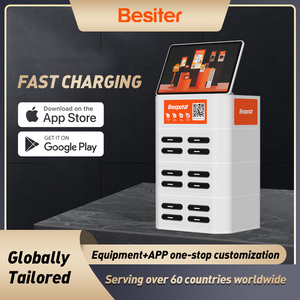
Besiter 12-Slot 22.5W Fast Charging Portable Power Rental Station
Integrated 10.1" digital screen, ultra-reliable Li-Polymer chemistry, universal plug ecosystem for high-traffic commercial hubs.
Send an Inquiry
High-efficiency, JET-compliant, and seismic-resistant power conversion units engineered specifically for commercial and municipal deployments in Japan.
Integrated 10.1" digital screen, ultra-reliable Li-Polymer chemistry, universal plug ecosystem for high-traffic commercial hubs.
Send an Inquiry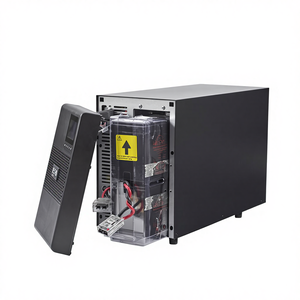
Zero-transfer time double-conversion architecture for sensitive Japanese data servers and telecom nodes.
Send an Inquiry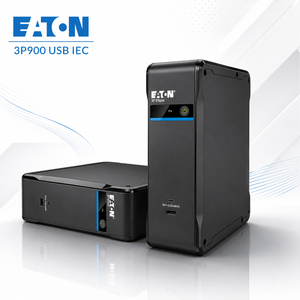
Ultra-silent operations (<25dB) with hot-swappable batteries designed for office and clinical lab environments.
Send an Inquiry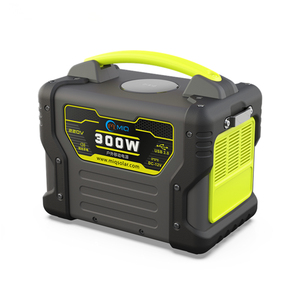
High-capacity long-lifecycle LFP cells ideal for emergency disaster response teams and remote field operations.
Send an Inquiry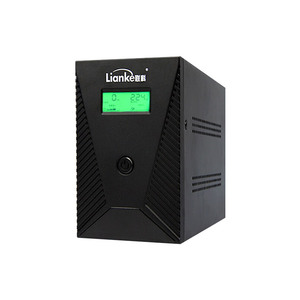
Compact, cost-effective surge protection and battery backup system tailored for security monitoring infrastructure.
Send an Inquiry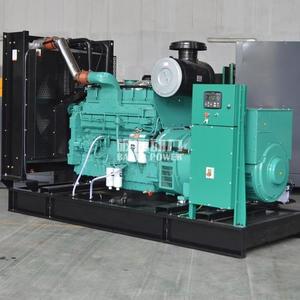
Industrial grade, soundproofed backup generation for manufacturing facilities requiring zero thermal shutdown risk.
Send an Inquiry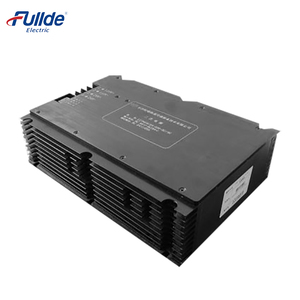
Custom engineered DC/AC output matrix for specialized industrial automation and critical infrastructure nodes.
Send an Inquiry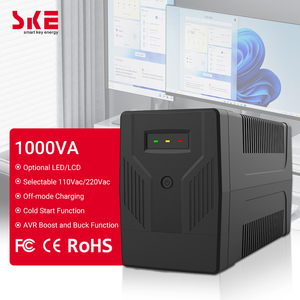
Integrated Automatic Voltage Regulation (AVR) to stabilize unstable grid lines in rural or heavy-load industrial zones.
Send an InquiryAn in-depth technical analysis for Japanese procurement directors, EPC contractors, and system integrators sourcing BESS and solar hardware from China.
Japan’s commitment to achieving carbon neutrality by 2050—and reducing greenhouse gas emissions by 46% by FY2030—has created a fundamental structural shift in its power markets. Under the 6th Strategic Energy Plan, renewables are targeted to account for 36% to 38% of national power generation by 2030. Solar Photovoltaic (PV) power represents the largest single share within this renewable portfolio. However, Japan’s unique geography, mountain-heavy topography, and isolated regional grid systems present severe engineering constraints.
Unlike interconnected European energy networks, Japan operates on isolated regional grids managed by major Transmission and Distribution (T&D) system operators (such as TEPCO, KEPCO, and Chubu Electric). Furthermore, Japan remains split between two distinct AC line frequencies: 50 Hz in Eastern Japan (Tokyo, Tohoku, Hokkaido) and 60 Hz in Western Japan (Osaka, Nagoya, Hiroshima). Sourcing solar inverters, energy storage systems (BESS), and uninterruptible power supplies (UPS) from China requires advanced dual-frequency compliance, tight grid-connection protocols, and robust harmonic distortion control.
Equipment exported to Japan must comply with rigid safety, EMC, and grid standards, including JET (Japan Electrical Safety & Environment Technology Laboratories) certification, PSE (Electrical Appliance and Material Safety Law) compliance, and JEM (Japan Electrical Manufacturers' Association) specifications for grid-tied anti-islanding protection.
The transition from the traditional Feed-in Tariff (FIT) scheme to the Feed-in Premium (FIP) model has radically altered solar energy economics in Japan. Solar project developers can no longer rely on fixed-rate compensation for raw power fed back into the grid during peak generation hours. Instead, solar asset operators must balance supply-demand schedules directly on the Japan Electric Power Exchange (JEPX).
This market evolution makes integrated Battery Energy Storage Systems (BESS) mandatory for commercial and utility-scale installations. By storing power during midday low-tariff periods and discharging during evening peak price spikes, Japanese enterprises maximize arbitrage value. China’s advanced wholesale manufacturing ecosystem supplies the exact technology needed to solve this margin challenge—offering Tier-1 lithium iron phosphate (LiFePO4) cells, smart string/centralized inverters, and high-precision Energy Management Systems (EMS).
Tailored power system architectures engineered to satisfy Japan’s specific environmental, municipal, and commercial operating requirements.
Japan suffers frequent seismic activity and typhoons. Commercial office buildings in Tokyo and Osaka utilize our hybrid solar-storage and zero-switch UPS units to guarantee uninterrupted operation of emergency lighting, security access, and data servers during main grid outages.
Combining agricultural cultivation with elevated solar panel structures. Our off-grid solar kits and heavy-duty IP65 outdoor energy storage units perform smoothly under extreme cold temperatures (-20°C) and heavy snow loads common in Northern Japan.
As NTT Docomo, KDDI, and SoftBank expand 5G and IoT networks into mountainous terrain, our 48V DIN-rail modular power supplies and compact rack-mount LiFePO4 batteries deliver low-noise (<25dB), high-density continuous power.
Standardized performance benchmarks of our solar power, BESS, and UPS equipment engineered for Japanese importers.
| Category | Standard Models | Grid & Frequency Compatibility | Safety & Compliance Standards | Target Japan Application |
|---|---|---|---|---|
| Industrial Off-Grid BESS | 50kWh – 500kWh Containerized | 100V / 200V Split-phase, 50Hz / 60Hz | JET, PSE, UN38.3, IEC 62619 | Factories, Logistic Hubs, Evacuation Centers |
| Commercial Hybrid Inverters | 10kW – 100kW String Inverters | Three-Phase 200V / 400V Grid Tied | JET Grid-Tied Anti-Islanding Class A | Rooftop Solar, Commercial Real Estate |
| Online Double Conversion UPS | 1kVA – 10kVA Tower/Rack mount | Single Phase 100V / 110V Pure Sine Wave | VCCI Class A, PSE, CE | Data Centers, Medical Facilities, Lab Gear |
| Emergency Mobile Storage | 1kW – 5kW LiFePO4 Stations | Dual 100V AC Outlets + 12V DC + USB-C | PSE Circular, UN38.3 MSDS | Municipal Disaster Response, Field Works |
Combining China’s unparalleled supply chain speed with rigorous North American and Japanese quality management controls.
100% burn-in testing, automated optical inspection (AOI), and precise cell matching guarantee failure rates below 0.02% across full lifecycle usage.
Agile automated SMT lines allow fast prototype delivery within 14 days and full container shipping to Kobe, Yokohama, or Osaka within 3 weeks.
Custom Japanese software GUIs, localized user manuals, custom packaging, and pre-programmed 50Hz/60Hz dual-frequency auto-sensing.
Direct direct access to senior power electronics engineers, firmware specialists, and international compliance experts throughout project lifecycles.
Detailed responses addressing compliance, logistics, customs, and OEM customization.
Our solar power converters, LiFePO4 battery modules, and UPS systems are engineered to meet Japanese regulatory standards. Depending on the product line, we offer units certified with PSE (Diamond and Circle marks), JET grid-connection verification, VCCI EMC compliance, and UN38.3 transport safety certification for lithium-based storage systems.
All our double-conversion online UPS units, hybrid solar inverters, and battery energy storage systems feature auto-sensing dual-frequency controllers. Equipment automatically synchronizes with Eastern Japan’s 50Hz (TEPCO area) or Western Japan’s 60Hz (KEPCO area) power grids without hardware reconfiguration.
For standard catalog models, our MOQ starts at 20 units. For full OEM/ODM customization (custom branding, Japanese localized LCD firmware, specialized enclosure painting, and unique voltage tuning), typical sample lead time is 14 days, with full production container shipments dispatched within 21 to 30 days.
We provide comprehensive engineering warranties ranging from 3 to 10 years depending on battery chemistry and system architecture. We collaborate with regional Japanese technical partners and offer rapid dispatch of spare board modules (plug-and-play PCB assemblies) to ensure minimum MTTR (Mean Time to Repair).
Yes. Our intelligent power platforms support Modbus-RTU, Modbus-TCP, CAN-bus, and optional SNMP communications. Importers and integrators can directly bind our system telemetry into existing building automation systems (BAS) or Japanese smart grid monitoring software.