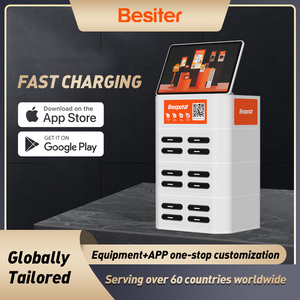
Besiter 12-Slot 22.5W Fast Charging Portable Power Station (10.1" Screen)
Universal fast-charging mobile energy kiosk designed for high-density public hubs, dispatch centers, and emergency command posts. Integrates Li-Polymer chemistry with dynamic load distribution.
Send an Inquiry
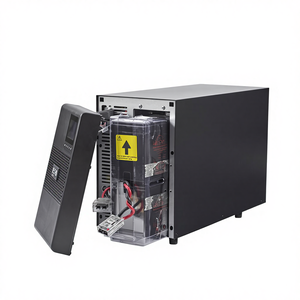
1-3KVA UPS Uninterruptible Power Supply 1000VA/900W Online Tower
High-precision double-conversion online tower UPS (9SX1000I equivalent) engineered for zero-transfer time site controllers, edge compute units, and remote wireless transceiver base stations.
Send an Inquiry
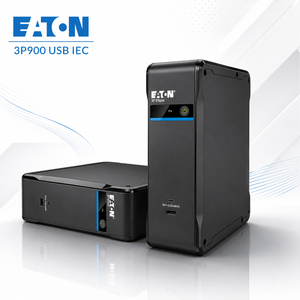
3P900UI Single Phase Standby UPS for Base Station Computing
Ultra-quiet (<25dB) micro-footprint standby UPS featuring a 12V 9Ah hot-replaceable battery and 97% eco-mode energy efficiency. Ideal for indoor micro-cell cabinets and server racks.
Send an Inquiry
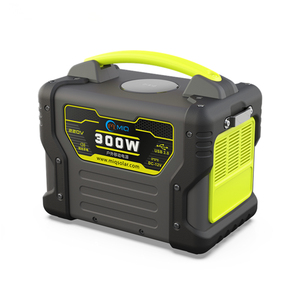
Emergency Standby Mobile Power Supply (LiFePO4 220V AC Output)
Heavy-duty mobile LiFePO4 energy storage unit supplying pure sine wave 220V power for emergency cellular tower maintenance teams, field diagnostic gear, and disaster recovery units.
Send an Inquiry
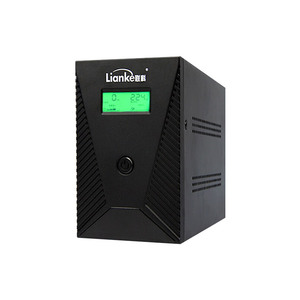
LK 800VA Offline Line-Interactive UPS 480W Standby Power
Compact 480W standby UPS system designed specifically for continuous power buffering of telemetry units, perimeter monitoring systems, and fiber-optic site nodes.
Send an Inquiry
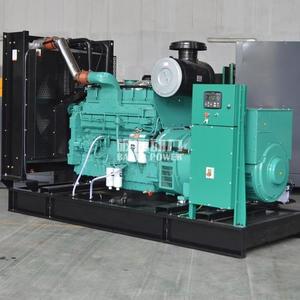
Heavy Duty Industrial Standby Diesel Generator Set for Telecom Facilities
Ruggedized prime and standby power generation plant equipped with automated transfer switches (ATS), low noise acoustic canopy, and long-autonomy fuel tanks for critical tower switching centers.
Send an Inquiry
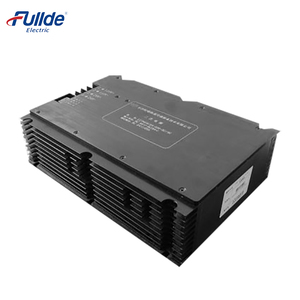
High-Tech Modular Emergency DC Power Switching Supply
Specialized high-frequency power conversion cabinet providing galvanically isolated multi-rail output (12V, 24V, 48V DC) for critical hybrid communication switching nodes.
Send an Inquiry
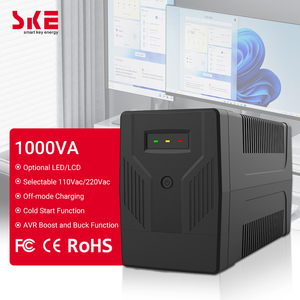
SKE 1000VA 600W AVR Standby UPS Power Backup System
Automatic Voltage Regulation (AVR) standby supply featuring a internal 12V 9Ah battery module, safeguarding sensitive signal processing equipment against brownouts and voltage spikes.
Send an Inquiry
Technical Whitepaper: Engineering Next-Generation Base Station Power Systems for Germany’s Telecommunications Grid
As Germany aggressively accelerates its nationwide 5G Standalone (SA) network expansion and strengthens public safety communication infrastructure (BOS Digitalfunk), the operational stress on base station power supplies has reached unprecedented levels. Modern macro cell sites, micro indoor nodes, and edge compute towers demand continuous, ultra-reliable 48V DC power converted from fluctuating AC grids. As a premier China Base Station Factory and Exporter, our engineering division delivers standardized, highly customizable DC power plants, modular rectifiers, uninterrupted power supplies (UPS), and energy storage solutions specifically tailored to European climatic conditions, stringent DIN regulations, and regional grid stability requirements.
Information Gain Insight: Modern 5G Massive MIMO base stations consume up to 3x more active power than legacy 4G systems during peak data traffic. Traditional linear power units generate excessive heat and operational expense (OpEx). Our advanced 96.8% high-efficiency switching rectifiers reduce site thermal dissipation by up to 40%, directly lowering cooling requirements in outdoor telecom cabinets across Germany.
1. Architecture of modern 48V DC Base Station Micro-Power Plants
Telecom infrastructure in Germany relies overwhelmingly on standard negative 48V DC (-48V DC) bus architectures to minimize copper loss while maintaining human touch-safety thresholds. Our base station power plants integrate five mission-critical subsystems into a unified rack or wall-mount chassis:
- Active PFC Switched-Mode Rectifier Modules: Converting incoming 230V/400V 50Hz AC electricity into stable, low-ripple -48V DC voltage. Equipped with Active Power Factor Correction (PFC > 0.99), ensuring compliance with EN 61000-3-2 grid harmonic standards.
- Smart Distribution & Circuit Breaker Protection: Independent A/B dual-bus distributions featuring hydraulic-magnetic circuit breakers. Per-circuit load monitoring enables automated shed management for non-critical assets during extended blackout events.
- LiFePO4 & VRLA Battery Management System (BMS): Precise multi-stage float and boost charging algorithms with automated temperature compensation (via dynamic thermal probes). Integrated Low Voltage Disconnect (LVD) circuits protect connected battery banks from destructive deep discharges.
- Ethernet / SNMP Remote Control Unit: An embedded industrial-grade microprocessor running HTTPS, SNMPv3, and Modbus TCP protocols. Network Operations Centers (NOCs) in Frankfurt, Munich, or Berlin can remotely monitor bus voltages, system currents, battery state-of-health (SoH), and ambient cabinet humidity without dispatching field technicians.
- Galvanic Isolation & Surge Suppression: Built-in Class II / Type 2 AC and DC surge protective devices (SPDs) rated up to 40kA (8/20µs), protecting sensitive digital signal processors against lightning-induced transients common in elevated German rural towers.
2. German Market Compliance & Regulatory Standardization
Exporting telecommunication base station equipment to Germany requires strict adherence to European Union directives and German national standards (VDE / DIN). Our factory manufacturing pipelines maintain continuous ISO 9001, ISO 14001, and ISO 45001 certifications, ensuring every unit leaving our production line satisfies:
- IEC/EN 62368-1: Audio/video, information, and communication technology equipment safety standards replacing legacy EN 60950-1.
- DIN EN 50272-2 / EN 50272-2: Safety requirements for secondary batteries and battery installations, providing correct gas ventilation calculations and electrical isolation.
- CE Marking & RED Compliance: Complete compliance with the EU Radio Equipment Directive (2014/53/EU) and Electromagnetic Compatibility (EMC) Directive (2014/30/EU) for zero RF interference with adjacent spectrum bands.
- RoHS & REACH Directives: Environmental manufacturing excluding heavy metals and hazardous chemical substances, fulfilling green procurement guidelines established by Deutsche Telekom, Vodafone Germany, and O2 Telefónica.
3. Technical Comparison: Modern Modular DC Base Station Power vs. Legacy Systems
The table below highlights the performance metrics of our export-grade China OEM Base Station Power Systems compared to conventional legacy power plants deployed across Central Europe:
| Performance Specification |
Our Next-Gen Modular DC Power System |
Legacy Telecom Power Cabinets |
Impact on German Network Operators |
| Peak Rectifier Efficiency |
96.5% – 97.2% (Super Efficiency) |
88.0% – 91.5% |
Reduces site energy waste by 6-8%, lowering annual kWh costs. |
| System Redundancy |
Modular Hot-Swap N+1 / N+2 Topology |
Fixed Single-Block Transformer Units |
Zero downtime during maintenance; modules swapped in <60 seconds. |
| Power Density (W/in³) |
Up to 45 W/in³ (Compact 1U/2U Shelves) |
<15 W/in³ (Bulky Floor Cabinets) |
Saves 60% rack space for 5G edge compute and fiber routing gear. |
| Battery Chemistry Support |
Native LiFePO4 (LFP) + VRLA/AGM Auto-Detect |
VRLA / Lead-Acid Only |
Extends backup lifespan from 3 years to 10+ years in field shelters. |
| Remote Control Telemetry |
SNMPv3, Web GUI, Modbus TCP, Dry Contacts |
Basic Analog Dry Contact Alarms |
Full telemetry automation, eliminating unnecessary field service calls. |
| Operating Temperature |
-40°C to +75°C (Derating above 55°C) |
-10°C to +45°C |
Guarantees reliable operation during summer heatwaves & alpine freezes. |
4. Energy Transition (Energiewende) Integration & Hybrid Power Architectures
Germany’s aggressive Energiewende initiative requires base station infrastructure to operate cleanly and integrate intelligently with renewable energy sources. Our base station power plants feature dual-input solar MPPT charge controllers and smart grid interaction capabilities. During peak solar generation hours in southern Germany, our system prioritizes photovoltaic power to run the 48V DC bus and recharge battery reserves, seamless scaling back AC grid draw. In off-grid or weak-grid environments, our power controller communicates automatically via RS485 with onsite heavy-duty standby diesel generators, triggering automated start/stop routines to optimize fuel economy.
Procurement FAQ
Frequently Asked Questions by German B2B Buyers & Engineers
Direct technical and commercial answers from our OEM export engineering management team.
Q1: Are your base station power systems fully compliant with German VDE and CE standards?
Yes. All exported base station power systems, rectifiers, and UPS units shipped to Germany carry full CE certification and comply with low-voltage directive IEC/EN 62368-1, electromagnetic compatibility EN 55032 Class B, and grid harmonic standard EN 61000-3-2. Safety testing protocols align with VDE and DIN EN 50272-2 specifications.
Q2: What lead times and shipping routes do you offer for bulk shipments to Germany?
For standard configurations, production lead time is 2 to 3 weeks. Express air freight to Frankfurt Airport (FRA) takes 5 to 7 days, while sea freight to Hamburg or Bremerhaven ports takes approximately 28 to 35 days. We also support DDP (Delivered Duty Paid) customs clearance directly to your logistics warehouse in Germany.
Q3: Can your 48V DC power plants integrate with existing German remote management platforms?
Absolutely. Our central controller modules support open SNMPv1/v2c/v3, Modbus RTU/TCP, and RESTful APIs. MIB files are provided with every shipment, allowing seamless plug-and-play integration into enterprise network monitoring software such as PRTG, Zabbix, Nagios, or proprietary carrier NOC systems.
Q4: Do you offer customized OEM/ODM mechanical designs for 19-inch and ETSI rack enclosures?
Yes. As a direct manufacturer, we offer complete structural customization. We supply both standard 19-inch chassis and 21-inch ETSI telecom rack mounting brackets, custom busbar locations, specialized terminal blocks, and custom-branded front panels based on your project requirements.
Q5: How do your systems handle extreme thermal environments in outdoor German telecom shelters?
Our rectifiers and power control modules are rated for wide industrial operating temperatures ranging from -40°C to +75°C. They feature intelligent variable-speed cooling fans, conformal coated circuit boards for moisture and salt spray resistance, and automated thermal derating protection.
Q6: What warranty and technical support services do you provide for European clients?
We provide a standard 3 to 5 year factory warranty on all rectifier modules and main power chassis, with optional warranty extensions. Spare modules can be stocked in partner European hubs for rapid replacement. Our application engineering team provides 24/7 technical support via remote IP diagnostics, email, and video calls.