
Engineered for high temperature resilience, wide AC input swings, and seamless deployment across Ghana.
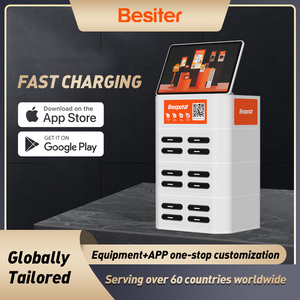
12-Slot lithium-polymer emergency power backup station designed for rapid commercial deployment and outdoor site support.
Contact Us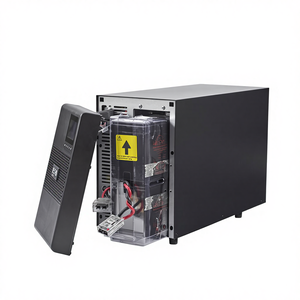
Double-conversion online regulated standby UPS for critical telecom nodes, datacenters, and industrial automation control.
Contact Us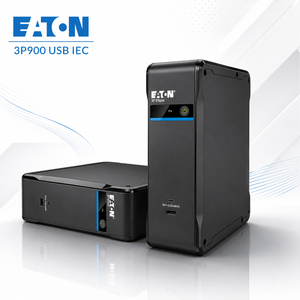
Ultra-quiet (<25dB) standby power backup featuring 97% high-efficiency energy transfer and replaceable hot-swap battery modules.
Contact Us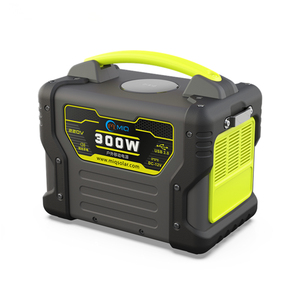
220V AC rechargeable pure sine mobile energy storage built with high-cycle LiFePO4 cells for rugged field operations in Ghana.
Contact Us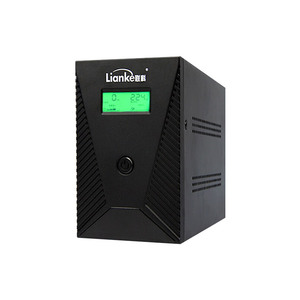
Compact, durable backup power supply engineered for security CCTV networks, tower monitoring sensors, and small office hardware.
Contact Us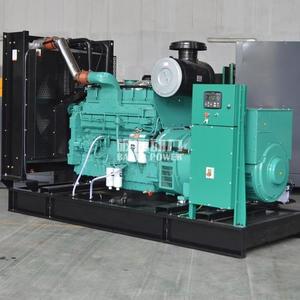
Industrial-grade generator auxiliary power system designed for heavy factory manufacturing and continuous site power security.
Contact Us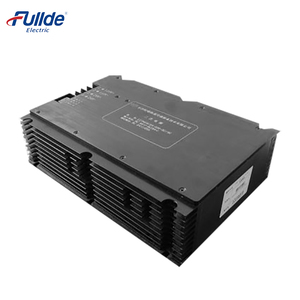
Custom-engineered DC voltage switching power platform for critical infrastructure, broadcast repeaters, and utility sub-stations.
Contact Us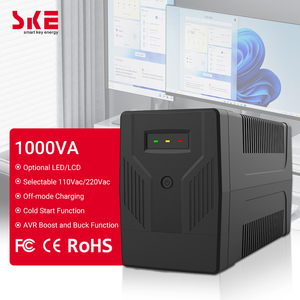
Automatic Voltage Regulation (AVR) standby power supply safeguarding sensitive network equipment against brownouts and voltage surges.
Contact UsAs Ghana accelerates its digital transformation under national initiatives like the Digital Ghana Agenda, national telecommunications networks, enterprise data centers, mining operations in the Ashanti and Western regions, and municipal infrastructure are expanding at an unprecedented rate. However, operational continuity remains severely challenged by electrical grid instability, frequent power fluctuations, sag conditions, and recurring load shedding—locally known as Dumsor.
For telecommunication operators (such as MTN Ghana, Telecel Ghana, and AT Ghana), Internet Service Providers (ISPs), and industrial processing facilities, reliance on legacy monolithic DC power systems or unmanaged AC backup leads to premature equipment failure, massive battery degradation, and sky-high Operational Expenditure (OPEX) driven by constant diesel generator operation.
This technical whitepaper provides infrastructure engineers, procurement executives, and system integrators across Accra, Kumasi, Takoradi, and Tamale with an authoritative evaluation of why Modular DC Power Rectifiers sourced directly from top-tier Chinese manufacturers represent the most economically viable and technically superior solution for power resilience in West Africa.
Electrical infrastructure across West Africa faces three primary stress factors that damage conventional power conversion units:

Understanding N+1 Redundancy, Switched-Mode Rectification (SMR), and Smart Thermal Dissipation
Unlike traditional single-block rectifiers, a Modular Switched-Mode DC Power System consists of a 19-inch sub-rack shelf housing multiple self-contained power modules operating in parallel, coordinated by a central intelligent control module (CSU/MCU) with Ethernet and SNMP network connectivity.
Utilizing Gallium Nitride (GaN) and Advanced Silicon Carbide (SiC) MOSFET switching topologies, modern Chinese rectifiers achieve conversion efficiencies up to 96.5%, dramatically reducing wasted heat and grid power draw.
With an active PFC ratio > 0.99 and Total Harmonic Distortion (THD) < 3%, these systems ensure full compliance with utility requirements and prevent generator waveform distortion during diesel failover switchovers.
Should an individual 50A or 100A module fail due to a severe lightning strike or power surge, the remaining modules dynamically pick up the load without interruption. Technicians swap modules in seconds without turning off the DC bus.

Given Ghana's elevated environmental temperatures, battery management is critical to protecting energy storage assets. Modern Chinese export-grade modular systems integrate:
A side-by-side technical evaluation for project directors and procurement specialists in Ghana
| Technical Parameter | Legacy Monolithic Rectifier | China Modular DC Power System | Advantage for Ghanaian Operators |
|---|---|---|---|
| System Redundancy | N (Single point of system failure) | N+1 or N+2 Hot-Swap Architecture | Eliminates site outages if one power module experiences a hardware fault. |
| AC Input Range | 180 VAC - 260 VAC (Narrow) | 85 VAC - 300 VAC (Wide Input Guard) | Continues charging batteries during severe brownouts without switching to battery storage. |
| Mean Time to Repair (MTTR) | 4 to 12 Hours (Requires field soldering) | < 5 Minutes (Plug-and-Play swap) | Reduces field technician labor costs and downtime across remote regions in Ghana. |
| Peak Energy Efficiency | 86% - 90% Efficiency | 95.5% - 97% Efficiency | Cuts diesel consumption on hybrid solar/generator sites by up to 25%. |
| Remote Visibility | Basic dry alarm contact relays | Embedded Web GUI, SNMP v3, IPv6/IPv4 | Enables full NOC management from Accra without physical site visits. |
| Scalability Options | Fixed capacity (Over-provision required) | Modular expansion from 1kW to 30kW+ | Lower initial CAPEX; payload expanded by plugging in additional modules as traffic grows. |
Customizing DC power distribution for telecom, mining, solar hybrid, and enterprise logistics
In remote tower locations near Kumasi or Tamale, outdoor cabinets house 48V DC BTS equipment. Sourcing modular 48V/100A to 48V/600A rectifiers with dual-bus distribution panels ensures clean power delivery to optical transmission gear and microwave backhauls. Remote SNMP traps instantly notify the Network Operations Center (NOC) when mains fail.
Mining operators in Tarkwa, Obuasi, and Ahafo utilize robust 24V and 110V DC power plants to energize SCADA control systems, emergency switchgear trip coils, and industrial PLC panels. Dust-sealed, conformal-coated rectifier modules withstand vibration and harsh chemical exposure common in processing plants.
To eliminate complete reliance on expensive diesel generators, hybrid energy platforms pair solar PV arrays with modular DC rectifiers and high-density Lithium battery banks. The intelligent controller prioritizes solar DC inputs, operates rectifiers during optimal grid windows, and automatically signals generator start/stop contacts only when SOC drops below safety thresholds.
Commercial hubs in Accra and the expanded Tema Port facility rely on high-capacity pure sine wave inverter systems paired with 48V modular DC rectifiers to maintain 99.999% uptime for core financial servers, container tracking radar, and emergency lighting.

Centralized monitoring is essential when managing dozens or hundreds of distributed remote power cabinets across Ghana. Our exported modular DC power systems feature an embedded HTML5 web console and full SNMP v2c/v3 integration.
Engineers can monitor per-circuit load currents, toggle individual branch breakers remotely to power-cycle frozen routers, track live battery float charge curves, and set real-time alarm thresholds via SMS or email alerts.
Navigating Ghana's evolving energy landscape, decarbonization goals, and telecom upgrades
Traditional Lead-Acid (VRLA) batteries are rapidly being phased out by Ghanaian network operators due to their short lifespan in high ambient temperatures. Modern modular rectifiers now feature dedicated software profiles specifically optimized for high-rate Lithium Iron Phosphate charging algorithms.
With spatial constraints inside metro street cabinets, power density has surged. Next-generation 1U hot-swap modules deliver up to 3kW per slot, allowing full 12kW rectifiers and distribution panels to occupy only 2U to 3U of rack space.
Ghanaian corporates are under strict ESG pressure to reduce carbon emissions. Replacing 88% efficient rectifiers with 96.5% high-efficiency modules directly cuts carbon output by reducing generator run-time by hundreds of hours annually per site.
Why China's power electronics ecosystem delivers unparalleled value, quality, and speed to Ghana
China has established itself as the global epicenter for power electronics manufacturing, telecom power R&D, and battery ecosystem integration. Sourcing directly from premier Chinese suppliers provides Ghanaian buyers with distinct strategic advantages:
Direct factory procurement eliminates multi-tiered distributor markups in Europe or North America, offering enterprise-grade DC power platforms at 30% to 50% lower capital outlay.
Leading Chinese exporters maintain strict ISO9001, ISO14001, and CE certifications. Systems undergo 100% full-load thermal burn-in testing prior to container loading.
Established supply chains with regular ocean shipping lines to Tema Port and Takoradi Port, combined with air freight connections to Kotoka International Airport (ACC) in Accra.
Ability to customize cabinet dimensions, breaker configurations, input voltage tolerances, and branding badges to meet specific tender specifications.
Importing power equipment into Ghana requires full compliance with international electrical standards. Our export-ready modular rectifiers adhere strictly to:

Decades of specialized power electronics manufacturing and international distribution
Addressing common technical, logistical, and operational questions for importing DC rectifiers
Our modular DC rectifiers are engineered with an ultra-wide AC input operating window (85 VAC to 300 VAC). Under severe sags or voltage brownouts down to 90 VAC, the rectifier modules continue to deliver stable DC output without triggering battery discharge. Multi-stage Metal Oxide Varistors (MOVs) and transient voltage surge suppressors safeguard the internal switching circuitry against power spikes caused by lightning or grid switching transients.
Yes. The central controller features pre-configured charging software profiles for all major Lithium Iron Phosphate (LiFePO4) battery brands as well as traditional VRLA AGM/Gel batteries. Direct communication via RS485 or CAN bus enables the controller to read individual cell voltages, temperature, and State-of-Charge (SOC) directly from the battery BMS.
We export full system configurations tailored to standard nominal bus voltages: 12 VDC (radio communications/automotive), 24 VDC (industrial SCADA, automation, and broadcasting), and 48 VDC (standard telecom BTS, optical fiber nodes, and data centers). Output voltages are fully adjustable via the front screen or web GUI.
Standard modular shelves and rectifier modules are held in stock. Custom-configured systems typically require 2 to 3 weeks for factory assembly and full-load testing. Ocean freight transit from main Chinese ports (Ningbo, Shanghai, Shenzhen) to Tema Port or Takoradi Port generally takes 30 to 38 days. Air freight options to Kotoka International Airport (Accra) are available for urgent site replacements (5 to 7 days).
Every rectifier module features an internal unlatching handle and reverse-current protection diodes. If a module fails, the central controller triggers an alarm trap. A field technician simply unlatches the faulty module and slides in a replacement unit. The system automatically recognizes the new module, updates its firmware if necessary, and balances the output load within seconds—all while the critical load remains fully powered.
All exported systems ship with comprehensive user manuals, single-line electrical schematics, factory test certificates, and a standard 24-month to 36-month factory warranty. Remote technical engineering support is available via video conference, email, and live chat to assist local Ghanaian installation teams during commissioning.
Consult with our senior power engineering specialists today for customized single-line diagrams, load sizing estimations, and direct factory pricing.
Contact Us