High-efficiency rectifiers, online UPS systems, LiFePO4 standby modules, and heavy-duty generators deployed across Philippine cellular towers and data hubs.

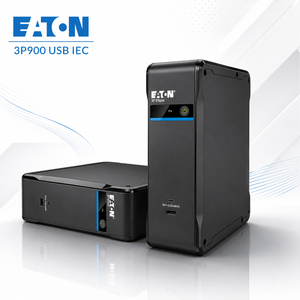
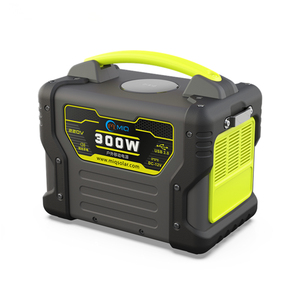
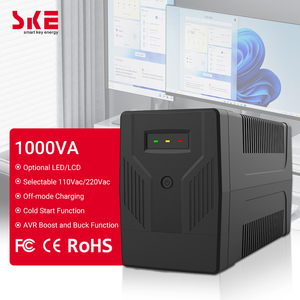
An in-depth evaluation of power engineering requirements, grid challenges, and vendor criteria for cellular base stations in the National Capital Region (NCR).
The telecommunications ecosystem in Metropolitan Manila—spanning dense commercial hubs like Bonifacio Global City (BGC), Makati Central Business District, Ortigas Center, and sprawling residential zones across Quezon City and Caloocan—represents one of the most demanding wireless environments in Southeast Asia. As major Network Operators (MNOs) including Globe Telecom, Smart Communications, and DITO Telecommunity accelerate 5G rollouts and 4G LTE densification, the underlying critical infrastructure—specifically telecom base stations, Remote Radio Units (RRUs), and Baseband Units (BBUs)—requires ultra-reliable power systems capable of operating seamlessly under intense tropical conditions.
In the Philippines, independent Tower Companies (TowerCos) such as EDOTCO Philippines, PhilTower, and ISOC edotco have transformed the base station market. Procurement teams and engineering contractors require OEM base station manufacturers and power supply vendors who deliver not merely off-the-shelf equipment, but fully adapted power architectures capable of mitigating frequent utility grid fluctuations, voltage sags, monsoon humidity, and typhoons that regularly strike the Luzon grid network.
The global telecommunications standard voltage of -48V DC remains the foundational architecture for active base station equipment deployed across Metro Manila. Using negative grounding reduces electrolytic corrosion on copper conductors in high-humidity tropical environments—a critical consideration for coastal and low-lying cities in NCR such as Navotas, Malabon, and Pasay.
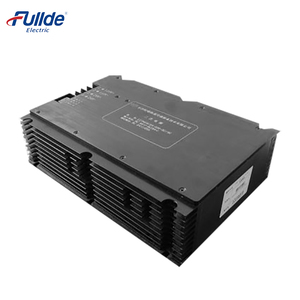
Modern base station power installations require modular rectifier shelves capable of scaling from 1kW for urban microcell nodes up to 12kW+ for macro tower shelter sites. These rectifiers convert dirty incoming AC grid power into pristine -48V DC power while simultaneously maintaining float charge on backup battery banks (LiFePO4 or VRLA) and supplying power directly to the radios mounted on tower structures.

Ambient temperatures in Manila frequently exceed 38°C during peak dry months, with relative humidity soaring above 85% during monsoon periods. Base station manufacturers supplying power conversion units must incorporate ambient operating ranges up to +65°C, conformal coated PCBs to prevent moisture ingress, and intelligent variable-speed cooling fans that adapt dynamically to thermal load.
Tailored power and enclosure configurations designed for distinct urban, suburban, and coastal telecommunication topographies.

High-density business districts like BGC, Makati, and Eastwood require compact, zero-footprint DIN-rail DC power supplies and outdoor IP65 micro-rectifiers mounted directly on lamp posts or building facades to serve high throughput subscriber traffic.
Get Catalog
High-rise residential and commercial roofs in Quezon City and Mandaluyong host heavy radio arrays. Lightweight modular 19-inch rack-mount hot-swap rectifier systems with integrated battery disconnects ensure simple elevator transport and rapid installation.
Get Catalog
Towers situated in Navotas, Malabon, and Laguna de Bay peripheral zones require elevated outdoor power cabinets fitted with IP66 sealed rectifiers, heat exchangers, and high-cycle LiFePO4 battery modules to survive extended storm surges.
Get CatalogQuantifiable power metrics engineered for critical communications networks across the Philippines.
Key technology transitions reshaping the procurement landscape for Philippine tower infrastructure.
Traditional Valve Regulated Lead-Acid (VRLA) batteries suffer rapid capacity loss under Manila's elevated ambient heat. Operators are rapidly replacing legacy battery strings with Lithium Iron Phosphate (LiFePO4) modules that deliver 4,000+ charge cycles, withstand higher ambient operating temperatures without thermal runaway, and offer 3x the energy density in 19-inch rack profiles.
With severe traffic congestion in Metro Manila making emergency maintenance dispatches ("truck rolls") costly and slow, TowerCos demand smart power systems with embedded web servers, SNMPv3, and Ethernet connectivity. Remote engineers can read individual circuit current, cycle remote load breakers, and diagnose battery health without physical site visits.
To combat elevated grid power costs (MERALCO electricity rates are among the highest in Asia) and lower operational carbon footprints, base station suppliers in Manila are delivering hybrid DC controllers. These units natively manage inputs from solar photovoltaic panels, diesel generators, and grid AC power to prioritize low-cost renewable power generation.
As independent TowerCos expand shared passive infrastructure, base station power distribution panels must support dual-bus and multi-tenant billing meters. Individual power channel monitoring allows TowerCos to accurately measure and bill power consumption for multiple MNO tenants hosted on a single tower.
Proven North American engineering combined with localized support for high-availability cellular networks.
Hot-swappable rectifier modules allow live system expansion and zero-downtime maintenance without taking the base station radio bus offline.
Embedded HTML browser server, SNMP MIB integration, and email alert traps keep network operations centers (NOC) connected 24/7.
Designed and manufactured to stringent ISO 9001 standards in North America with fully traceable, high-reliability components.
Parallel load-sharing configurations ensure continuous tower operation even if a single rectifier or AC utility feed experiences failure.

Full browser-based management interface for real-time control of output voltages, current limits, battery test sequences, and distribution breaker statuses.
Select the optimal power system configuration based on cell site category and capacity requirements in the Manila market.
| System Category | Nominal Voltage | Max Capacity Range | Primary Manila Application | Key Environmental Protection |
|---|---|---|---|---|
| Microcell Power Supply | -48V DC / 12V DC | 300W – 1.2kW | Street-level 5G Nodes, BGC Pole Mounts | IP65 Enclosure, Conformal Coated PCB |
| Rooftop Modular Rectifier | -48V DC | 2kW – 8kW (N+1) | High-rise Commercial Rooftops (Makati/Quezon City) | Active Power Factor Correction, Hot-Swap Shelves |
| Macro Tower Power System | -48V DC / 24V DC | 6kW – 24kW | Ground-based Lattice Towers (Bulacan / Rizal border) | Dual-Bus Distribution, Integrated LVD, Surge Suppressor |
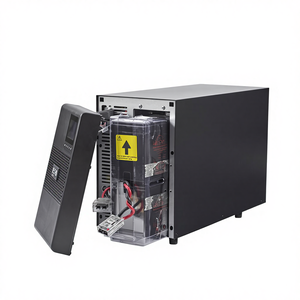
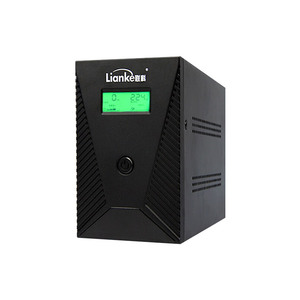
| Online Tower UPS (AC) | 220V AC Output | 1kVA – 3kVA | Base Station Server Racks & IP Transmission Gear | Double-Conversion, AVR Voltage Regulation |
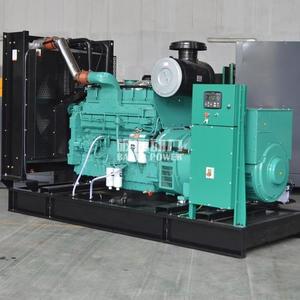
| Emergency Generator Standby | 220V / 380V AC | 15kVA – 100kVA+ | Core Exchange Nodes & Off-Grid Tower Backup | Soundproof Canopy, Auto Transfer Switch (ATS) |
Expert answers addressing compliance, customs, ambient resilience, and power design for the Philippine market.
Metro Manila's grid service (supplied primarily by MERALCO) operates on 220V AC single-phase or 230V/400V three-phase at 60Hz. Due to localized voltage sags during peak summer demand, base station power rectifiers should feature a wide input voltage window (90V AC to 300V AC) so the system delivers stable -48V DC without draining backup batteries during brownouts.
Coastal base station sites in NCR are exposed to high salt spray and atmospheric moisture. Our equipment utilizes conformal-coated circuit boards, stainless steel or powder-coated aluminum chassis fasteners, negative-ground DC topologies (-48V DC), and IP65/IP66 sealed outdoor enclosures with heat exchangers rather than direct ventilation fans.
Yes. Our intelligent power rectifiers feature fully customizable float, equalize, and Low Voltage Disconnect (LVD) voltage set points. They seamlessly interface with standard 48V nominal LiFePO4 battery modules equipped with internal Battery Management Systems (BMS) via dry alarm contacts or Modbus/RS485 communications.
All intelligent rectifiers and distribution panels include built-in Ethernet controllers supporting SNMPv1/v2c/v3, HTTPS web interface, and SMTP email alerts. This allows seamless integration into third-party network management systems such as SolarWinds, PRTG, or custom MNO NOC monitoring dashboards.
Yes. Our equipment is manufactured under ISO 9001 quality management standards and complies with international safety standards including CE, UL/CSA 62368-1, FCC Class B, and IEC standards recognised by the Bureau of Philippine Standards (BPS) and local building officials.
You can request a complete product catalog, single-line wiring diagrams, and formal bill-of-materials quotes by clicking the button below to connect directly with our application engineering sales team.
Consult with our lead power engineers today to receive complete technical specifications, load sizing assistance, and OEM catalog downloads.
Get Catalog