
Mission-critical power equipment engineered for high-altitude resilience, sub-zero Alpine endurance, and uninterruptible operational continuity across Swiss telecommunication sites.
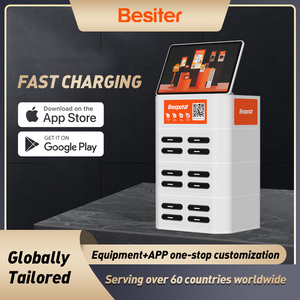
Modular battery bay platform equipped with a 10.1-inch monitoring interface. Ideal for field service teams and rapid mobile base station deployments in high-density Swiss urban zones.
Get a Quote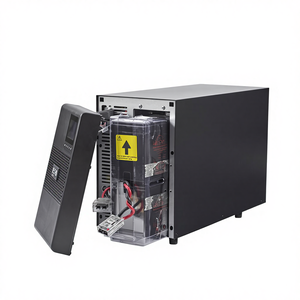
Double-conversion online UPS topology (9SX1000I standard) delivering zero-transfer voltage regulation for delicate Swiss 5G micro-cell controllers and edge compute nodes.
Get a Quote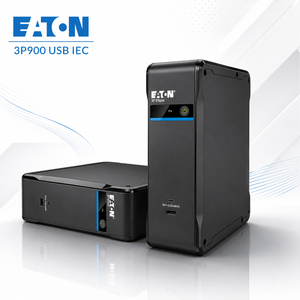
Ultra-quiet (<25dB) 97% high-efficiency standby power unit engineered for noise-sensitive Swiss residential sub-stations, indoor small cells, and critical monitoring control racks.
Get a Quote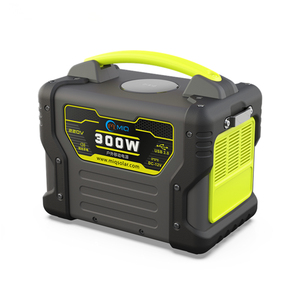
Heavy-duty Lithium Iron Phosphate (LiFePO4) energy system designed for rapid transport to isolated Alpine tower sites during severe winter grid disconnections.
Get a Quote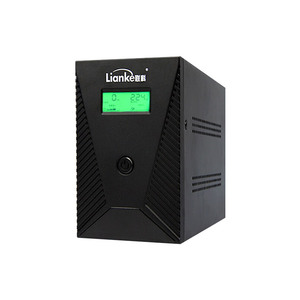
Compact, economic power protection module engineered for baseline transceiver monitoring equipment, IP security gateways, and auxiliary site telematics.
Get a Quote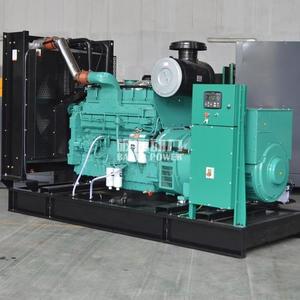
Industrial-grade emergency generator featuring Swiss compliance acoustic enclosures and automated transfer switching (ATS) for multi-tenant macro base stations.
Get a Quote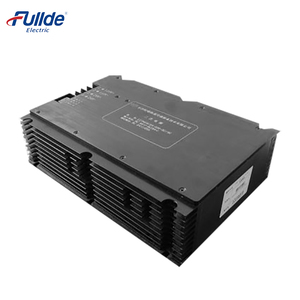
Specialized wide-input DC power supply customized for hybrid solar/wind telecom installations operating in rugged Swiss topography without direct grid access.
Get a Quote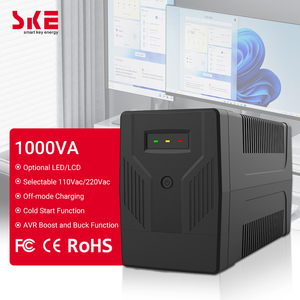
Integrated Automatic Voltage Regulation (AVR) standby supply protecting sensitive radio transceivers against grid sag, spikes, and brownouts across remote Cantonal networks.
Get a QuoteSwitzerland stands at the forefront of European telecommunication sophistication. With nationwide 5G coverage mandates, dense suburban micro-cell expansions in Zurich, Geneva, and Basel, alongside challenging Alpine transceivers spanning the Valais and Grisons ranges, the requirement for reliable cellular base station infrastructure has never been more critical. As a specialized base station power equipment manufacturer and OEM supply partner, our engineering framework directly addresses the operational realities of the Swiss telecommunications matrix.
Swiss network operators (including Swisscom, Sunrise, and Salt Mobile), alongside public safety communications platforms such as POLYCOM, operate under stringent regulatory standards governed by the Federal Office of Communications (BAKOM / OFCOM) and the Federal Inspectorate for Heavy Current Installations (ESTI). Base stations deployed across Switzerland must satisfy rigorous Electromagnetic Compatibility (EMC) thresholds, ultra-low acoustic emissions, and strict environmental preservation guidelines.
Furthermore, Switzerland’s geography presents extreme operational contrasts. Urban macro sites demand hyper-efficient 48V DC power rectifiers capable of handling high-density traffic throughput, while remote mountain towers require self-sufficient, climate-hardened standby power systems capable of surviving prolonged grid disconnects during winter avalanches and heavy snowfalls.

Information Gain Insight: Unlike standard European flatland base station deployments, Swiss cellular towers demand a dual-tier power strategy: high power-density 1U/2U hot-swap rectifiers for compact city shelters, coupled with wide-temperature LiFePO4 battery modules equipped with thermal management heaters for high-altitude stations operating above 2,000 meters elevation.
Our comprehensive base station power conversion, uninterruptible power supply (UPS), and intelligent DC distribution systems are purpose-built for five main Swiss operational sectors:
High-altitude installations in the Swiss Alps face sub-zero temperatures down to -30°C and severe grid fluctuations. Our customized LiFePO4 standby power units and isolated DC-DC converters incorporate automatic thermal management and remote SNMP monitoring over satellite or microwave backhaul, ensuring uninterrupted 48V DC power for remote radio heads (RRH).
In densely populated cities such as Zurich, Geneva, and Bern, space constraints dictate power hardware dimensions. Our 19-inch and DIN-rail ultra-compact DC power supplies deliver up to 97% energy efficiency within a minimal footprint, reducing municipal power consumption and keeping acoustic noise below Swiss residential night-time caps (<25dB).
Switzerland’s national safety radio system (POLYCOM) demands absolute mission-critical reliability. Our N+1 and N+2 redundant online tower UPS systems (1-3KVA) and dual-bus DC distribution panels guarantee that even in the event of a total primary power grid failure, emergency services communication channels remain 100% operational.
Along the extensive Swiss Federal Railways (SBB CFF FFS) tracks, base stations power GSM-R and ETCS Level 2 signalling transceivers. Our isolated DC-DC converters and heavy-duty standby units withstand high mechanical vibration, electrical surge currents, and harsh catenary interference.
Navigating the Swiss base station market requires deep compliance alignment with localized technological and legislative shifts:

Swiss base station operators are systematically phasing out traditional Valve-Regulated Lead-Acid (VRLA) batteries in favor of smart Lithium Iron Phosphate (LiFePO4) chemistry. LiFePO4 offers 3x the cycle life, superior energy density per kilogram (critical for mountain transport by helicopter or cable vehicle), and wide thermal tolerance without rapid degradation.
Under Switzerland’s Energy Strategy 2050 framework, corporate energy waste is heavily scrutinized. Telecom rectifiers and power conversion units must meet dynamic eco-mode standards, operating at >96% to >97% conversion efficiency across partial load profiles (20% to 80% load curves), thereby reducing thermal dissipation and HVAC cooling power overhead at remote shelters.
Given the labor costs and logistical complexity of dispatching field engineers up Swiss mountain passes, base station power supplies must integrate embedded HTML web servers and SNMP v2c/v3 telemetry interface modules. Real-time reporting of phase voltages, individual load circuit currents, battery state-of-health (SoH), and ambient shelter temperatures allows preventive maintenance without physical site dispatches.
Since 1986, our manufacturing enterprise (Innovative Circuit Technology / ICT partnership framework) has specialized in single-minded engineering: converting, backing up, distributing, and monitoring low-voltage DC and AC power for critical communications infrastructure worldwide.
We do not operate as a third-party reseller; we are a direct hardware design authority and precision factory partner. Our engineering facility maintains end-to-end control over schematic capture, multilayer PCB layout, high-frequency transformer winding, automated SMT assembly, conformal coating application, and environmental stress screening (ESS).


Our intelligent power hardware exposes full telemetry down to individual load breaker outputs. Network Operations Centers (NOC) in Switzerland can monitor live power draw, reset locked transceivers via remote power cycling, execute automated load shedding during prolonged outages, and receive immediate alerts before a low-voltage battery disconnect event occurs.
The following engineering guide illustrates typical technical parameters across our primary product platforms recommended for Swiss procurement managers and telecommunications system integrators:
| System Architecture | Nominal Output | Efficiency / Conversion | Alpine Thermal Range | Primary Swiss Application Fit |
|---|---|---|---|---|
| Modular Hot-Swap Rectifier Shelves | 48V DC (Adjustable 44-58V) | > 96.5% Ultra-High Efficiency | -30°C to +65°C | 5G Macro Base Stations, Multi-Operator Shared Towers |
| Online Double-Conversion Tower UPS | 230V AC ± 1% (Pure Sine) | 90% - 97% Eco Mode | -15°C to +50°C | POLYCOM Emergency Radio, Edge Compute & Core Racks |
| Compact DIN-Rail Power & Charger Units | 12V / 24V / 48V DC | > 92% High Efficiency | -25°C to +70°C | Fiber Distribution Hubs, Small Cell Outdoor Cabinets |
| Isolated DC-DC Converters | 24V to 48V / 48V to 12V | > 90% Galvanic Isolation | -30°C to +60°C | SBB Railway Signalling & Mixed Voltage Legacy Racks |
| Intelligent Dual-Bus Distribution Panels | 12V / 24V / 48V DC (200A Max) | < 0.5W Metering Loss | -20°C to +60°C | Dual-Feed (A/B) Redundant Telecom Shelters & NOCs |
| LiFePO4 Standby Battery Modules | 48V Nominal (50Ah / 100Ah) | 99% Round-Trip Charge | -20°C to +55°C (Heated) | High-Altitude Off-Grid & Solar Hybrid Base Stations |
The standard DC bus voltage across modern 4G/5G base stations in Switzerland is 48V DC (negative ground or floating). However, legacy microwave links, local land mobile radio (LMR) equipment, and railway telematics often utilize 12V DC or 24V DC. Our product lineup covers all three nominal voltages, featuring step-up and step-down isolated DC-DC converters to allow multi-voltage equipment integration within a single cabinet.
High altitude (>2,000 meters) presents reduced air density, impacting thermal dissipation, alongside severe sub-zero temperatures. Our Alpine-spec power platforms feature derated thermal components, heavy-duty conformal coating on all internal PCBs to prevent condensation short circuits, and intelligent heating elements integrated into our LiFePO4 battery enclosures to ensure charge acceptance down to -30°C.
Yes. All ICT Intelligent Series power supplies and distribution panels feature embedded Ethernet controllers supporting standard SNMP v1, v2c, and v3 protocols. They seamlessly export MIB files into existing Enterprise Network Management Systems (NMS) such as SolarWinds, PRTG, or proprietary operator dashboards, enabling real-time site telemetry and automated traps.
In an N+1 system, multiple power modules share the operational load evenly. If one module experiences a fault, the remaining modules instantly absorb the load without output voltage drop or interruption. Maintenance technicians can remove the damaged module and insert a replacement while the site remains live—eliminating scheduled downtime and reducing field service repair durations.
We work directly with Swiss system integrators, telecom contractors, and regional distributors across Zurich, Geneva, Bern, and Lugano. Factory orders are pre-configured to client voltage and rack specs prior to shipment, accompanied by comprehensive test reports, customs documentation, and full CE/ROHS compliance certificates for smooth clearance into the DACH region.
Consult directly with our base station power application engineers. Submit your load budgets, site constraints, and delivery timelines for custom factory pricing.