
Direct-from-factory power architecture designed for uninterrupted autonomy, remote monitoring, and rigorous industrial continuous duty cycles.

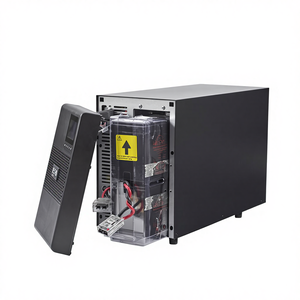
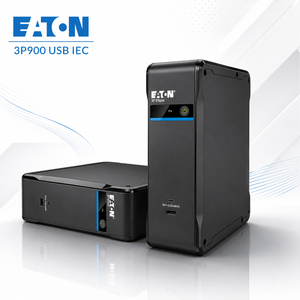
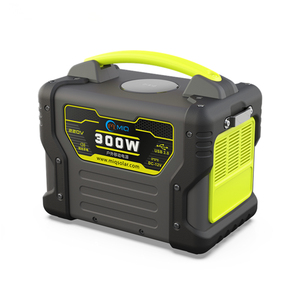
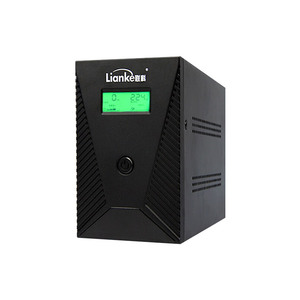
In an era defined by 5G densification, mission-critical Land Mobile Radio (LMR), and remote industrial IoT deployments, grid independence and continuous power delivery have become paramount. Telecom operators, public safety dispatch centers, and remote facility engineers face an unprecedented challenge: managing increasing power consumption at the edge while simultaneously lowering site operational expenses (OpEx) and mitigating downtime risks. Power disruption at an isolated communication tower or public safety base station leads to immediate financial loss, compromised critical response, and severe SLA penalties.
Selecting top-tier tower power factories & suppliers requires looking far beyond basic capacity metrics. World-class original equipment manufacturers (OEMs) design holistically—incorporating modular switch-mode rectifiers, intelligent DC-to-DC converters, dynamic battery management systems (BMS), and remote Ethernet-based monitoring. By transitioning from legacy, unmanaged standalone UPS units to integrated, remote-managed DC power plants, site operators achieve continuous operational visibility and complete power resiliency.

Traditional AC power topologies require multiple power conversion stages (AC to DC, DC to AC), with each stage introducing thermal losses and potential points of failure. Modern communication towers operate primarily on nominal 12 VDC, 24 VDC, and 48 VDC buses. Direct DC distribution eliminates inverter conversion losses, delivers higher energy efficiency, and allows seamless, direct integration with secondary battery strings (such as LiFePO4 or VRLA) and renewable energy inputs (solar/wind).
Advanced tower installations standardise on N+1 hot-swappable rectifier shelves. This architecture ensures that if a single power module suffers an internal fault, adjacent modules automatically scale up current delivery to absorb the load without introducing a single millisecond of voltage drop or interrupting site operations.
Four decades of engineering specialized power solutions for mission-critical, harsh-environment remote sites.
Every system undergoes rigorous end-to-end engineering, firmware development, and automated stress-testing at our North American headquarters. Traceable hardware component sourcing guarantees zero unverified supply chain risks.
Scale system capacity dynamically as site bandwidth grows. Swap out failed rectifiers live while the bus remains continuously energized—eliminating maintenance service windows and site dispatch downtime costs.
Full remote control from any desktop web browser. Integrated SNMP v1/v2c/v3 traps seamlessly feed existing Network Operations Center (NOC) dashboards, alerting technicians prior to battery exhaustion or grid failure.
Precision temperature-compensated float charging, low-voltage load disconnect (LVD), and automatic battery health testing maximize battery service life and protect remote capital investments against deep discharge damage.
As telecom networks transition toward edge micro-data centers, tower site power equipment is undergoing a massive transformation. Engineering teams must evaluate suppliers based on their technical roadmap alignment with the following key industry developments:

Legacy Lead-Acid and Gel batteries are rapidly being phased out in favor of Lithium Iron Phosphate (LiFePO4) chemistry. LiFePO4 offers 3x the cycle life, superior performance at elevated ambient temperatures (+60°C), and a 70% weight reduction—critical for pole-mounted and space-constrained tower base shelters.
Modern distribution panels are moving from passive thermal-magnetic breakers to intelligent solid-state distribution units (PDUs). Engineers can program multi-stage load-shedding parameters over Ethernet: during prolonged commercial AC outages, non-essential secondary radios are powered down, prioritizing critical 911 dispatch and emergency backhaul links.
Next-generation tower power rectifiers utilize Gallium Nitride (GaN) and Silicon Carbide (SiC) semiconductors. These materials allow switching power supplies to operate at higher frequencies with reduced internal switching losses, pushing rectifier electrical efficiency beyond 96.5% while shrinking 1U rack-mount enclosure footprints.
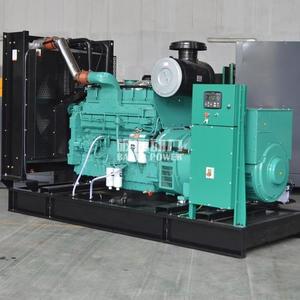
Off-grid and weak-grid towers are increasingly integrating hybrid power systems. Top suppliers are manufacturing smart controller platforms capable of dynamically blending commercial grid AC, solar PV arrays, wind turbines, and backup standby diesel generators to minimize fuel usage and lower site carbon footprints.

Key procurement methodologies supply chain directors must adopt to ensure network stability and capital optimization.
Procurement strategies have evolved from seeking the lowest initial hardware unit price to evaluating Total Cost of Ownership (TCO). High-efficiency rectifiers and remotely controllable distribution units save thousands of dollars per site annually by preventing unneeded truck dispatches ("truck rolls") and minimizing continuous thermal dissipation costs.
Operators are moving away from proprietary, single-purpose power bricks. Modern sourcing requires unified power platforms where a single modular shelf architecture accepts 12V, 24V, or 48V modules, simplifying spare parts inventory logistics across nationwide network footprints.
Leading telecom firms demand direct access to factory application engineers rather than dealing solely with catalog brokers. Custom wire harness configurations, pre-set voltage thresholds, and factory-flashed enterprise network parameters significantly compress field commissioning schedules.
Match your site electrical requirements with our core factory product categories.
| Platform Category | Nominal Bus Voltages | Typical Output Range | Efficiency Rating | Key Operational Feature | Target Deployment Scenario |
|---|---|---|---|---|---|
| DC Power Systems | 12V / 24V / 48V DC | 700W – 12.0kW | > 95.5% | Hot-Swap N+1 Rectifiers & Integrated PDU | Multi-tenant LMR towers, cellular base stations |
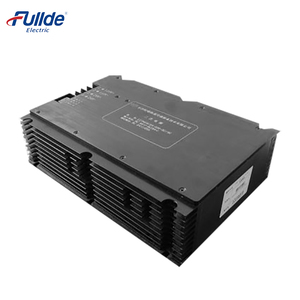
| DC Power Modules | 12V / 24V / 48V DC | 700W – 1500W per module | 96.0% | Active Load Sharing & Live Replacement | Capacity expansion in modular power shelves |
| Single/Dual Bus Distribution | 12V / 24V / 48V DC | 100A – 300A Continuous | > 99.1% | Per-circuit current telemetry & breaker status | A/B redundant feed distribution panels |
| DIN-Rail Power Supplies | 12V / 24V / 48V DC | 100W – 480W | 93.5% | Compact rail mount with integrated battery charger | Small cell enclosures, fiber junction huts, SCADA |
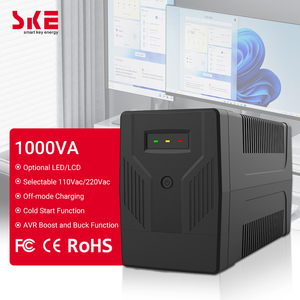
| Pure Sine Wave Inverters | 24V / 48V DC Input | 1000VA – 3000VA AC | 91.0% | Low distortion (<3% THD) continuous AC | Powering AC test equipment from site DC bus |
| Isolated DC-DC Converters | Step Up / Step Down | 100W – 1000W | 92.0% | Galvanic input/output isolation | Mixed-voltage equipment on legacy sites |
Direct responses from our senior application engineering team regarding site design, integration, and procurement.
Need assistance sizing your DC power shelf, calculating battery backup autonomy, or specifying custom distribution panels? Speak directly with our technical engineering team today.
Contact Us