Engineered for mission-critical telecommunications, edge data infrastructure, emergency response networks, and industrial automation. Inspect our top-recommended remote power systems below.

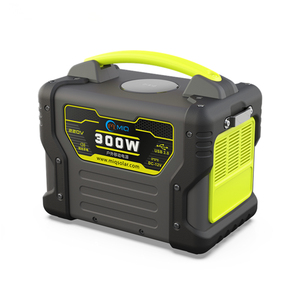
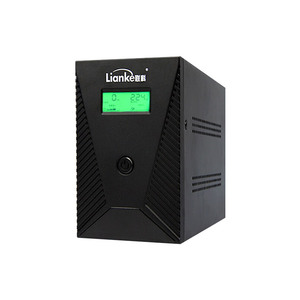
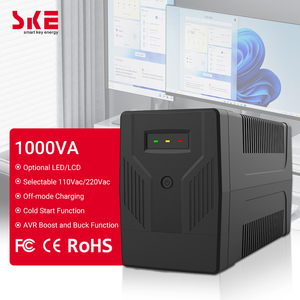
In modern critical infrastructure, a site outage is never measured in simple downtime—it is measured in lost public safety communications, dropped SCADA telemetry, and expensive truck rolls to inaccessible locations.
Deploying remote power systems across unattended communication towers, fixed wireless broadband hubs, pipeline control cabinets, and off-grid sub-stations requires a fundamental shift from off-the-shelf UPS backup to high-reliability, intelligent DC power conversion. As global networks expand into harsh thermal and geographic environments, selecting a qualified remote power supplier demands strict adherence to rigorous engineering standards, verified MTBF metrics, and comprehensive remote management capability.
Core Architectural Axiom: True power reliability is achieved when power conversion, battery management, load distribution, and IP telemetry operate as a single unified ecosystem with zero single points of failure.
This whitepaper details the structural requirements, procurement evaluation frameworks, and technical evolutions governing low-voltage DC power systems, modular hot-swap rectifiers, sine-wave inverters, and emergency standby generation for tier-one industrial and telecom applications.

With a specialized focus cultivated since 1986, ICT engineered the industry standard for intelligent DC power conversion, remote monitoring, and modular backup systems designed and built in North America.
All design, firmware development, assembly, and quality assurance are executed under one roof in Langley, BC, Canada—ensuring strict component traceability and immediate engineer-to-engineer technical support.

Deploy scalable power rectifiers with integrated active current sharing. Replace or expand power modules while the main DC bus remains fully energized without dropping critical client loads.

Embedded web servers and native SNMP v1/v2c/v3 support allow full browser control, remote circuit power cycling, voltage regulation, and precise thermal alarm threshold monitoring.

Specified by emergency service agencies, 911 dispatch centers, and utility operators worldwide for applications where utility mains failure is a non-negotiable operational reality.

To eliminate configuration guesswork during site planning, review the comparative technical criteria established by our application engineering team across core remote power topologies.
| Topology Platform | Nominal Bus Voltages | Primary Target Applications | Redundancy / Protection | Remote IP Control |
|---|---|---|---|---|
| Modular DC Power Systems | 12V, 24V, 48V DC | Multi-tenant telecom sites, P25 radio repeaters, broadband towers | N+1 Hot-Swap Integrated LVD & fuse/CB distribution | Embedded HTML Web GUI & SNMP v1/v2c/v3 |
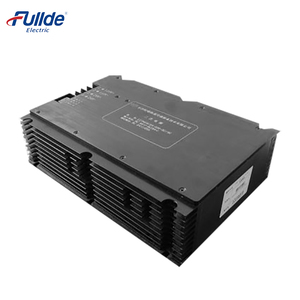
| Hot-Swap Rectifier Modules | 12V, 24V, 48V DC | Live capacity expansion in modular rack shelf assemblies | Active load sharing with live module insertion | Monitored via intelligent system controller |
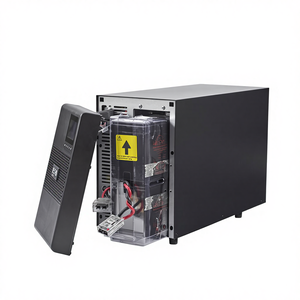
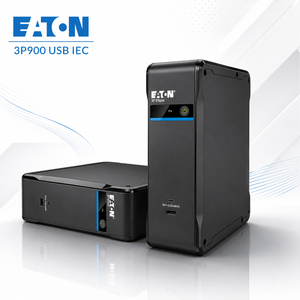
| Online Tower UPS Systems | 120V / 230V AC Output | On-site server racks, enterprise computer monitoring stations | Zero transfer time double-conversion standby | Optional network management card (NMC) |
| DIN-Rail Power & PDU | 12V, 24V, 48V DC | Compact roadside cabinets, SCADA RTUs, fiber enclosures | DIN-mount LVD, over-current circuit protection | Ethernet-enabled DIN PDU models available |
| Pure Sine Wave Inverters | 24V/48V DC to 120V AC | Sensitive AC instruments operating at negative 48V DC sites | Over-voltage, thermal & short-circuit shutdown | Form-C dry contact alarm outputs |
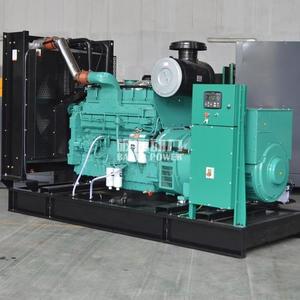
| Heavy Duty Generators | 230V / 400V 3-Phase AC | Factory buildings, multi-day prime standby site power failure | Auto-transfer switch (ATS) & emergency governor | RS485 / Modbus remote engine telemetry |

Unattended sites in mountain passes, offshore stations, or dense rural towers present extreme physical access challenges. Dispatching a maintenance vehicle simply to power-cycle a unresponsive network switch or adjust battery float voltage incurs severe operational expenditure.
ICT Intelligent DC systems resolve this challenge by integrating secure network telemetry directly into the DC conversion chassis:
As industrial electrification, 5G standalone densification, and decentralized microgrids accelerate, procurement officers and systems engineers must design power networks capable of adapting to five key industry transformations.
Legacy VRLA and Gel batteries are rapidly being replaced by Lithium Iron Phosphate (LiFePO4) chemistry due to its 3x higher cycle life, superior thermal tolerance, and compact footprint. Procurement strategies now mandate power supplies featuring adjustable float/absorption charge curves and customized Low Voltage Disconnect settings tailored to LiFePO4 Battery Management Systems (BMS).
Remote telecommunication sites are increasingly powered by hybrid architectures combining solar PV arrays, wind turbines, backup battery strings, and auxiliary standby diesel generators. Intelligent power management systems now serve as the primary orchestration hub, automatically selecting the most cost-effective power source while maintaining DC bus stability.
Next-generation rectifiers leverage Gallium Nitride (GaN) and Silicon Carbide (SiC) semiconductors. This transition yields conversion efficiencies exceeding 96%, substantially reduces waste thermal output in enclosed cabinets, and allows higher power density in compact 1U rack dimensions.
With wildfire risks, severe freezing, and coastal storm surges on the rise, buyers prioritize power hardware with wide operating temperature ranges (-30°C to +60°C), conformal-coated printed circuit boards (PCBs), and hardened fanless convection cooling options for corrosive environments.
Static periodic maintenance schedules are giving way to predictive analytics. Modern intelligent power supplies export high-resolution telemetry data over SNMP or MQTT, allowing machine learning models to detect subtle impedance changes and predict battery failure months before an actual outage occurs.
Network operators are consolidating supplier lists in favor of manufacturers offering complete ecosystem interoperability—from primary AC-DC rectifiers and secondary DC-DC converters to DIN-rail distribution and remote management software modules.
See how tier-one operators utilize ICT remote power systems to guarantee network continuity under severe operational demands.
A major fiber broadband provider standardized on ICT DIN-rail power supplies with integrated battery chargers across 450 remote distribution huts, achieving complete remote visibility and eliminating unscheduled site visits.
By installing dual-bus monitored DC distribution panels and N+1 modular rectifiers, a fixed wireless ISP guaranteed uninterrupted power during sub-zero winter storms while managing load priorities remotely.
Engineered hot-swap 48V DC power system deployed at a remote satellite ground station, delivering low-noise, highly regulated DC power to uplink amplifiers with seamless SNMP NOC tracking.
Get verified engineering answers to common technical queries regarding DC voltage configuration, battery management, network telemetry, and procurement logistics.
Whether you are engineering a multi-channel LMR repeater facility, expanding fixed wireless broadband access, or deploying roadside SCADA cabinets, our power application specialists are ready to review your single-line diagrams and recommend optimized hardware configurations.