
In modern data communications, Land Mobile Radio (LMR), 5G small cell deployment, and industrial automation, power delivery is the foundation of network survival. As a premier global rackmount power manufacturer and original equipment factory, we engineer intelligent, continuous-duty power conversion architectures that keep infrastructure online when grid failure occurs.
Explore our top-tier recommended uninterruptible power supplies, portable energy hubs, and industrial standby systems designed for uncompromising reliability.

From single-site telecom repeaters to multi-megawatt hyperscale data center infrastructure, our direct engineering control guarantees traceable quality, firmware integrity, and maximum power efficiency.
Built explicitly for 24/7 continuous operations across public safety, emergency dispatch networks, and remote cellular towers with zero allowance for un-scheduled downtime.
N+1 redundant modular rectifier shelves enable online maintenance and live hot-swapping of power units without interrupting live loads on the bus bar.
Embedded web server with SNMP v3 telemetry integration, supporting real-time per-circuit load metering, temperature compensation, and remote power cycling via web browsers.
Integrated R&D, direct component sourcing, and stringent manufacturing protocols ensure short procurement lead times and immediate engineering-level technical support.
An engineering analysis of evolving buying requirements, technological shifts, and sustainability mandates across industrial power procurement networks.
Global procurement teams in telecom and data center sectors are rapidly transitioning away from legacy ACUPS topologies toward unified 48V DC power distribution platforms. This trend is driven by the necessity to eliminate double-conversion losses (which account for 6%–12% energy degradation in traditional AC UPS setups) and reduce copper cabling gauge requirements. Higher voltage DC distribution at the rack level directly lowers I²R thermal dissipation, shrinking cooling operational costs (OPEX) while maximizing rack utilization.
While sealed lead-acid (VRLA) batteries historically dominated rackmount UPS backup systems, strategic procurement in 2025 and beyond centers almost exclusively on LiFePO4 battery chemistry. Lithium Iron Phosphate offers 3x to 5x the cycle life (over 4,000 cycles at 80% DOD), a significantly broader operating temperature footprint (-20°C to +65°C), and 60% lower total weight. The reduction in maintenance truck-rolls and battery replacement frequency yields a dramatically lower 10-year Total Cost of Ownership (TCO).
Procurement directors are no longer purchasing passive power strips or static rectifiers. Modern RFP requirements mandate Ethernet-enabled micro-granular PDU distribution. Facilities require per-circuit current metering, programmable sequential load shedding, and automated ping-reboot capabilities for remote routers and radios. This intelligence allows NOC engineers to resolve network freeze-ups remotely without dispatching field technicians, drastically optimizing operational efficiency.
Capital expenditure (CAPEX) optimization has prioritized modular rackmount power shelves. Factories that supply hot-swappable 700W to 3000W rectifier units allow network architects to deploy minimum initial capacity while reserving space for live, online expansion. Adding power modules into an energized chassis guarantees N+1 redundancy without risking downtime during site expansion.
How advanced power electronics, wide-bandgap semiconductors, and intelligent telemetry are revolutionizing industrial rackmount power design.
Integration of Gallium Nitride (GaN) and Silicon Carbide (SiC) switching transistors enables power rectifiers to operate at switching frequencies exceeding 500 kHz. This yields over 96% efficiency ratings in a ultra-compact 1U rack profile.
Next-generation rack systems embed microcontrollers that monitor internal electrolytic capacitor health, thermal degradation, and battery internal resistance, warning NOC operators weeks before a potential hardware failure occurs.
Modern industrial power shelves are engineered to accept hybrid power inputs—seamlessly blending traditional AC grid power with direct DC solar PV inputs to reduce grid dependence and carbon footprints.
Comprehensive baseline metrics for network engineers and procurement teams choosing between power architecture topologies.
| Platform Category | Nominal Bus Voltage | Efficiency Rating | Form Factor / Mounting | Primary Application Fit | Monitoring Protocol |
|---|---|---|---|---|---|
| Modular DC Power Systems | 12V / 24V / 48V DC | 95.5% – 97.2% | 1U / 2U / 4U 19" Rack Shelf | Telecom Towers, LMR Repeaters, Central Offices | HTTP/HTTPS Web UI, SNMP v1/v2c/v3, MQTT |
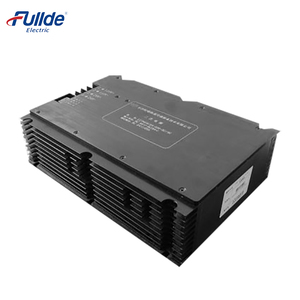
| Hot-Swap Rectifier Modules | 48V DC (Adjustable) | 96.0% | Hot-Insertable Cassette | N+1 Capacity Scaling & Redundancy Expansion | CAN-Bus Internal, Centralized Controller |
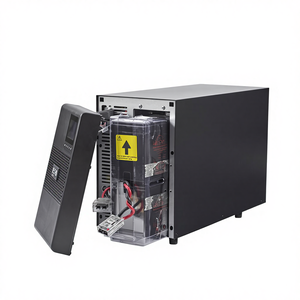
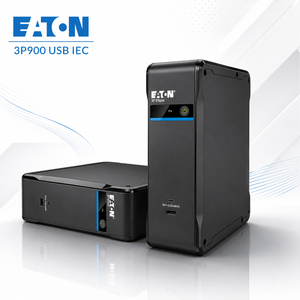
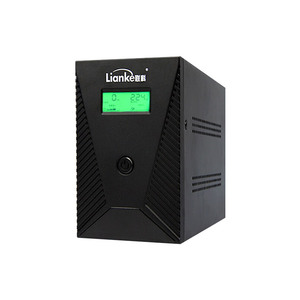
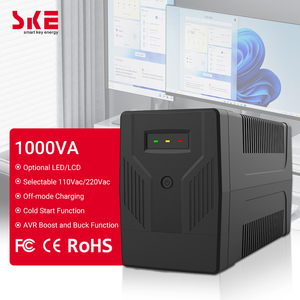
| Online Double-Conversion UPS | 120V / 230V AC | 92.0% – 94.5% | Tower / 2U Convertibly Mounted | Critical Server Racks, Medical Equipment, Data Hubs | USB, RS232, Optional Network Card |
| DIN-Rail Power Supplies | 12V / 24V / 48V DC | 89.0% – 93.0% | Standard TS-35 DIN-Rail | Industrial Automation, Fiber Huts, SCADA Cabinets | Relay Contact Alarms, Modbus RTU |
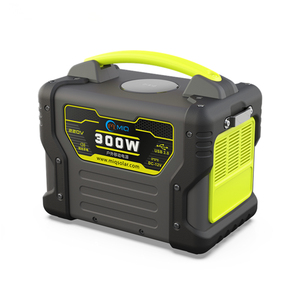
| LiFePO4 Mobile Standby Station | 220V AC / 12V DC | 94.0% | Rugged Portable Casing | Field Emergency Standby, Remote Maintenance | LCD Screen, Bluetooth App Telemetry |
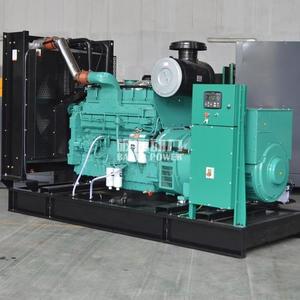
| Heavy-Duty Industrial Diesel Generator | 400V Three Phase / 230V AC | Fuel-Optimized Efficiency | Skid Mounted / Soundproof Canopy | Factory Backup Power, Data Center Prime Standby | DeepSea / ComAp Automated Controller |
Detailed answers provided by our engineering team to common sourcing, integration, and operational queries.
Our enterprise rackmount power system platforms natively support all three primary industry nominal voltages: 12 VDC, 24 VDC, and 48 VDC. Nearly all rectifier models and power modules feature adjustable output voltage rails via software control or potentiometer trimming. This allows network engineers to match precise battery float/absorption charging profiles (for LFP, AGM, or Gel batteries) and compensate for line drop over long DC cable runs to remote active loads.
N+1 redundancy operates by adding at least one excess power module beyond the calculated peak load requirement of the site (for instance, utilizing four 700W modules to support a 2100W load). The modules operate in active current-sharing mode. If a single rectifier module fails, the remaining modules immediately absorb the load without any voltage transient or transfer time. Furthermore, hot-swappable architecture allows site technicians to remove and replace the damaged module while the system chassis remains energized and online.
Our intelligent DC power supplies and distribution panels feature embedded Linux-based web servers and network controllers. Operators can access the system via standard HTTPS web browsers or integrate telemetry into enterprise Network Management Systems (NMS) such as SolarWinds, PRTG, or Zabbix via SNMP v1/v2c/v3 traps. Telemetry includes live output voltage, total load current, individual breaker current draw, ambient temperature, battery state-of-charge, and immediate email or SNMP alarm notifications upon threshold breaches.
A single bus distribution panel channels power from one unified DC input source across all output circuit breakers or fuses, providing straightforward power distribution for standalone battery back-up setups. A dual bus distribution panel features two electrically isolated input buses (Bus A and Bus B) inside a single 1U or 2U chassis. This enables redundant dual-feed architecture to dual-power-corded server gear or allows two independent voltage rails (e.g., +24V and -48V) to be safely managed within the same enclosure.
Yes. As a direct design and manufacturing factory, we offer comprehensive OEM/ODM customization services. This includes custom backplane layout design, specific circuit breaker/form-factor configurations, specialized mechanical bracket modifications for non-standard cabinets, custom branding/screen printing, and tailored firmware protocols (such as custom SNMP MIBs or Modbus map configurations) designed to integrate seamlessly into your proprietary hardware ecosystem.
Low Voltage Disconnect (LVD) is an automated protection mechanism integrated into our intelligent power systems. During prolonged utility grid blackouts, the standby battery bank supplies site power. If the battery voltage drops below a critical safety threshold (e.g., 42V on a 48V nominal system), the electronic LVD contactor automatically disconnects non-essential or total loads. This prevents catastrophic deep-discharge damage to the battery cells, preserving battery lifespan and guaranteeing the battery can be successfully recharged once grid power is restored.