Engineering-Grade Station Power & Backup Solutions
Export-certified uninterruptible power supplies, LiFePO4 energy stations, and industrial backup systems for global telecom, utility, and mission-critical sites.
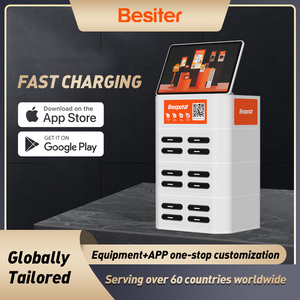
Besiter 12-Slot 22.5W Fast Charging Portable Power Station
Integrated 10.1" interactive screen, high-density Li-Polymer cells, universal plug support for smart commercial hubs.
Send an Inquiry
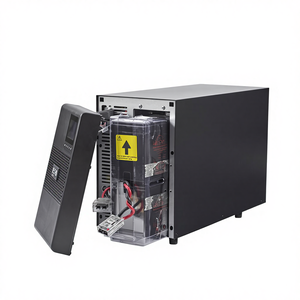
1-3KVA Online Tower Regulated UPS (1000VA/900W)
Double-conversion online architecture, zero transfer time, precise power failure standby protection for critical servers.
Send an Inquiry
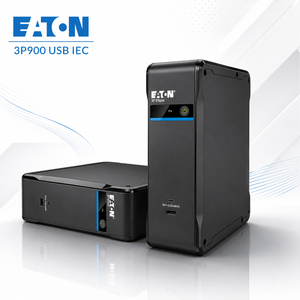
Single Phase Standby Industrial Computer UPS 12V 9Ah
97% high-efficiency energy conservation, replaceability battery tray, ultra-quiet noise level below 25dB.
Send an Inquiry
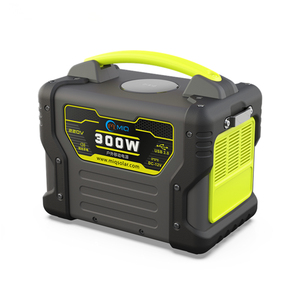
LiFePO4 Emergency Mobile Power Supply 220V
High-safety Lithium Iron Phosphate chemistry, ruggedized portable chassis, high-peak overload output for field operations.
Send an Inquiry
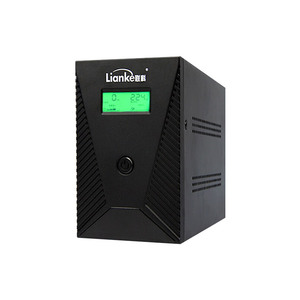
LK 800VA/480W Offline Standby Monitoring UPS
Automatic voltage regulation (AVR), surge filtering protection, engineered specifically for industrial security & CCTV sites.
Send an Inquiry
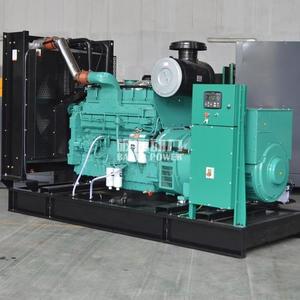
Heavy-Duty Diesel Generator Station Backup Power
High-displacement continuous output power plant for factory buildings, utility substations, and critical heavy industry.
Send an Inquiry
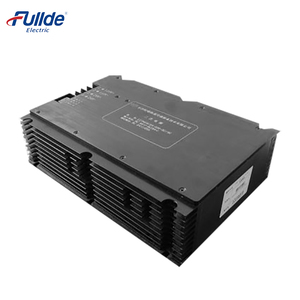
High-Tech Custom Special Purpose Emergency Station
Tailored high-voltage DC & AC output specs, engineered for specialized medical, defense, and telecom applications.
Send an Inquiry
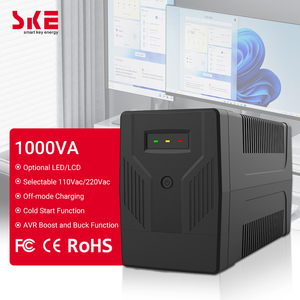
SKE 1000VA/600W Offline Standby UPS with AVR
Internal 12V 9Ah AGM battery backup, fast switching time, reliable power regulation for mission-critical automation nodes.
Send an Inquiry
1. Technical Architectural Overview: The Evolution of Industrial Station Power Systems
Modern industrial station power systems represent the backbone of global utility grid stability, telecommunication continuity, and automated manufacturing operational resilience. Historically, station power relied on passive, single-bus AC standby systems or bulk flooded lead-acid battery banks with minimal telemetry. Today, the global energy transition and grid volatility demand software-defined, modular, and intelligent DC/AC power systems capable of instantaneous line transfer, dynamic load shedding, and predictive telemetry over secure remote management protocols.
As a leading Chinese station power manufacturer and global exporter, our engineering frameworks integrate advanced high-frequency switching conversion, wide bandgap (WBG) power semiconductors such as Silicon Carbide (SiC) and Gallium Nitride (GaN), and real-time state-of-health (SOH) battery management systems (BMS). These innovations guarantee 97%+ operating conversion efficiency, reduce thermal dissipation by up to 35%, and deliver N+1 hot-swappable module redundancy for zero-downtime maintenance cycles.
97.8%
Peak Conversion Efficiency
<2ms
Ultra-Fast Transfer Time
100k+
Global Field Deployments
Core Engineering Disciplines of Mission-Critical Power Architectures
Whether deploying Land Mobile Radio (LMR) repeaters, fiber optic distribution hubs, heavy-duty manufacturing control panels, or remote microgrids, system architects must optimize three fundamental power management pillars:
- Uninterruptible Double-Conversion Rectification: Continuously synthesizing clean output power from erratic AC sources, filtering harmonics, line surges, voltage sags, and frequency fluctuations.
- Smart Battery Autonomy Management: Multi-stage charging algorithms tailored for Lithium Iron Phosphate (LiFePO4) and advanced AGM chemistries, incorporating real-time cell balancing and low-voltage disconnect (LVD) safeguards.
- Unified Remote Network Management (Ethernet/SNMP): Embedded HTML microservers and SNMPv3 agents exposing telemetry down to individual distribution circuits, eliminating manual truck rolls.
Why Global System Integrators Partner With Our Manufacturing Hub
Decades of specialized power electronics production, domestic R&D control, and rigorous international quality compliance.
Modular & Scalable Hot-Swap Platforms
Engineered with plug-and-play power rectifiers and inverter modules. Add capacity incrementally without de-energizing the main bus, achieving true N+1 or N+2 hardware redundancy.
Global Export Certification & Compliance
Full regulatory adherence including ISO9001, CE, IEC 62040-1/2, UL 1778, RoHS, and UN38.3 lithium transportation safety standards for seamless cross-border customs clearance.
Advanced Smart BMS & Multi-Chemistry Support
Compatible with legacy lead-acid strings, VRLA, LiFePO4, and emerging solid-state chemistries. Automated thermal compensation prevents thermal runaway and extends cell lifespan.
2. Strategic Analysis: Future Procurement Trends in Station Power Systems (2025–2030)
Procurement executives and EPC contractors face unprecedented challenges driven by volatile grid supply, aggressive corporate decarbonization mandates, and the rapid deployment of edge computing and 5G/6G communication infrastructure. A comprehensive procurement audit reveals four overarching technological shifts shaping purchasing specs over the coming decade:
Trend 1: Transition from Lead-Acid to High-Safety LiFePO4 Energy Enclosures
While flooded lead-acid and AGM batteries dominated legacy installations due to low upfront expenditure, Lithium Iron Phosphate (LiFePO4) has officially reached Total Cost of Ownership (TCO) parity. LiFePO4 delivers 3,500 to 6,000 charge cycles at 80% Depth of Discharge (DoD), compared to fewer than 800 cycles for lead-acid. Combined with a 70% weight reduction and a footprint saving of up to 50%, global procurement agencies are establishing mandatory LiFePO4 transition clauses for all remote station power tenders.
Trend 2: AI-Driven Predictive Maintenance and Cloud Diagnostics
Passive alarm dry contacts are no longer adequate for high-availability sites. Enterprise buyers require edge-computing power controllers equipped with predictive AI algorithms. By analyzing microscopic shifts in internal cell resistance, ripple current signatures, and operating temperature profiles, smart station power units predict battery degradation up to 90 days before functional failure occurs.
Trend 3: Hybrid Microgrid Integration & Multi-Source Power Hubs
Station power architectures are rapidly evolving from simple grid-backup battery systems into multi-input energy hubs. Modern industrial stations seamlessly synthesize power from grid AC, solar photovoltaic arrays, wind generators, diesel gensets, and local battery storage simultaneously. MPPT (Maximum Power Point Tracking) solar charge controllers built directly into DC rectifier shelves enable green-priority powering, lowering utility power consumption during peak tariff windows.
Trend 4: Silicon Carbide (SiC) Power Electronics and Thermal Optimization
Next-generation high-frequency switching rectifiers utilizing SiC MOSFETs operate at significantly elevated switching frequencies with lower switching losses. This enables drastic reductions in magnetic component volume (transformers and inductors), producing ultra-compact 1U and 2U rack-mount rectifiers capable of delivering power densities exceeding 45W/in³ while maintaining ultra-quiet acoustic noise levels below 25dB.
Station Power Architecture Decision Matrix
Compare fundamental system specifications to select the correct technology stack for your operational constraints.
| Power System Architecture |
Primary Bus Voltages |
Typical Efficiency |
Maintenance Cycle |
Best-Fit Operational Scenario |
| Online Double-Conversion UPS |
100V - 240V AC / High-Voltage DC |
92.0% - 95.5% |
Annual Inspection |
Critical Data Servers, Telecom Switching Centers, CCTV Hubs |
| Modular Hot-Swap DC Systems |
12V, 24V, 48V DC |
96.5% - 98.2% |
Bi-Annual Remote Diagnostic |
LMR Repeater Towers, Microwave Backhaul, SCADA Automation |
| LiFePO4 Mobile Energy Stations |
12V DC, 110V/220V Pure Sine AC |
95.0% - 97.0% |
Minimal (BMS Managed) |
Field Utility Repair, Emergency First-Responder Command Posts |
| Heavy Diesel Generator Standby |
380V/400V/480V 3-Phase AC |
35.0% - 42.0% (Fuel Thermal) |
Monthly Engine Servicing |
Factory Base-Loads, Industrial Plants, Extended Grid Outages |
Frequently Asked Questions for Enterprise Station Power Procurement
Direct answers from our Senior Application Engineering Team regarding customization, lead times, and global field support.
What key parameters should be provided to receive an optimized OEM/ODM station power proposal?
To provide an accurate technical quote, our application engineers require: 1) Nominal load requirements (Watts/Amps) and peak surge factor; 2) Target nominal bus voltage (12V, 24V, 48V DC or 110V/220V AC); 3) Required battery backup autonomy runtime (e.g., 4 hours, 8 hours, 24 hours); 4) Environmental enclosure constraints (indoor 19-inch rack, outdoor IP65/NEMA 4X cabinet, ambient temperature extremes); and 5) Communication protocol requirements (SNMPv3, Modbus TCP, Dry Contacts).
How do modular hot-swappable rectifiers improve system availability compared to single-chassis UPS systems?
Modular hot-swappable platforms utilize parallel current-sharing power rectifiers in an N+1 or N+2 configuration. If a single rectifier module fails, the remaining active modules immediately assume the load without voltage dip or transfer interruption. The faulty module can be removed and replaced by field technicians in seconds without isolating power to critical connected loads, reducing Mean Time to Repair (MTTR) to near zero.
What international export certifications do your station power products carry?
Our manufacturing facility operates strictly under ISO 9001:2015 Quality Management and ISO 14001 Environmental Management standards. Standard production lines carry CE, IEC 62040-1/2, IEC 60950-1, UL 1778, FCC Class A/B, RoHS, and UN38.3 lithium battery transport compliance. Project-specific certification testing (such as marine DNV or seismic IEEE 693) can be performed upon request.
How does remote Ethernet monitoring operate across secure enterprise or telecom VPN networks?
Our intelligent station power products feature embedded HTTPS microservers supporting customizable user access levels, TLS encryption, and SNMPv1/v2c/v3 network protocols. Network administrators can monitor live bus voltages, output currents per branch, ambient temperature, and battery capacity. Additionally, individual distribution circuit breakers can be remotely power-cycled to reboot locked field equipment without dispatching physical maintenance teams.
What is the expected production lead time for bulk enterprise export orders?
Standard off-the-shelf power supplies, UPS units, and DIN-rail modules maintain a steady safety stock with lead times of 1 to 2 weeks. Custom OEM rack assemblies, high-capacity industrial LiFePO4 energy enclosures, or heavy diesel generator stations typical carry a manufacturing timeline of 3 to 5 weeks, including rigorous full-load factory acceptance testing (FAT) prior to shipment packaging.
Can your power systems operate reliably under high ambient thermal stress and dirty grid conditions?
Yes. Industrial station power modules are constructed with conformal-coated PCBAs, high-grade 105°C rated electrolytic capacitors, and heavy-duty transient surge suppression (Class II/III SPD). The operating temperature range spans -40°C to +75°C (with automatic thermal derating above 55°C), making them suitable for unconditioned outdoor enclosures in desert or tropical climates.
Consult With Our Senior Power Systems Engineers
Submit your site load profile, enclosure dimensions, and autonomy targets. Our engineering team will supply a complete technical drawing, single-line schematic, and factory-direct commercial quotation within 24 hours.