
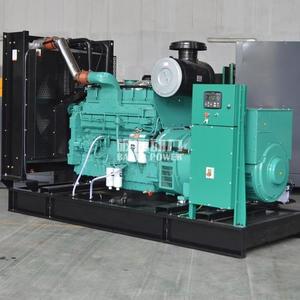
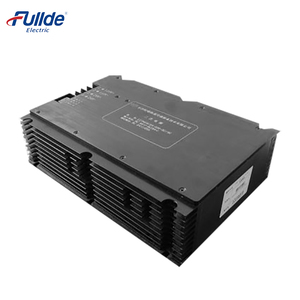
Featured OEM power platforms engineered for critical telecom, industrial automation, monitoring systems, and mobile emergency backup infrastructure.

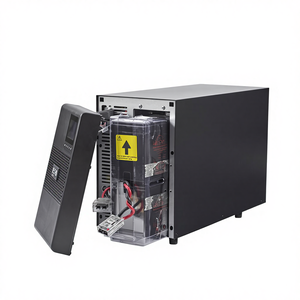
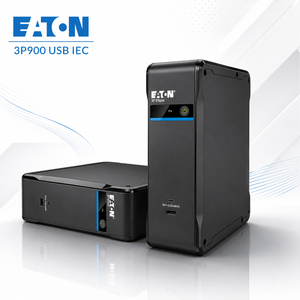
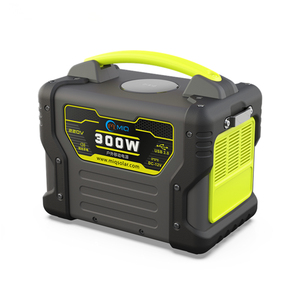
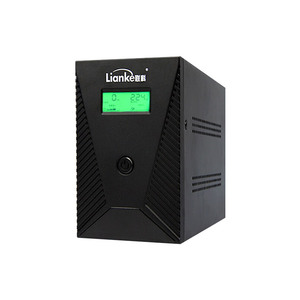
In modern industrial automation, telecommunications infrastructure, land mobile radio (LMR) networks, and critical energy sites, the Switching Power Supply (SMPS) is no longer just a passive component—it is the vital backbone of operational uptime. Transitioning from legacy linear power units to advanced high-frequency switching power converters has unlocked unprecedented efficiency gains exceeding 96%, drastic thermal reduction, and compact modular footprints.
However, global procurement teams face a complex market. Sourcing from top-tier switching power factories and exporters requires far more than comparing baseline wattages and unit costs. Engineering directors must evaluate active Power Factor Correction (PFC) stages, harmonic distortion limits, Mean Time Between Failures (MTBF), dynamic response times, and compliance with stringent international standards such as UL 62368-1, IEC 61000, and FCC Class B EMI controls.
This technical whitepaper provides an exhaustive procurement and architectural evaluation of top switching power suppliers, detailing how intelligent DC management, wide-bandgap (GaN/SiC) semiconductors, and N+1 modular redundancy are redefining system availability for global enterprises.

A rigorous evaluation matrix built by senior power systems engineers to audit OEM/ODM exporter capabilities prior to contract award.
Leading exporters utilize ZVS (Zero Voltage Switching) and LLC resonant converter topologies paired with active PFC (Power Factor Correction >0.98). This minimizes switching losses, drastically reduces internal heat buildup, and achieves 80 PLUS Titanium-grade thermal profiles.
Industrial applications demand field-adjustable DC bus outputs. Qualified suppliers engineer custom trim controls allowing fine adjustments (e.g., 44–58 VDC for 48V nominal systems) to perfectly align with lead-acid float voltages, LiFePO4 BMS protocols, and cable drop compensation.
For zero-downtime missions, modular switching rectifier shelves must integrate live hot-swappable power modules with active current sharing. If one module experiences a fault, adjacent modules seamlessly absorb the load without bus drop or system reset.
When selecting a high-power switching exporter for industrial sites, insist on reviewing third-party thermal imaging maps and THD (Total Harmonic Distortion) reports under 100% continuous load. Lower quality switching power units create high-frequency noise spikes (ripple noise >150mV p-p) that compromise sensitive digital radio transceivers, SCADA RTUs, and telemetry sensors. World-class factories integrate multi-stage LC input filtering and isolated DC-DC converters to guarantee sub-30mV noise floors.
How digital telemetry, wide-bandgap semiconductors, and hybrid renewable integration are altering global procurement requirements.
The transition from traditional Silicon MOSFETs to wide-bandgap (WBG) materials like GaN and SiC allows switching frequencies to jump from 100 kHz to over 1 MHz. For procurement teams, this delivers up to a 50% reduction in power supply chassis volume, 40% weight savings, and higher power density (W/in³), critical for space-constrained remote enclosures and mobile command centers.
Unattended telecom huts and fiber nodes can no longer rely on manual maintenance dispatches ("truck rolls"). Next-generation switching power systems feature embedded Linux/microcontroller web servers, enabling network operations center (NOC) engineers to remotely monitor per-circuit load current, adjust battery charge profiles, and execute remote power recycling via secure SNMPv3 or HTML5 interfaces.
As global sites shift from VRLA/AGM lead-acid batteries to Lithium Iron Phosphate (LiFePO4), switching power supplies must offer programmable multi-stage charging algorithms. Top exporters now standardise on custom temperature-compensated float/absorption routines and integrated Low Voltage Disconnect (LVD) contactors to prevent catastrophic lithium cell deep-discharge.
Savvy corporate buyers are moving away from initial Capital Expenditure (CAPEX) focus toward full Operational Expenditure (OPEX) modeling. A switching power supply operating at 95% efficiency versus 88% efficiency saves thousands of kilowatt-hours annually per rack while generating significantly less ambient heat, thereby extending the service life of adjacent network switches and radios.
Cross-reference system architectures to select the optimal power conversion, backup, and distribution framework for your facility.
| Power Architecture Class | Nominal Voltage Ranges | Typical Conversion Efficiency | Redundancy / Protection | Primary Industrial Use-Cases |
|---|---|---|---|---|
| Modular Hot-Swap Rectifiers | 12 VDC / 24 VDC / 48 VDC | 95.5% – 97.2% | N+1 Active Load Share, Hot-Pluggable | Mission-Critical LMR Repeaters, Cellular Small Cells, Fiber Central Offices |
| DIN-Rail Switching Supplies | 12 VDC / 24 VDC / 48 VDC | 89.0% – 94.0% | Over-Current, Short Circuit, Auto-Recovery | Industrial Automation Cabinets, SCADA RTUs, PLC Enclosures |
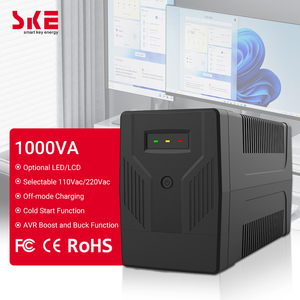
| Online Double-Conversion UPS | 1000VA – 3000VA (AC/AC) | 91.0% – 95.0% | Zero Transfer Time, AVR, Internal Battery Backup | Data Centers, Server Racks, Critical Factory Process Controllers |
| Pure Sine Wave Inverters | 24/48 VDC In to 110/220 VAC Out | 90.0% – 93.5% | Low Input Voltage Alarm, Reverse Polarity, LVD | AC Equipment Operation at Off-Grid DC-Powered Telecom Sites |
| Isolated DC-DC Converters | 12V/24V/48V Step-Up / Step-Down | 88.0% – 93.0% | Galvanic Isolation (1500VDC Input/Output) | Ground Loop Elimination, Mixed-Voltage Site Equipment Rails |

Founded with a singular engineering focus in 1986, our manufacturing philosophy centers on delivering continuous power solutions for sites that simply cannot go dark. Unlike catalogue resellers or unverified trading vendors, we control the entire product lifecycle—from PCB schematic design and magnetic component winding to automated SMT assembly, thermal burn-in testing, and firmware creation.
Key Enterprise Capabilities Include:
Engineered for mission-critical public safety networks, broadband infrastructure, and industrial utility operations.
Direct technical answers addressing input voltage stability, battery management, network telemetry, and OEM export logistics.