
Explore high-efficiency pure sine wave platforms, online double-conversion UPS, and industrial standby systems evaluated for mission-critical deployments.

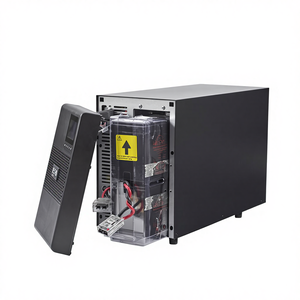
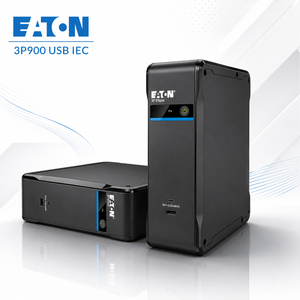
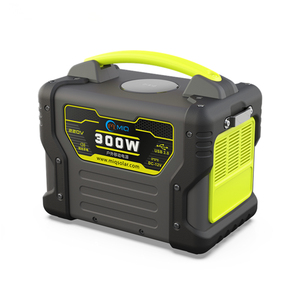
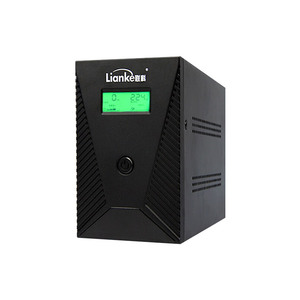
A comprehensive analysis for procurement officers, system integrators, and telecom infrastructure engineers evaluating global sine inverter suppliers.
In the evolving landscape of power conversion, modern telemetry, industrial automation, land mobile radio (LMR), and microgrid telecommunications demand absolute signal purity. Unlike modified sine wave (square wave approximation) inverters that generate high total harmonic distortion (THD > 20%), pure sine wave power inverters deliver clean AC power with THD strictly under 3%. This near-zero harmonic pollution protects sensitive inductive loads, microprocessors, and radio frequency amplifiers from thermal overheating, mechanical vibration, and signal interference.
Technical Benchmark: Premium industrial sine inverters utilize high-frequency Pulse Width Modulation (PWM) powered by MOSFET/IGBT bridges. They ensure transient load recovery in less than 2 milliseconds while maintaining steady-state voltage regulation within ±1% across variable DC input rails (12VDC, 24VDC, 48VDC).
When selecting OEM/ODM partners among top sine inverter factories, procurement teams must look beyond initial unit cost. Evaluating dynamic load response, galvonically isolated DC-to-AC topologies, integrated battery management systems (BMS), and remote telemetry management via Ethernet/SNMP provides true total cost of ownership (TCO) optimization.
Pure sine wave output (< 2.5% THD) guarantees hum-free operation for audio, radio basestations, medical electronics, and precision instrumentation.
Modular inverter shelves accept live hot-swappable modules, allowing zero-downtime maintenance and parallel capacity expansion.
Embedded web servers provide real-time voltage monitoring, remote load shedding, temperature metrics, and instant SNMP fault alerts.
Utilize this standardized OEM/ODM evaluation framework developed by senior power engineers to benchmark inverter manufacturers globally.
| Evaluation Parameter | Tier-1 Factory Standard | Tier-2 OEM Standard | Impact on Site Reliability |
|---|---|---|---|
| Output Waveform & THD | Pure Sine Wave (< 2% THD) | Pure Sine Wave (3% - 5% THD) | Eliminates harmonic heating and audio noise in communication receivers. |
| Surge Capacity Rating | 300% Continuous Rating for 5s | 150% - 200% Rating for 2s | Crucial for motor startup, inductive pumps, and high-inrush radio power amplifiers. |
| Efficiency & Cooling | > 94% Peak Efficiency (Fanless/Smart Fan) | 85% - 90% Peak Efficiency (Constant Fan) | Reduces battery drain rates and thermal stress inside sealed outdoor cabinets. |
| Galvanic Isolation | Full Input-to-Output Transformer Isolation | Partial / Shared Ground Path | Prevents ground loops and isolates DC battery bus from high-voltage AC surges. |
| Remote Management | HTTPS Web GUI, SNMP v2c/v3, Modbus TCP | Basic RS232 / USB Local Port | Eliminates costly field technician dispatches ("truck rolls") during power events. |
| MTBF & Design Life | > 250,000 Hours (MIL-HDBK-217F) | 100,000 Hours Standard | Ensures continuous 24/7 mission-critical availability over a 10-year operational lifecycle. |
Key technological disruptions reshaping global power conversion supply chains over the next decade.
The global inverter industry is undergoing a transition from traditional silicon MOSFETs to Wide Bandgap (WBG) materials like Silicon Carbide (SiC) and Gallium Nitride (GaN). Next-generation sine inverters feature thermal limits up to 200°C and switching frequencies 5x faster than conventional designs. This shift reduces core transformer dimensions by 40% while raising energy conversion efficiency beyond 96%.
Procurement teams are prioritizing bidirectional inverter architectures capable of seamless transitions between battery discharge (DC to AC) and rapid grid/solar charging (AC to DC). As distributed energy resources (DERs) expand, pure sine inverters serve as intelligent microgrid nodes equipped with frequency regulation and reactive power compensation (V2G / ESS integration).
Hardware isolation is no longer sufficient. Enterprise buyers demand fully integrated IoT telematics. Leading factories embed smart sensors to monitor internal capacitor degradation, thermal drift, and fan speed variance, broadcasting real-time SNMP traps to centralized NOCs (Network Operations Centers) before hardware failure occurs.

Specialized North American design, manufacturing, and technical support engineered for zero-downtime environments.

Field-tested for emergency 911 dispatch networks, fixed wireless towers, and remote repeaters operating under extreme weather conditions.

Native HTML browser interfaces combined with full SNMP integration provide granular control over every individual distribution breaker and inverter output rail.

Scalable power architecture allows seamless hot-swapping of modules while system load remains fully energized and protected.

In-house engineering, manufacturing, and direct application support ensure strict quality control and traceable hardware/firmware revisions.
Direct responses from our application engineering team addressing common technical, operational, and sourcing inquiries.
Pure sine wave inverters replicate the smooth, continuous AC power delivered by utility grids, producing less than 3% Total Harmonic Distortion (THD). Modified sine wave inverters generate blocky, step-waveform output with high THD (>20%), which can damage sensitive electronics, cause overheating in motors and transformers, and create significant audible/electrical noise in telecom systems.
Inductive loads such as compressors, pumps, cooling fans, and large power supplies draw high peak currents (inrush current) during startup, often 2 to 3 times their continuous wattage rating. When sizing a pure sine inverter, ensure the unit's peak surge rating (typically rated for 3 to 5 seconds) comfortably exceeds the combined startup peak of all simultaneously powered devices.
Yes. Industrial-grade pure sine inverters feature adjustable DC input windows and customizable low-voltage disconnect (LVD) thresholds. This compatibility allows precise alignment with the narrow voltage curves and BMS protection cutoff limits of Lithium Iron Phosphate (LiFePO4) battery chemistry.
Integrated Ethernet interface with SNMP support allows facility managers to remotely view input DC voltage, AC output load current, chassis temperature, and alarm status via standard web browsers or NOC platforms. Remote power cycling capability enables engineers to reboot unresponsive equipment without dispatching service vehicles, significantly reducing operational expenditure (OPEX).
Tier-1 industrial inverters incorporate full galvanic isolation between the DC input battery bus, AC output rails, and chassis ground. This isolation protects connected DC equipment from high-voltage AC surges, prevents ground loops, and maintains system floating ground options required in negative-ground or positive-ground telecom shelters.
Our application engineering team collaborates directly with system integrators to customize nominal input bus ratings (12V, 24V, 48VDC), custom AC output receptacle plates, sub-rack DIN-rail chassis, and modified firmware algorithms. Contact our sales department to submit your single-line diagram (SLD) for engineering review.
Consult directly with our North American application specialists. We provide load budget analysis, thermal calculations, and single-line diagram reviews for custom B2B deployments.