
Industrial-grade power conversion, uninterrupted UPS battery backup, and modular power distribution engineered for land mobile radio (LMR), telecom towers, and critical enterprise backup.

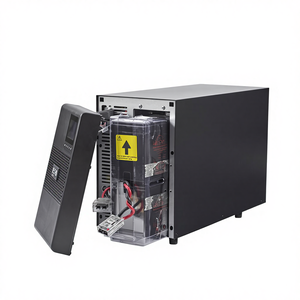
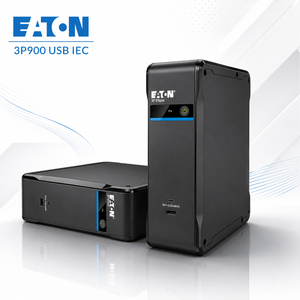
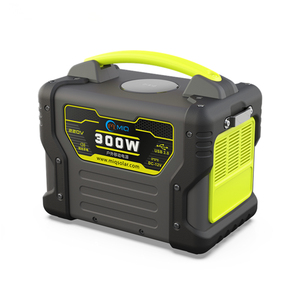
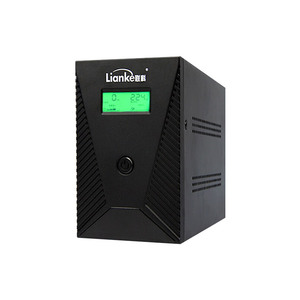
A rigorous engineering framework for sourcing industrial DC rectifiers, standby UPS systems, and remote radio power infrastructure.
In modern telecommunications, Land Mobile Radio (LMR) networks, P25 emergency response repeaters, and fixed wireless broadband systems, power infrastructure is the foundational pillar of network availability. A single power module failure or uncontrolled battery discharge at an unattended mountain-top repeater site can sever critical emergency communication links, incur thousands of dollars in emergency technician dispatch costs ("truck rolls"), and degrade carrier SLA ratings.
Selecting the right OEM/ODM manufacturer for radio power systems requires an evaluation framework beyond basic AC-to-DC voltage transformation. Procurement officers and chief systems engineers must scrutinize electrical efficiency, thermal derating capabilities, electromagnetic interference (EMI) shielding, remote TCP/IP telemetry, and compliance with rigorous global standards such as Telcordia GR-63-CORE, CE, UL, and ISO 9001.
Sensitive RF transmitters, digital trunked repeaters, and base stations require ultraclean power feeds. Premium radio power rectifiers maintain peak-to-peak output ripple voltage under 10mV RMS to prevent phase noise, signal degradation, or hum on transmitted radio channels.
Industrial radio installations demand non-stop operation. Hot-swappable power module shelves allow engineers to replace or scale power capacity live without interrupting connected mission-critical loads or triggering system resets.
Integrated low-voltage disconnect (LVD) contactors safeguard lead-acid and LiFePO4 battery banks against destructive deep discharge during prolonged utility outages, while temperature-compensated float charging maximizes battery lifespans.
Comparative analysis of leading global manufacturers specializing in radio power supplies, modular DC rectifiers, and backup power equipment.
| Manufacturer / Brand | Primary Power Focus | Key Core Competencies | Target Applications |
|---|---|---|---|
| Innovative Circuit Technology (ICT) | Intelligent DC Systems (12V/24V/48V) | Ethernet SNMP control, hot-swap modularity, high efficiency, N+1 shelf designs. North American production. | LMR repeaters, public safety networks, fixed wireless broadband, SCADA. |
| Delta Electronics | Telecom DC Power Systems & Rectifiers | High power density, global supply chain, automated factory production, up to 98% efficiency. | Carrier 5G telecom, macro base stations, enterprise datacenters. |
| Eltek (Delta Group) | Flatpack DC Power Rectifiers & Systems | High-efficiency Flatpack rectifiers, advanced Smartpack controllers, flexible rack integration. | Telecom wireless base stations, central office power, utility substations. |
| Eaton Electrical | Enterprise UPS & Distributed DC Power | Comprehensive AC UPS, hybrid DC systems, energy storage software, global distribution. | Commercial radio stations, datacenters, enterprise IT backup. |
| Vertiv (Emerson) | NetSure DC Power & Integrated Enclosures | Industrial shelter systems, micro-edge power distribution, high-capacity rectifier shelves. | Global telecom infrastructure, broadcast stations, heavy industrial plants. |
| Schneider Electric (APC) | Uninterruptible Power Supplies (UPS) | Smart-UPS technology, lithium-ion battery integration, cloud-based EcoStruxure monitoring. | Radio broadcast studios, remote monitoring stations, edge computing enclosures. |
| Mean Well Enterprises | Standard Industrial DIN-Rail Supplies | High-volume factory cost structure, wide voltage range, modular DIN-rail format. | Control panels, auxiliary radio supplies, small cell cabinet enclosures. |
| Benning Power Electronics | Custom Industrial DC & AC Systems | Heavy-duty industrial rectifiers, microgrid hybrid controllers, high shock/vibration tolerance. | Railways, offshore oil platforms, nuclear & utility telecommunications. |
| ABB Industrial Solutions | High-Power Rectifier Systems & Microgrids | Utility-scale DC systems, heavy industrial power conversion, grid-tied battery storage. | Smart grid communication nodes, power grid protection systems. |
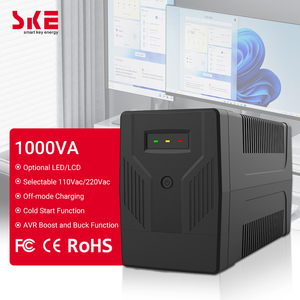
| SKE & Specialized OEMs | Offline UPS & Portable Emergency Power | Cost-efficient offline UPS, high-volume portable LiFePO4 stations, flexible white-label OEM. | Field emergency radio kits, mobile surveillance, quick-deploy power. |
Innovative Circuit Technology (ICT) has specialized in single-minded engineering: design, manufacturing, and supporting high-reliability low-voltage DC power equipment for sites that simply cannot go dark.

Strategic insights for procurement directors and network architects planning next-generation radio infrastructure investments.
Unmanaged "dumb" power supplies are being systematically phased out. Modern procurement specifications strictly mandate IP-connected DC distribution panels and rectifiers featuring native HTML5 web GUIs, secure SNMPv3 traps, and MQTT connectivity for predictive AI maintenance.
Lead-acid batteries (VRLA/AGM) are being rapidly replaced by Lithium Iron Phosphate (LiFePO4) chemistry due to 3x cycle life, higher energy density, and superior performance under elevated ambient temperatures. Radio power supplies now feature firmware specifically tuned to lithium charge curves and active balancing protocols.
Remote repeater stations are increasingly migrating toward hybrid solar-diesel-battery topologies. Modern DC rectifiers and distribution units are engineered to seamlessly blend solar MPPT inputs with utility AC grid power or standby generator feeds to minimize fuel consumption and carbon footprint.
As 5G private networks and trunked radio channels expand, tower shelter rack space commands a premium. Manufacturers are delivering ultra-compact 1U and 2U hot-swap rectifier shelves with power densities exceeding 30W per cubic inch without sacrificing thermal ventilation.
Cybersecurity is moving to the power physical layer. Network-connected radio power controllers now feature encrypted HTTPS interfaces, SSH access, SNMPv3 user authentication, and TLS 1.3 protocol support to neutralize remote network penetration vectors.
Global logistics bottlenecks have forced mission-critical network operators to prioritize manufacturers with transparent domestic component sourcing, localized factory stock, and traceable engineering revision control over unbranded commodity imports.
Essential answers for system integrators, buyers, and field engineers specifying radio and standby power equipment.
Land mobile radio (LMR) repeaters, mobile radios, and base station equipment typically operate on standard nominal voltages: 12 VDC (often nominal 13.8V for radio power), 24 VDC (common in industrial SCADA and maritime installations), and 48 VDC (standard across telecommunication and fiber optic networks). Modern intelligent DC power systems feature field-adjustable float and equalize voltages to precisely match various battery chemistries including AGM, Gel, and LiFePO4.
An intelligent DC power supply or distribution panel with embedded Ethernet access allows engineers to read live bus voltage, load current per circuit, ambient temperature, and power module status via any standard web browser. If a remote router or radio freezes, technicians can remotely power-cycle specific output circuits over IP. This remote control capability eliminates emergency technician field dispatches ("truck rolls"), saving significant operational expenditure (OPEX) and dramatically shortening MTTR (Mean Time to Repair).
N+1 redundancy is a system design approach where the power shelf contains one more rectifier module than required to support the maximum site load. For instance, if a base station requires 1000W of power and is configured with three 500W modules (total 1500W capacity), the system retains N+1 protection. If any single module suffers an AC input or internal component failure, the remaining active modules immediately share the current load without any interruption to the connected radio equipment.
A Single Bus distribution panel distributes power from one primary DC input source to multiple output fuse/breaker circuits. It is simple, compact, and cost-effective. A Dual Bus panel features two electrically isolated DC power buses (Bus A and Bus B) within a single rack chassis. This allows system integrators to feed critical dual-corded communications hardware, distribute two distinct voltage rails (e.g., +48V and -48V), or separate primary battery feeds from auxiliary generator feeds for maximum resilience.
During an extended utility AC blackout, connected equipment consumes power continuously from the standby battery bank. If batteries discharge below a critical threshold (e.g., ~1.75V per cell for lead-acid), permanent chemical degradation occurs, drastically reducing battery life or causing complete cell reversal. An integrated electronic LVD contactor automatically isolates non-essential loads or completely disconnects the battery bank when voltage drops to a preset safe cutoff limit, preserving battery longevity until grid power is restored.
RF power amplifiers and digital radio repeaters are highly sensitive to power supply noise. Excessive AC ripple or switching noise on the DC supply rail translates directly into phase jitter, harmonic distortion, reduced signal-to-noise ratio (SNR), and audible hum on voice channels. Commercial-grade radio power rectifiers incorporate multi-stage LC filtering and high-frequency switching topology to maintain peak-to-peak output ripple below 10mV RMS under full load.
Need assistance sizing an N+1 hot-swap power shelf, configuring dual bus DC distribution, or selecting the ideal standby UPS system for your radio site? Contact our senior application engineering team today.
Inquire Now