
As a tier-1 power rectifier manufacturer and global exporter, our engineering platforms supply ultra-reliable, high-density AC-to-DC rectification, online uninterruptible power systems (UPS), and modular DC power distribution across 60+ countries. Explore our top recommended hardware engineered for telecommunications, land mobile radio (LMR), datacenters, and industrial automation.

Integrated 10.1" digital touch screen display, universal USA plug interface, high-density Li-Polymer battery matrix for high-demand commercial rental ecosystems.
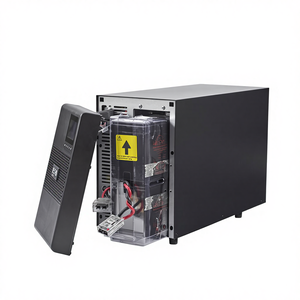
Precision 9SX1000I online double-conversion tower UPS engineered for zero-transfer-time voltage regulation during severe grid disturbances and blackouts.
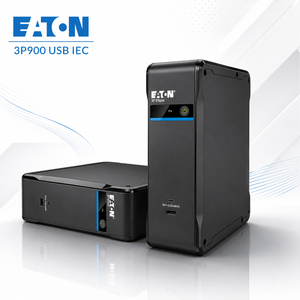
Equipped with 12V 9Ah replaceable internal battery cells, achieving up to 97% operational efficiency with WhisperQuiet acoustics under 25dB for sensitive rack equipment.
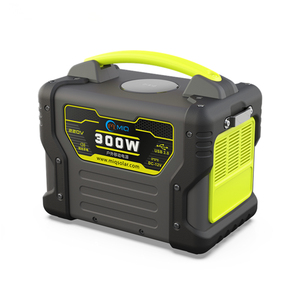
Heavy-duty rechargeable lithium iron phosphate battery architecture providing continuous 220V pure sine wave output for field repair and off-grid command units.
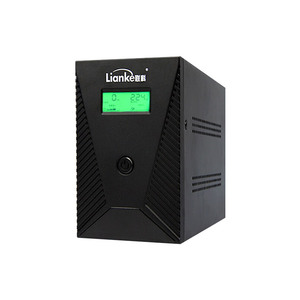
Targeted power conditioning and battery backup designed specifically for computer workstations, site monitoring systems, and edge IoT devices.
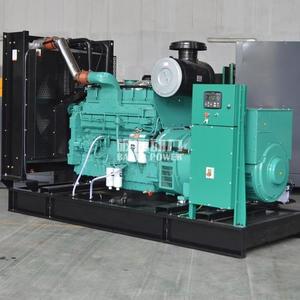
Utility-grade emergency power generation system engineered for industrial factory complexes, telecommunication switching centers, and data facilities.
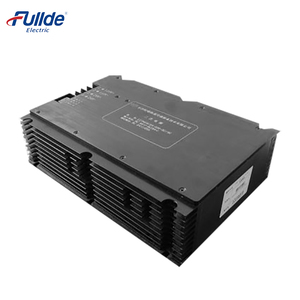
Military-grade and specialized power conversion unit featuring ultra-wide temperature stability, wide input AC tolerance, and ruggedized housing.
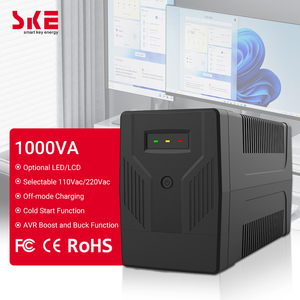
Integrated Automatic Voltage Regulation (AVR) with 12V 9Ah sealed backup battery, preventing power sags and surges from reaching mission-critical loads.
Since founding our specialized power engineering operations in 1986, Innovative Circuit Technology (ICT) and our OEM manufacturing facility in Langley, British Columbia, Canada have established the gold standard in intelligent DC power systems. Unlike catalog resellers, we operate an end-to-end manufacturing footprint that encompasses hardware design, surface-mount assembly, micro-controller programming, safety certification, and rigorous thermal testing.
Our rectifiers and switching power supplies are engineered specifically for continuous 24/7 duty cycles. From public safety dispatch systems to telecom towers, every unit undergoes full-load burn-in verification before export delivery.
Deploy scalable N+1 power shelves that grow alongside site power demand. Technicians can perform live module replacements in less than 60 seconds without disrupting output voltage or risking site downtime.
Embedded web servers, HTML5 interfaces, and SNMP v1/v2c/v3 protocols allow network operation centers (NOCs) to monitor individual circuit currents, adjust voltage float levels, and initiate remote load resets instantly.
The global power rectifier market is undergoing a structural transition driven by the expansion of 5G telecom networks, rural wireless broadband (WISP), industrial automation (Industry 4.0), and renewable microgrids. Procurement executives and engineering specifiers must align their sourcing strategies with several technical shifts:
Legacy silicon-based rectifiers are being rapidly phased out in favor of wide-bandgap (WBG) semiconductors. Silicon Carbide (SiC) and Gallium Nitride (GaN) MOSFETs enable switching frequencies up to 5x higher while reducing thermal dissipation losses by over 40%. For factory buyers, this translates to compact 1U/2U rack footprints, reduced enclosure cooling requirements, and significantly lower total cost of ownership (TCO) over a 10-year operational lifecycle.
Unmanaged power supplies represent an operational liability for remote utility sites and cell towers. Modern procurement guidelines mandatorily require embedded TCP/IP communication interfaces. Systems equipped with real-time SNMP alarm traps, graphical web management, and automated email alerts allow field teams to diagnose battery degradation or phase imbalances remotely—eliminating costly "truck rolls" solely for manual voltage inspections.
As industrial sites transition from legacy Valve-Regulated Lead-Acid (VRLA) batteries to Lithium Iron Phosphate (LiFePO4) chemistry, power rectifiers must adapt. Procurement teams now prioritize multi-stage rectifiers featuring customizable charging profiles, active thermal compensation sensors, and programmable Low-Voltage Disconnect (LVD) contactors to prevent destructive deep discharge cycles.
Sustainability directives (ESG compliance) are compelling infrastructure operators to seek rectifiers with peak efficiency exceeding 96% under partial load conditions. Modular systems operating under active load-sharing modes allow high-efficiency operation even when site loads fluctuate drastically, minimizing waste heat and carbon intensity.
Modern industrial rectifiers rely on Digital Signal Processors (DSPs) to dynamically tune control loops, correct power factor (PFC > 0.99), and mitigate Total Harmonic Distortion (THD < 3%). DSP firmware updates can be deployed remotely to optimize performance without hardware retrofits.
Industrial facilities are standardizing on 48V DC bus architectures for telecommunications and data transportation due to lower current losses, while 12V and 24V DC platforms remain dominant in land mobile radio and SCADA control panels. Modern rectifiers offer field-adjustable DC voltage outputs to bridge multi-voltage site needs.
Deployments in harsh outdoor cabinets demand conformal-coated PCBs, wide operating temperature ranges (-40°C to +70°C), surge protection compliant with IEEE C62.41, and immune operation under high electromagnetic interference (EMI) environments.
| System Class | Nominal Bus Voltage | Efficiency Rating | Redundancy / Scalability | Primary Industrial Application |
|---|---|---|---|---|
| Modular DC Power Systems | 12V, 24V, 48V DC | 95% - 97.5% | N+1 Hot-Swap Modular Shelves | Telecom Central Offices, 5G Small Cells, LMR Repeating Stations |
| Industrial Power Rectifiers | 24V / 48V DC (High Power) | 94% - 96.5% | Parallel Current Sharing Modules | SCADA Systems, Utility Substations, Process Control Automation |
| Online Double-Conversion UPS | 110V / 220V AC Output | 90% - 93% (Online) | Standalone / External Battery Expansion | Data Centers, Server Racks, Critical Medical Equipment |
| DIN-Rail Power Supplies & PDUs | 12V, 24V, 48V DC | 91% - 94% | Compact Cabinet Rail Mount | IoT Edge Enclosures, Security Cameras, Fiber Huts |
| Pure Sine Wave Inverters | 48VDC Input / 120-230VAC | 90% - 95% | N+1 Inverter Systems | AC Equipment Operating off DC Battery Infrastructure |
Voltage selection depends on line distance and equipment design. 48V DC is the global standard for telecom, fiber broadband, and data infrastructure due to lower current draw, which minimizes line loss across long cable runs. 12V and 24V DC systems are widely specified in Land Mobile Radio (LMR), vehicle installations, aviation ground control, and legacy industrial SCADA systems.
Our intelligent rectifiers feature an embedded Linux web server and SNMP controller connected to your local network. System administrators can log into a secure browser GUI or integrate SNMP Object Identifiers (OIDs) into platforms like SolarWinds, PRTG, or Nagios. You can remotely read real-time voltage, current draw per branch, temperature sensor data, toggle load distribution breakers, and perform forced reboot power cycles.
N+1 redundancy implies installing one more rectifier module than required for the maximum system load (e.g., three 700W modules for a 1400W load). If any individual module suffers a internal component fault, the remaining active modules immediately share the current load without output interruption. The faulty module can be live-swapped without powering down the connected mission-critical site loads.
A single bus panel feeds all branch output breakers or fuses from a unified DC power supply input. A dual bus panel isolates two distinct electrical buses (Bus A and Bus B) within one physical enclosure. Dual bus designs enable complete dual-path (A+B) redundancy for equipment equipped with dual power supplies, preventing single-point failure across the distribution layer.
All core engineering design, firmware development, assembly, and quality assurance validation are conducted at our North American facility in Langley, British Columbia, Canada. Domestic production guarantees strict quality control, compliance with UL/CSA/CE safety standards, full component traceability, and immediate access to original design engineers for technical support.
We export globally through authorized international distributors, systems integrators, and direct factory OEM contracts. To initiate a project evaluation, submit your load parameters, environmental specs, and delivery schedule to our technical sales team via our live interactive portal.
Whether you require a standard 1U rack-mount rectifier module, a custom dual-bus distribution panel, or a complete industrial standby power solution, our senior application specialists are ready to review your single-line electrical diagrams and specify the ideal configuration.