
Factory-direct OEM/ODM turnkey manufacturing across modular UPS systems, high-density LiFePO4 energy storage, and industrial-grade continuous backup units.

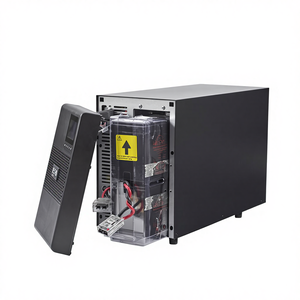
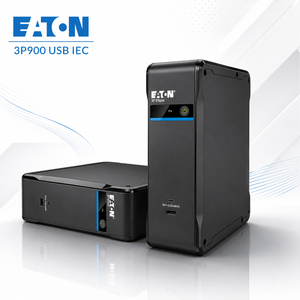
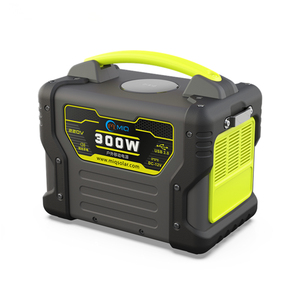
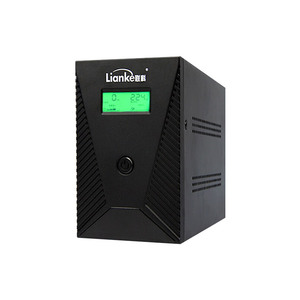
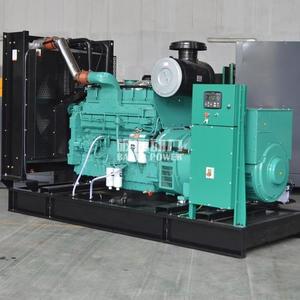
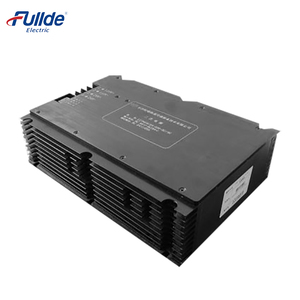
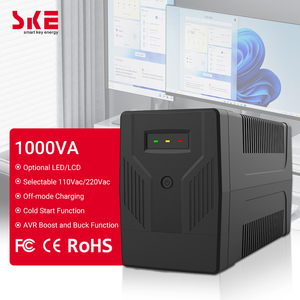
Since 1986, our engineering teams have specified, manufactured, and deployed fault-tolerant power conversion hardware across 60+ countries for sites that cannot afford a millisecond of downtime.
Modular rectifier shelves accept hot-swappable modules sharing load current. Adding N+1 capability allows live maintenance without de-energizing critical buses.
Engineered support for 12VDC, 24VDC, and 48VDC operational standards with precise float tuning for Lead-Acid and high-density LiFePO4 chemistries.
Full remote telemetry visibility via web GUI, HTML5 dashboards, and SNMP integration into central NOC platforms without third-party middleware.
In-house circuit, mechanical, and software design tailored for telecom, land mobile radio (LMR), fiber huts, and heavy industrial automation sites.
In modern mission-critical applications—spanning telecom base stations, 5G micro-cells, emergency dispatch repeaters, and edge computing nodes—power failure directly correlates with catastrophic system downtime. As an established OEM/ODM factory and global exporter of redundant power systems, we engineer solutions designed around Zero Single Point of Failure (N+1 / 2N) paradigms, guaranteeing continuous operation under volatile electrical conditions.
Traditional standby power systems relied heavily on offline passive switching, introducing a transfer delay of 4 to 10 milliseconds. In ultra-sensitive digital communication hubs, this delay can cause packet drops, relay crashes, and logic state corruptions. Next-generation OEM/ODM redundant power supply units utilize active hot-swappable online double-conversion topologies.
Procurement officers and technical integrators evaluating manufacturing partners must account for dynamic industry shifts redefining continuous power delivery:
Legacy VRLA Lead-Acid batteries are being rapidly phased out in favor of intelligent LiFePO4 packs. Offering over 4,000 thermal cycles, integrated Battery Management Systems (BMS), and half the volumetric weight, LiFePO4 reduces Total Cost of Ownership (TCO) by over 40% across a 10-year service lifecycle.
Smart PDU and rectifier chassis now integrate dedicated IP controllers. System admins can remotely power-cycle hung load channels, adjust per-circuit current limits, monitor ambient site temperatures, and receive automated email/SNMP trap warnings before battery depletion occurs.
Unattended outdoor cabinets demand power hardware capable of surviving thermal extremes from -40°C to +65°C. Combined with Active Power Factor Correction (PFC > 0.99), modern switching power supplies dramatically reduce reactive power losses and generator sizing requirements.
The following engineering data visualizer aids OEM/ODM procurement decision-makers in specifying the correct topology based on site criticality and environment:
| Topology Class | Transfer Time | Efficiency Rating | N+1 Hot-Swap Support | Primary Industrial Application |
|---|---|---|---|---|
| Online Double Conversion UPS | 0 ms (Seamless) | 92% - 95% | Supported (Modular Rack) | Telecom Nodes, Data Centers, Critical Instrumentation |
| Line-Interactive AVR Systems | ;2 ms - 4 ms | External Switching | Industrial Monitoring, Local SCADA Panels | |
| Standby / Offline UPS Units | 4 ms - 8 ms | 97% - 98% | Not Supported | Workstations, Security CCTV Storage, Non-Critical Workloads |
| DC Integrated Hot-Swap Rectifier | 0 ms (DC Bus Shared) | 95% - 97% | Native (Direct Bus Insert) | Land Mobile Radio (LMR), Fiber Huts, Wireless ISPs |
Clear answers to crucial procurement, technical compliance, and custom manufacturing inquiries.
Our factory provides end-to-end custom engineering including form factor adaptation (1U/2U/3U rackmount, wall-mount, DIN-rail), custom backplane busbar design, DC voltage setpoints (12V, 24V, 48V, 110VDC), private-label branding, customized web UI interface development, and bespoke communication protocol integration (SNMP, Modbus-RTU, CANbus).
Our redundant power modules feature an active analog/digital current-share bus. When installed in a common shelf, internal microcontrollers dynamically adjust output voltage across modules to ensure load balance within ±5%. If a module suffers an internal breakdown, an internal isolation diode (ORing MOSFET) instantly disconnects the damaged module without dragging down the main DC bus.
All factory-exported systems comply with major global standards including UL1778, IEC/EN 62368-1 for IT/Telecom safety, CE, FCC Class B electromagnetic compatibility, RoHS environmental directives, and ISO9001 quality management system manufacturing compliance.
A single bus panel feeds all load breakers from a unified DC battery/rectifier source, minimizing wiring complexity. A dual bus panel incorporates two electrically isolated sub-assemblies (Bus A & Bus B) within one chassis, permitting redundant dual-feed power delivery to mission-critical servers and repeaters with zero cross-talk.
Systems utilize smart 3-stage battery charging (Bulk, Absorption, Float) coupled with external temperature sensors for automatic temperature-compensated float voltage control. This prevents thermal runaway in high-ambient environments and extends battery service life significantly.
Standard evaluation samples are typically dispatched within 7–10 working days. Customized OEM/ODM prototype builds requiring new sheet metal tooling or firmware customization range between 3 to 5 weeks. Mass production manufacturing cycles average 4 weeks depending on batch volume and component sourcing schedule.
Submit your electrical specification requirements, load list, or project RFQ to our application engineering team. Receive detailed technical proposals, single-line diagrams, and factory-direct pricing within 24 hours.
Send an Inquiry