
Engineered for 24/7 continuous operation, high efficiency, and absolute reliability under demanding field conditions.

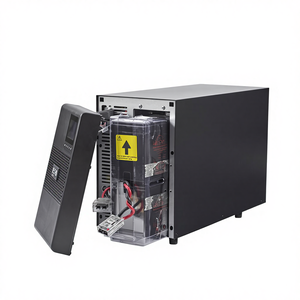
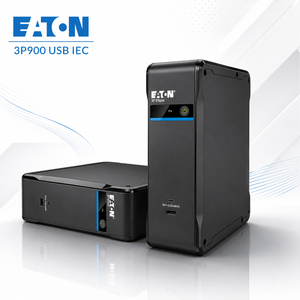
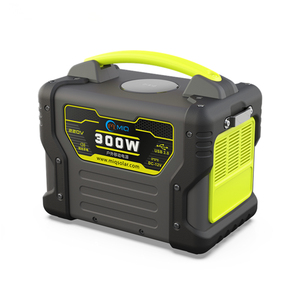
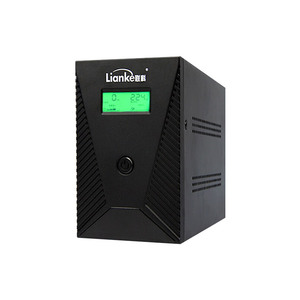
A Technical Assessment of High-Density Rectifiers, DC Bus Distribution, and Uninterruptible Infrastructure Engineering
Modern telecommunications, fixed wireless broadband networks, Land Mobile Radio (LMR) repeaters, and industrial SCADA monitoring facilities demand continuous, clean, low-voltage direct current (DC) power. Unlike off-the-shelf commercial power units, mission-critical infrastructure relies on custom-engineered OEM/ODM DC supply factories capable of delivering modular hot-swappable rectifiers, integrated low-voltage disconnect (LVD) circuits, temperature-compensated battery charging, and remote SNMP monitoring.
Since 1986, dedicated OEM/ODM manufacturing facilities have transformed industrial DC power architecture. Transitioning from heavy, inefficient linear transformer supplies to high-frequency switch-mode power supplies (SMPS) operating above 95% thermal efficiency has dramatically reduced rack space requirements while extending total battery autonomy.

Information Gain Summary: Selecting a specialized OEM/ODM factory partner ensures custom DC bus configurations (12 VDC, 24 VDC, 48 VDC), strict compliance with IEEE and IEC safety standards, specialized EMI/RFI filtering for radio frequency environments, and direct access to component-level hardware and firmware engineering teams.
Choosing an experienced North American design and manufacturing partner yields measurable operational advantages over generic catalog resellers. By retaining full engineering oversight over board layouts, magnetic component design, transformer potting, and thermal modeling, OEM/ODM DC supply factories deliver unmatched reliability across four core power domains:
Industrial DC supply factories engineer modular power shelves where individual 700W to 1500W rectifier modules share load current in parallel. If a single module experiences an internal component fault, the remaining units instantaneously assume the entire site load without voltage dip. Technicians can replace faulty modules while the system remains completely energized, achieving 99.999% availability ("five-nines uptime").
Advanced OEM/ODM distribution panels split main battery buses into individually protected branch circuits. Dual-bus architecture provides complete electrical isolation between primary (Bus A) and redundant (Bus B) power rails. Hydraulic-magnetic breakers or electronic fuses continuously report real-time current consumption, preventing downstream equipment shorts from dropping the entire site DC bus.
Embedded Linux web servers integrated directly into the power management controller give network operations centers (NOC) granular remote control. Engineers can view individual circuit loads, adjust battery float voltages, execute automated battery capacity discharge tests, and receive immediate SNMP traps or email alerts when site power mains are lost—eliminating unnecessary truck rolls to remote mountain or tower locations.
Factory-customized charging profiles accommodate Sealed Lead Acid (SLA), VRLA, Gel, and next-generation Lithium Iron Phosphate (LiFePO4) chemistries. Integrated Low Voltage Disconnect (LVD) contactors continuously measure battery terminal voltage during prolonged utility outages, cleanly disconnecting non-critical loads before deep discharge damages costly battery strings.
Compare standard factory platforms and tailored OEM/ODM engineering options across nominal system voltages.
| System Platform | Nominal Bus Voltage | Standard Power Range | Efficiency Rating | Primary Industrial Applications | OEM/ODM Customization Options |
|---|---|---|---|---|---|
| Hot-Swap DC Rectifier Shelves | 12 VDC / 24 VDC / 48 VDC | 700 W to 12.0 kW | 95.5% Peak | Cellular Small Cells, Fixed Wireless Hubs, Public Safety LMR Repeaters | Custom backplanes, N+1/N+2 shelf scaling, custom SNMP MIBs, private label front bezels |
| Intelligent DC Distribution Panels | 12 VDC / 24 VDC / 48 VDC | 100 A to 300 A Continuous | 99.2% Electrical | Multi-tenant telecom shelters, fiber optic POP huts, central offices | Single/Dual bus switching, hydraulic breaker vs. GMT fuse options, automated channel load shedding |
| DIN-Rail Industrial Power Units | 12 VDC / 24 VDC / 48 VDC | 120 W to 480 W | 94.0% High Efficiency | SCADA panels, traffic control, pipeline monitoring, industrial automation | Conformal coating for corrosive environments, extended temp range (-40°C to +70°C), custom relay alarms |
| Pure Sine Wave DC-to-AC Inverters | 24 VDC / 48 VDC Input | 1000 VA to 3000 VA | 91.0% High Efficiency | AC-only telemetry gear, remote desktop servers, field test gear on DC sites | Static transfer switches, fast switchover (<4ms), custom bypass circuits, hardwired AC terminal blocks |
| Isolated DC-DC Voltage Converters | 48V to 12V / 24V to 48V | 200 W to 1500 W | 93.5% Efficiency | Mixed-voltage equipment racks, positive ground to negative ground conversion | Galvanic isolation (1500 VDC), custom enclosure form factors, wide input voltage windows |
Key Technological Shifts Reshaping Industrial Power Sourcing Over the Next Decade
OEM/ODM supply factories are aggressively integrating Gallium Nitride (GaN) and Silicon Carbide (SiC) power switches into high-frequency rectifiers. This technology elevates switching speeds past 500 kHz, driving thermal losses down by 35% and shrinking magnetic transformer footprints by half.
Procurement teams are rapidly shifting away from legacy VRLA batteries toward Lithium Iron Phosphate (LiFePO4) storage modules. LiFePO4 delivers 4x the cycle life, operates at higher ambient temperatures without active air conditioning, and offers integrated Battery Management Systems (BMS) communicating over CAN bus.
Future OEM/ODM DC systems incorporate edge artificial intelligence to analyze battery internal resistance curves, ripple voltage degradation, and thermal dissipation trends. Procurement contracts increasingly specify predictive maintenance software interfaces that alert operators months before a component failure occurs.
When evaluating OEM/ODM manufacturing options, procurement directors must analyze total lifecycle cost rather than initial unit purchase price. Inferior power supplies with uncalibrated battery chargers degrade battery strings within 18 to 24 months, forcing costly field replacements and technician dispatch. Investing in high-efficiency, intelligently monitored OEM/ODM DC supplies typically delivers full return on investment (ROI) within 14 to 22 months through three distinct vectors:
Decades of continuous innovation in mission-critical power systems
Expert answers addressing system design, OEM customization, compliance, and ordering procedures.
Direct OEM/ODM factory collaboration allows full tailoring of physical form factors, input/output voltage setpoints, enclosure sealing ratings (IP65/NEMA 4X), custom mounting brackets, and specialized communication protocols (SNMP v1/v2c/v3, MODBUS, CAN bus). Furthermore, factory direct sourcing provides full component traceability, long-term product availability warranties, and direct consultation with senior hardware design engineers.
Our OEM/ODM manufacturing infrastructure covers the three core nominal DC bus voltages utilized globally: 12 VDC (vehicle, radio, and security applications), 24 VDC (industrial SCADA, automation, and land mobile radio), and 48 VDC (telecommunications, fiber broadband, cellular small cells, and data networks). Output voltages across all series are field-adjustable to support custom float and equalize voltage targets for lead-acid, gel, and LiFePO4 batteries.
Intelligent OEM/ODM power supplies incorporate an embedded web server accessible through any standard browser (HTTPS), coupled with full SNMP protocol support for integration into enterprise Network Management Systems (NMS) such as SolarWinds, PRTG, or Zabbix. Operators can inspect live voltage, output current per branch, ambient site temperature, and alarm statuses, execute remote circuit power cycles, and automatically receive real-time fault notifications.
Yes. Modular rectifier shelves feature active current-sharing backplanes that accommodate multiple slide-in rectifier modules. By adding one module beyond the total site load budget (e.g., three 700W modules for a 1400W load), the system achieves full N+1 redundancy. In the event of a module degradation, the system raises an alarm while maintaining seamless DC output power, allowing instant hot-swap replacement without de-energizing the main bus.
A single bus distribution panel routes all circuit breaker or fuse outputs from one common DC input, making it ideal for standard single-battery backup configurations. A dual bus distribution panel features two completely isolated electrical buses within one rack chassis (Bus A and Bus B). This allows dual power supply servers, redundant network switches, or independent battery banks to be powered and monitored separately, providing superior fault tolerance.
Standard factory platforms modified for OEM customer branding or custom wiring harnesses typically require short lead times of 2 to 4 weeks with flexible low-MOQ evaluation runs. Ground-up ODM engineering developments involving custom PCB design, bespoke metal enclosures, and specialized safety certifications carry typical prototype development timelines of 8 to 12 weeks. Contact our engineering sales team to evaluate your technical scope.
Submit your single-line electrical diagrams, load requirements, and cabinet specifications. Our senior North American application engineering team will deliver a comprehensive proposal and technical system review.