Industrial Product Portfolio
Featured OEM/ODM Backup Power Solutions
Customizable, enterprise-grade standby power systems engineered for maximum reliability, extreme ambient operation, and uninterrupted uptime.
Why Partner With Us
Enterprise Advantages & Original Equipment Manufacturing (OEM/ODM) Mastery
Providing institutional B2B procurement partners with turnkey engineering, traceable component sourcing, and fully validated power conversion architectures since 1986.
End-to-End Turnkey OEM/ODM Engineering
From initial single-line topology drafting to custom enclosure stamping, PCB design, firmware programming, and thermal management simulation, our in-house engineering team provides complete Joint Design Manufacturing (JDM) services tailored to bespoke client specifications.
Mission-Critical Reliability & Standard Compliance
Our power systems are engineered for uninterrupted 24/7/365 operations across telecommunications, land mobile radio (LMR), industrial automation, public safety 911 networks, and utility infrastructure, rigorously tested to pass UL 1778, IEC 62368-1, CE, and FCC Class A/B requirements.
Smart Telemetry & Remote Ethernet Management
Integrate intelligence directly into your power infrastructure. Our systems feature embedded web servers, secure SNMPv2c/v3 API interfaces, real-time bus voltage telemetry, individual circuit load monitoring, and remote IP-based reboot capabilities without requiring truck rolls.
Hot-Swap Modularity & N+1 Redundancy
Eliminate single points of failure. Our modular DC rectifier shelves and UPS arrays accept hot-swappable power modules that automatically balance load currents. Replace or upgrade power capacity live on an energized bus without dropping downstream equipment load.
Strategic Technical Analysis: Future Procurement Trends in Industrial Backup Power
The global backup power landscape is undergoing a systemic paradigm shift driven by grid instability, extreme weather events, decentralized edge computing, and decarbonization mandates. B2B procurement directors, system integrators, and network infrastructure managers are moving beyond legacy lead-acid systems toward unified, intelligent DC power conversion and high-density lithium storage topologies.
Understanding these macro procurement trends is vital for specifying infrastructure designed for a 15-to-20-year operational lifecycle:
Key Market Drivers Shaping 2026-2035 B2B Sourcing
- Dominance of Lithium Iron Phosphate (LiFePO4) over VRLA: Global export data shows a rapid transition away from Valve-Regulated Lead-Acid (VRLA) batteries toward LiFePO4 chemistry due to 4x higher cycle life (3,000 to 6,000 cycles at 80% DoD), superior thermal tolerance up to 60°C, and 70% lower weight footprint.
- Migration to Modular DC Bus Standards (48VDC / 24VDC): Modern telecom, broadband, and edge data centers are increasingly bypassing AC-to-DC-to-AC conversion losses by standardizing directly on 48VDC nominal bus architectures, achieving system efficiency ratings exceeding 96.5%.
- Zero-Touch Operations & Automated Predictive Maintenance: Procurement specifications now mandate automated telemetry that reports state-of-health (SoH), individual cell internal resistance, temperature gradient alerts, and automated load shedding via SNMP management.
- Hybrid Renewable Integration (Solar/Diesel/Grid): Advanced OEM projects require hybrid charge controllers capable of seamlessly blending solar PV input, utility grid power, and automated diesel generator startup commands within a unified power control unit.
Engineering Roadmap: Next-Generation Development Trends in Emergency Power Supply Design
As a leading OEM/ODM backup power exporter, our research and development efforts focus on solving the physical and operational challenges encountered in real-world infrastructure deployments. Modern power conversion demands ultra-high efficiency, high power density, dynamic thermal control, and zero transfer latencies.
Silicon Carbide (SiC) MOSFET Topology
Replacing legacy silicon IGBTs with Wide Bandgap (WBG) Silicon Carbide devices enables switching frequencies above 100 kHz, drastically reducing transformer and inductor volume while driving power conversion efficiency beyond 97.5%.
Software-Defined Power Architecture
Moving control loops from analog ICs to high-speed Digital Signal Processors (DSPs) allows remote firmware tuning of output charge profiles, dynamic voltage scaling, custom alarm trip points, and protocol translation (Modbus, SNMP, CANbus).
Ultra-Low Latency Transfer Switching
For standby and line-interactive UPS platforms, modern solid-state static transfer switches (STS) reduce utility-to-inverter switchover times to under 2 milliseconds, preventing logic resets in sensitive industrial PLCs and servers.
Technical Specifications Matrix: Standby Architecture Selection Guide
Selecting the optimal power architecture depends on load criticality, runtime requirement, ambient environmental conditions, and total cost of ownership (TCO) constraints.
| Architecture Type |
Nominal Voltages |
Efficiency |
Transfer Time |
Primary Industrial Application |
OEM/ODM Customization Scope |
| Online Double-Conversion UPS |
120V / 230V AC, 1-3KVA |
92% - 95% |
0 ms (Continuous) |
Critical Data Servers, Medical Electronics, Sensitive Monitoring |
Enclosure form factor, SNMP card options, custom battery expansion ports |
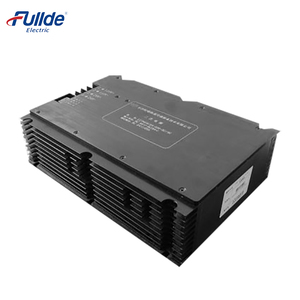
| Modular DC Rectifier Systems |
12V, 24V, 48V DC |
95% - 97% |
0 ms (DC Bus) |
Telecom Towers, Microwave Backhaul, Public Safety LMR Repeaters |
Hot-swap shelf capacity, distribution breaker count, custom LVD thresholds |
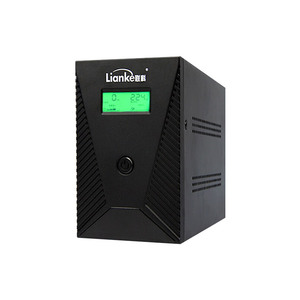
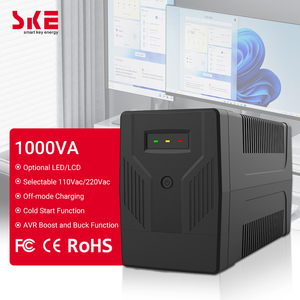
| Offline / Standby UPS |
120V / 220V AC, 600-1000VA |
96% - 98% |
4 - 8 ms |
Security Cameras, Workstations, Non-critical Monitoring Systems |
Branded housing, plug socket types (USA/EU/UK), internal cell capacity |
| LiFePO4 Mobile Energy Storage |
12V / 24V / 220V AC/DC |
94% - 96% |
< 10 ms |
Emergency Field Response, Mobile Command Units, Remote Utility Maintenance |
Inverter output rating, ruggedized flight cases, solar input charge controller |
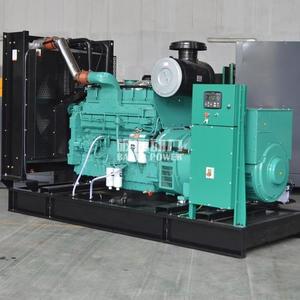
| Industrial Standby Generators |
208V / 400V / 480V 3-Phase |
Mechanical Efficiency |
10 - 15 Seconds |
Factory Complexes, Hospitals, Data Center Grid Failover |
Canopy soundproofing levels, ATS control panel logic, fuel tank capacity |
Procurement Guidance
Frequently Asked Questions (FAQ) for B2B Sourcing & OEM Partnerships
Direct answers from our senior application engineering and international trade logistics team.
What custom OEM/ODM options are available for industrial backup power products?
+
We offer comprehensive contract engineering and manufacturing services. Customization options include bespoke chassis mechanical dimensions (rack-mount, wall-mount, DIN-rail, or freestanding outdoor cabinet), customized PCB layouts, wide DC/AC input voltage ranges, specific connector types, custom battery management system (BMS) logic, private label silk-screening, custom metal finishes, and proprietary firmware/SNMP MIB files.
How do you guarantee quality control and international compliance during export production?
+
Our manufacturing facilities are ISO 9001:2015 and ISO 14001:2015 certified. Every production batch undergoes rigorous quality assurance steps: 100% incoming component inspection, automated optical inspection (AOI) of SMT assemblies, full-load burn-in testing under elevated temperatures (HALT/HASS), dielectric withstand testing, and functional system validation. All exported products carry CE, FCC, RoHS, and optional UL certification marks.
What is the typical lead time for custom OEM sample prototyping and mass production?
+
For standard catalogue modifications (e.g., custom connector configurations or branded enclosures), sample prototypes are delivered within 2 to 3 weeks. Full custom OEM/ODM projects requiring new tooling and PCB fabrication typically require 4 to 6 weeks for functional prototypes. Mass production lead times range between 4 and 6 weeks after sample approval, backed by expedited global sea and air freight logistics.
What is the difference between single-bus and dual-bus DC power distribution panels?
+
A single-bus power distribution panel feeds all protected output circuit breakers or fuses from one common DC input supply. This is ideal for straightforward sites with a single power source and battery bank. A dual-bus panel provides two electrically isolated A and B distribution paths within a single chassis. This enables redundant feed configurations (Feed A + Feed B) for critical dual-corded telecom and server hardware, maximizing site availability.
How does remote Ethernet and SNMP telemetry improve site operational efficiency?
+
Intelligent power systems with embedded IP connectivity allow network operations center (NOC) engineers to monitor vital statistics—such as system bus voltage, total load current, individual output breaker status, ambient temperature, and battery charge states—in real time. If a fault occurs, the system sends immediate SNMP traps or email notifications. Furthermore, remote circuit switching allows engineers to power-cycle frozen remote routers or radios without dispatching maintenance personnel to remote sites.
How do I size an emergency backup power system for high-inrush inductive loads?
+
Inductive loads such as electric motors, compressors, heavy power tools, and certain industrial pumps draw starting inrush currents that can be 3x to 7x higher than their nominal running amperage. When specifying an uninterruptible power supply or inverter system, calculate the total peak surge requirements. Our application engineering team assists B2B clients in performing comprehensive load profile analyses to ensure proper sizing with adequate thermal and crest-factor derating margins.
Partner with a World-Class OEM/ODM Backup Power Exporter
Whether you require a custom-engineered 48VDC modular power shelf, high-capacity industrial UPS arrays, or bespoke LiFePO4 energy storage units, our engineering team is ready to analyze your single-line diagrams and deliver a competitive B2B quotation.