

Standard and customized power architectures engineered for telecom, public safety, industrial SCADA, and uninterruptible energy deployments.
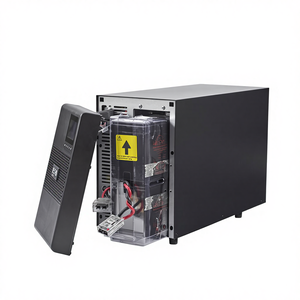
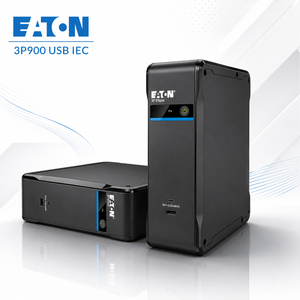
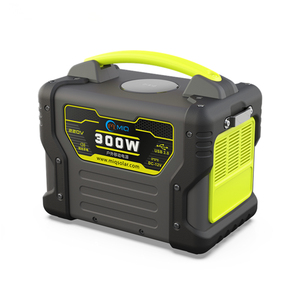
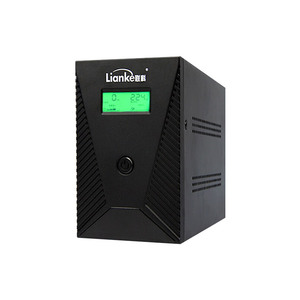
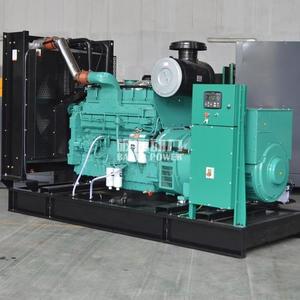
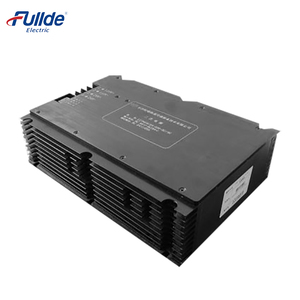
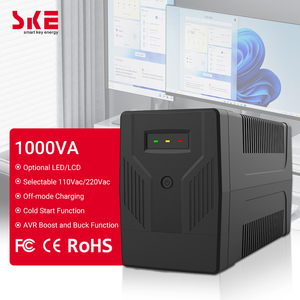
An in-depth technical analysis for electrical engineers, system integrators, and procurement directors specifying mission-critical power equipment.
In modern telecommunications, Land Mobile Radio (LMR), industrial automation, and remote edge computing, electrical power stability is not merely an operational feature—it is an absolute operational constraint. Standard off-the-shelf voltage converters often fail to satisfy the complex thermal, electromagnetic compliance (EMC), and form-factor requirements demanded by high-density remote shelters and industrial enclosures. As a premier Custom OEM Voltage Converter Manufacturer & Supplier, our engineering paradigm is rooted in 38+ years of dedicated power conversion research, specializing in 12 VDC, 24 VDC, and 48 VDC nominal bus architectures.
The core of custom OEM voltage converter design centers on selecting the optimal topology for dynamic load regulation and thermal dissipation. Modern industrial systems demand high energy conversion efficiency to eliminate active fan cooling requirements, thereby drastically increasing Mean Time Between Failures (MTBF).
Utilizing Gallium Nitride (GaN) and Silicon Carbide (SiC) MOSFET switches to achieve conversion efficiencies exceeding 97%, significantly minimizing thermal dissipation in tight DIN-rail or rack enclosures.
Full planar transformer isolation separates sensitive radio telemetry and microprocessor logic from noisy ground loops, high-voltage battery banks, and lightning transients typical of communication towers.
Embedded web server architectures with integrated SNMPv3 and Modbus TCP protocols allow real-time monitoring of input/output voltage, load current, temperature, and circuit-level trip management.
Technical Insight: Galvanic isolation between primary input circuits and secondary output buses prevents ground noise migration. This is essential in mixed-voltage LMR and broadband sites where negative-ground radios operate alongside positive-ground legacy telecom equipment on a shared 48 VDC battery bank.
Industrial OEM converters must perform reliably under severe ambient temperature swings, typically specified from -40°C to +70°C. OEM customized housing options incorporate high-conductivity aluminum extrusion heatsinks, vacuum encapsulation potting for shock and moisture protection (IP66/IP67 ratings), and heavy-copper printed circuit board (PCB) traces capable of sustaining high surge currents during motor or radio PTT (Push-To-Talk) transients.
Key market drivers shaping the selection of custom voltage converters, uninterruptible power supplies (UPS), and battery management systems.
As corporate sustainability mandates collide with expanding 5G networks, IoT automation, and public safety communications, enterprise procurement teams are shifting away from off-the-shelf commodities. The procurement landscape for custom power conversion hardware is being redefined by four critical industry trends:
Enterprise buyers are specifying modular shelf systems capable of holding multiple hot-swappable power modules. This architecture enables continuous N+1 redundancy—allowing field technicians to replace or upgrade converter modules without de-energizing the critical load. This approach slashes Mean Time to Repair (MTTR) from hours to minutes while eliminating planned site downtime.
Traditional VRLA/AGM lead-acid batteries are rapidly being replaced by Lithium Iron Phosphate (LiFePO4) chemistry. OEM voltage converters and UPS rectifiers must now feature programmable, multi-stage charge profiles, active cell balancing integration, and dynamic temperature-compensated float voltage control to optimize lithium battery longevity across extreme operational environments.
Unattended remote sites require autonomous intelligence. Procurement specs increasingly require embedded web servers, native HTML5 control panels, automated email alerts, and SNMP integration into existing Network Operations Center (NOC) dashboards (e.g., SolarWinds, PRTG, Zabbix). Remote circuit switching enables NOC operators to reboot frozen edge routers without dispatching a service vehicle—saving thousands of dollars per incident in truck roll costs.
With geopolitical trade volatility, Tier-1 system integrators prioritize manufacturers with robust engineering provenance, transparent component sourcing, and strict compliance with UL 62368-1, FCC Class B, CE, and RoHS standards. Fully traceable firmware and hardware builds protect against cyber vulnerabilities and supply chain interruptions.
Comparative analysis of standard industrial topologies engineered for custom OEM/ODM production.
| Converter / Power Platform | Nominal Bus Voltage | Efficiency | Isolation Level | Primary Target Application | OEM Customization Scope |
|---|---|---|---|---|---|
| Isolated Step-Down DC-DC | 48 VDC to 12 VDC / 24 VDC | 94% – 96.5% | 1500V – 3000V DC | Land Mobile Radio, Fixed Wireless, Tower Shelters | Output current limiting, custom pinouts, chassis brackets |
| Non-Isolated High-Current Buck | 24 VDC to 12 VDC | 96.5% – 98% | Non-Isolated (Shared GND) | On-board vehicle electronics, heavy industrial machinery | Compact PCB dimensions, custom heat spreader plating |
| Step-Up DC-DC Boost Converter | 12 VDC to 24 VDC / 48 VDC | 93% – 96% | 1500V DC Isolation | Long-distance DC power distribution, POE injectors | Wide input range (9–18VDC), conformal coating options |
| Hot-Swap Modular Rectifier Shelf | 110/220VAC to 12/24/48VDC | 95% – 97.5% | 3000V AC Isolation | Core Telecom Central Offices, Public Safety Sites | N+1 slot count, SNMP/Ethernet firmware branding |
| DIN-Rail Industrial Power & PDU | 12 VDC / 24 VDC / 48 VDC | 92% – 95% | 1500V DC Isolation | SCADA, Pipeline Control, Fiber Node Cabinets | Form factor size, terminal block type, LED alarm logic |
| Pure Sine Wave Inverter | 24 VDC / 48 VDC to 120/230VAC | 90% – 94% | Galvanic AC/DC Isolation | Precision instrumentation, sensitive AC field equipment | Custom AC socket configurations, bypass switch logic |
Delivering specialized DC power engineering, rigorous quality control, and direct factory technical support since 1986.
Our in-house electrical, mechanical, and software engineering teams take your concept from initial single-line schematic to functional 3D CAD modeling, thermal simulation, and prototype validation.
Every custom OEM converter unit undergoes 100% full-load thermal burn-in, high-voltage dielectric withstand (Hipot) testing, and automated optical inspection (AOI) prior to shipment.
Choose from standard 1U/2U 19-inch rack enclosures, wall-mount chassis, ruggedized cast aluminum enclosures, or specialized DIN-rail form factors tailored to your equipment cabinet layout.
Direct technical responses to common engineering, procurement, and deployment questions.
Connect directly with our application engineering team to review single-line power diagrams, request technical datasheets, or build your custom product catalog.
Get Catalog