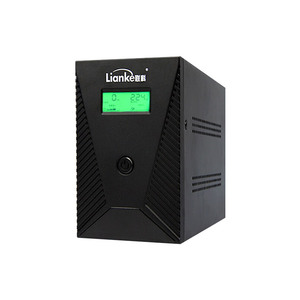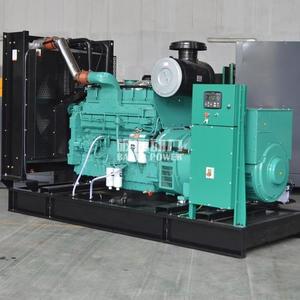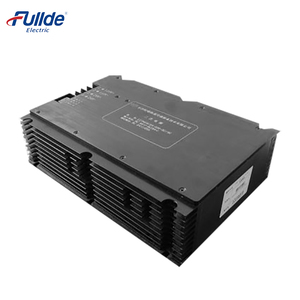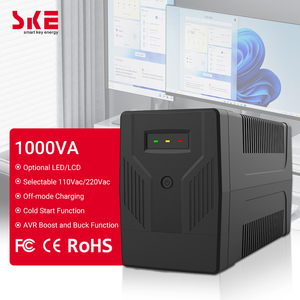
Explore our precision-engineered solar backup equipment, online UPS power supplies, and lithium battery storage systems designed for industrial microgrids and remote site resilience.
Why top-tier system integrators, land mobile radio (LMR) networks, and utility providers choose our custom OEM manufacturing over catalog resellers.
Engineered specifically for 24/7 continuous operations in public safety networks, broadband telecommunications, and isolated solar microgrids where downtime incurs unacceptable financial or operational risk.
Our modular power shelves accept live hot-swappable rectifiers and DC-DC converters. Load-sharing topology provides true N+1 redundancy, allowing seamless module exchange without de-energizing critical site loads.
R&D, firmware design, circuit layout, and stringent quality testing take place under direct North American engineering oversight, maintaining total component traceability and compliance with strict UL/CE/IEEE standards.
Embedded web servers and native SNMP v1/v2c/v3 support allow full Ethernet remote management. Operators monitor bus voltage, per-circuit current draws, ambient temperature, and execute load shedding directly from any standard browser.

Unlike off-the-shelf consumer solar products, true industrial Custom OEM Solar Power Solutions demand rigid compliance with site autonomy parameters and environmental variations. Since 1986, our manufacturing facility has refined low-voltage DC power architectures that bridge the gap between solar photovoltaic generation, battery storage, and load management.
Our intelligent platforms integrate battery-aware charging algorithms, low-voltage disconnect (LVD) circuits, temperature compensation probes, and high-efficiency pure sine wave conversion. By utilizing embedded Ethernet controllers, engineers can monitor live telemetry across remote solar sites, dynamically reboot stuck hardware, and receive immediate trap alarms long before a battery system reaches critical depletion.
A deep-dive analytical perspective for B2B purchasing directors, system integrators, and infrastructure procurement managers navigating the global energy transition.
As corporate sustainability directives converge with grid instability and rising energy costs, the procurement landscape for solar power generators, energy storage systems (ESS), and industrial standby supplies is undergoing a profound structural shift. Buyers are moving away from fragmented, multi-vendor components toward unified, custom OEM/ODM manufacturing partnerships that deliver end-to-end reliability, cybersecurity compliance, and dynamic load control.
Procurement trends show a rapid decline in traditional flooded and AGM lead-acid battery specifications. OEM buyers are mandating high-cycle-life Lithium Iron Phosphate (LiFePO4) and emerging Sodium-Ion cells. These chemistries offer over 4,000 deep cycles, wider operational thermal windows (-20°C to +60°C), and integrated Smart BMS communication over CAN bus and RS485 interfaces.
To eliminate inline resistive losses ($I^2R$) across large solar array installations, procurement specs are shifting from legacy 12VDC buses to 48VDC for telecommunications and up to 800VDC for utility-scale energy storage. Modern OEM factories must provide high-efficiency buck/boost DC-DC converters to seamlessly interface high-voltage photovoltaic strings with sensitive low-voltage site loads.
Future procurement specifications require edge-computing intelligence embedded within the power distribution unit (PDU). Rather than passively delivering power, custom OEM solar systems must analyze live weather data, solar irradiance forecasts, and electricity tariff rates to automatically shed non-essential loads, maximize battery lifespan, and feed peak-shaving energy back to the grid.
| Technical Benchmark | Standard Catalog Reseller | Custom OEM Industrial Factory (Our Standard) |
|---|---|---|
| System Architecture | Fixed off-the-shelf single chassis | Custom modular rack, wall, or DIN-rail configurations |
| Redundancy & Reliability | Single point of failure (No hot-swap) | N+1 Hot-swappable rectifiers & active current sharing |
| Nominal Bus Adaptability | Rigid 12V or 24V single output | Fully adjustable 12V, 24V, and 48VDC output ranges |
| Remote Telemetry | Basic LED status or localized bluetooth | Embedded HTML server, SNMP v1-v3 traps, Ethernet remote reboot |
| Battery Protection | Generic voltage cut-off | Precision LVD, multi-stage temperature compensation & BMS sync |
| Warranty & Engineering Support | Distributor tier 1 limited support | Direct access to North American design & application engineers |
How advanced power electronics, wide-bandgap semiconductors, and modular design principles are defining the next decade of solar equipment production.
The integration of Gallium Nitride (GaN) and Silicon Carbide (SiC) field-effect transistors is revolutionizing OEM power inverter and converter manufacturing. By replacing legacy silicon switches with GaN/SiC devices, operational thermal dissipation drops by up to 40%, while power conversion efficiency exceeds 97.5%.
This leap allows our factories to shrink the physical footprint of pure sine wave inverters and high-power rectifiers by half, enabling dense installation in outdoor IP66 pole-mount enclosures and space-constrained telecom cabinets.
Modern solar manufacturing is eliminating complex field wiring. Next-generation OEM designs incorporate standardized quick-connect DIN-rail backplanes, hot-swappable MPPT charge controller cards, and pre-wired dual-bus distribution panels.
Field technicians can scale system output capacity from 700W to multi-kilowatt levels simply by sliding new power modules into an active shelf. This modularity reduces field installation time by over 60% and eliminates site downtime during expansion.

Robust low-noise DC power supply designs crafted for high-altitude microwave links, public safety 911 dispatch networks, and remote cellular towers utilizing hybrid solar-diesel power generation.

Real-time graphical dashboards providing network operations center (NOC) personnel with granular command over individual branch breakers, battery health metrics, and automated alert dispatching.

Tailor-made enclosure design, custom voltage set points, private-label branding, and dedicated hardware/firmware co-development directly matching your exact client requirements.
Detailed technical answers to common queries submitted by engineering consultants, buyers, and international procurement agencies.
Need a customized solar energy storage configuration, specialized DC-DC converter modules, or a high-reliability N+1 redundant rectifier system for your upcoming infrastructure project? Speak directly with our senior power application engineers.