
Standardized and customizable OEM modules engineered for seamless rack, tower, and remote site integration.

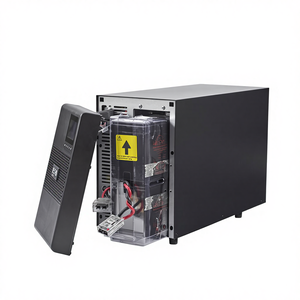
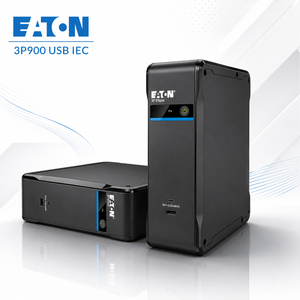
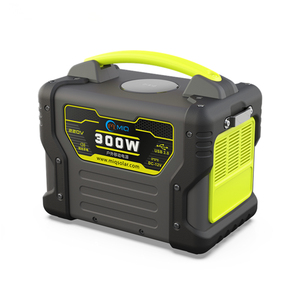
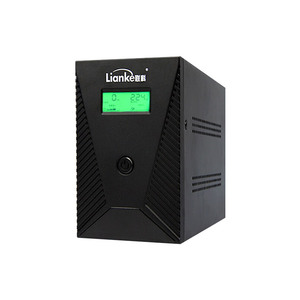
Advanced multi-axis CNC milling, deep drawing, and automated turret punching ensuring ±0.01mm tolerances for complex Land Mobile Radio (LMR) chassis.
Continuous-injected polyurethane gaskets, die-cast aluminum alloys, and hydrophobic venting membranes engineered for harsh exterior telecom deployments.
Integrated vapor chambers, extruded pin-fin heatsinks, and computational fluid dynamics (CFD)-validated thermal paths for high-wattage RF amplifiers.
In the rapidly evolving ecosystem of mission-critical communication networks, Land Mobile Radio (LMR), fixed wireless broadband, satellite ground stations, and outdoor small cell deployments, the physical enclosure is no longer merely a passive metal box. Modern high-density RF electronics, high-power switching rectifiers, and remote Ethernet management platforms demand highly optimized, thermally dynamic, and electro-magnetically shielded structural housings. Sourcing officers, hardware architects, and system integrators navigating the global supply chain must evaluate prospective Custom OEM Radio Enclosure Factories & Exporters through a comprehensive multi-disciplinary lens spanning metallurgical engineering, regulatory compliance, and lifecycle procurement strategies.
Selecting the optimal material matrix forms the foundation of any OEM enclosure development project. Factory engineers balance structural yield strength, thermal conductivity, total mass, and corrosion resistance based on the target operating environment:
| Material / Alloy | Thermal Conductivity (W/m·K) | Corrosion Resistance | Primary Industry Application |
|---|---|---|---|
| AL6063-T6 Aluminum | 200 - 210 | Excellent (Anodized) | Extruded Heatsink Enclosures & Base Station Cavities |
| ADC12 Die-Cast Aluminum | 96 - 100 | Very Good (Chromated) | High-Volume Complex Geometry Remote Radio Heads (RRH) |
| 304 / 316 Stainless Steel | 16 - 24 | Superior (Marine Grade) | Highly Corrosive Industrial Chemical & Offshore Sites |
| SECC Galvanized Steel | 50 - 60 | Moderate (Indoor) | 19-Inch Rackmount Server & DC Power Distribution Chassis |
Advanced OEM manufacturing centers utilize precision die-casting for complex 3D topological features, allowing structural mounting bosses, EMI sealing channels, and heat dissipation fins to be integrated directly into a single monolithic casting. This minimizes interface thermal resistance (Rth) and eliminates potential water-ingress seam failures.
With RF power amplifiers operating across multi-gigahertz bands alongside sensitive digital baseband processors, internal electromagnetic interference (EMI) containment is crucial. Leading export factories incorporate dual-chamber isolation geometries alongside specialized conductivity treatments:
As next-generation 5G RAN and high-power radio repeaters exceed 300W thermal dissipation in sealed enclosures, traditional passive aluminum finning reaches its physical limit. Custom OEM exporters are now integrating embedded copper vapor chambers directly into die-cast aluminum baseplates. By leveraging liquid-vapor phase transitions, lateral thermal spreading resistance is reduced by over 40%, preventing localized junction overheating in power transistors and online UPS rectifier modules.
The global procurement landscape for custom industrial enclosures is undergoing a structural shift driven by technological convergence, regionalized supply chains, and stringent ESG (Environmental, Social, and Governance) mandates. Procurement executives must align their vendor qualification frameworks with three overarching market dynamics:
System integrators are rapidly shifting away from sourcing bare metal boxes and power electronics separately. The modern standard demands fully integrated units where custom radio enclosures are pre-fitted with DIN-rail power modules, intelligent DC distribution panels, automated low-voltage disconnects (LVD), and battery management systems (BMS). Purchasing fully qualified assemblies reduces field commissioning costs and eliminates multi-vendor liability during warranty events.
To reduce time-to-market for specialized radio deployments, OEM factories are combining direct metal laser sintering (DMLS) 3D printing with short-run CNC machining. This hybrid workflow permits low-volume, highly customized enclosure prototypes to undergo field thermal testing within 10 business days—significantly accelerating the transition to high-volume die-cast production lines.
Tier-1 network operators are increasingly mandating embodied carbon metrics in RF RFP evaluations. Leading export manufacturers are transitioning to 100% recycled green aluminum billets processed using solar or hydroelectric energy. Advanced powder coating lines with zero volatile organic compound (VOC) emissions and closed-loop wastewater recovery are becoming mandatory qualifiers for global export contracts.
Partnering with a mature OEM radio enclosure manufacturer delivers crucial structural benefits for telecom operators, public safety agencies, and industrial system integrators:

Engineered for 24/7/365 continuous duty cycle operation in extreme outdoor environments, protecting sensitive radio electronics and standby emergency systems.

Seamless mechanical co-design for embedded Ethernet controllers, HTML web servers, and SNMP alarm monitoring modules for complete site visibility.

Full ISO 9001:2015 certification with rigorous CMM dimension checking, helium leak detection, and 100% automated electrical isolation testing.

Collaborate directly with senior mechanical, RF, and thermal engineers from initial DFM analysis through tooling verification and volume manufacturing.
Connect directly with our application engineering team to submit your 2D/3D mechanical drawings, thermal requirements, and target production volumes for a comprehensive technical review and quotation.