Recommended Industrial OEM Power & Standby Systems
Explore our high-performance power conversion, uninterrupted power supplies (UPS), and emergency backup platforms built for mission-critical industrial deployments.
Besiter 12-Slot 22.5W Fast Charging Portable Power Rental Station 10.1" Screen Li-Polymer Battery Universal USA Plug
Key Specs: 12-Slot Modular Bay | 22.5W Fast Charge | Integrated 10.1" Touch Display | Li-Polymer
Send an Inquiry
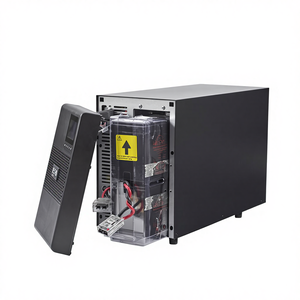
1-3KVA UPS Uninterruptible Power Supply 1000VA/900W Online Tower Regulated 9SX1000I Power Failure Standby
Key Specs: 1000VA / 900W Output | Online Double Conversion | Pure Sine Wave | Tower Topology
Send an Inquiry
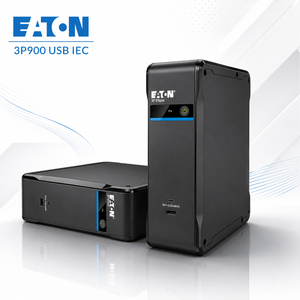
For 3P900UI Single Phase Standby UPS for Computer-12V 9Ah Replaceable Battery 97% Efficiency <25dB Noise Level
Key Specs: 97% Energy Efficiency | 12V 9Ah Hot-Swap Battery | Ultra-Quiet <25dB | Single Phase
Send an Inquiry
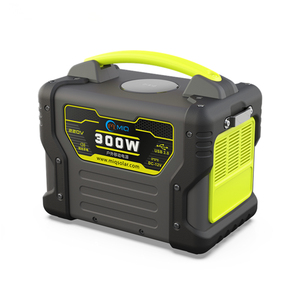
Emergency Standby Power Supply LiFePO4 Battery Mobile Power Supply 220V Portable Rechargeable Power Supply
Key Specs: Premium LiFePO4 Cells | 220V Pure AC Output | Heavy-Duty Portable Chassis | Extended Cycle Life
Send an Inquiry
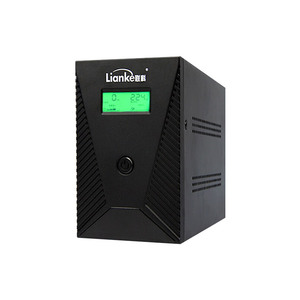
LK 800VA Offline UPS Uninterruptible Power Supply 480W Standby UPS For Computer Monitoring
Key Specs: 800VA / 480W Capacity | Automatic Voltage Regulation (AVR) | Compact Footprint
Send an Inquiry
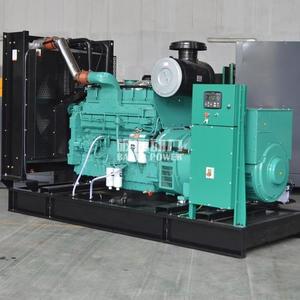
Heavy Duty Diesel Generator Standby Power Supply for Factory Building
Key Specs: High-KVA Industrial Engine | Soundproof Acoustic Enclosure | Automatic Transfer Switch (ATS) Ready
Send an Inquiry
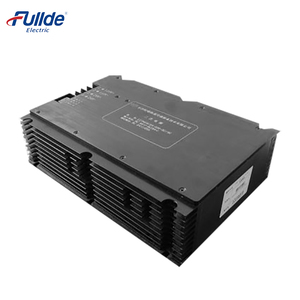
Standby Emergency Power Supply High Tech Special Power Supply
Key Specs: Industrial Grade Surge Protection | High-Density Isolation Topology | Ruggedized Casing
Send an Inquiry
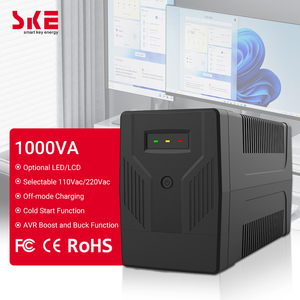
SKE Offline UPS 1000VA 600W AVR Standby Ups Power Supply 12V 9AH Battery Backup Energy Power Supply
Key Specs: 1000VA / 600W Rating | Integrated AVR Stabilization | 12V 9Ah Internal Lead-Acid / LiFePO4 Option
Send an Inquiry
1. Custom OEM Industrial Power Manufacturing: Executive Technical Summary
In modern industrial operations, telecommunications networks, public safety repeaters, and automated process facilities, energy continuity is not merely a utility requirement—it is the foundational pillar of operational integrity. As a specialized premier custom OEM industrial power manufacturer and direct factory engineering group operating since 1986, our mandate centers on solving complex power conversion, backup, and distribution challenges for mission-critical infrastructure where equipment downtime results in catastrophic operational loss.
Modern industrial equipment demands tight voltage regulation, high energy density, thermal robustness, and intelligent remote telemetry. Unlike off-the-shelf consumer power supply units (PSUs) or unmonitored commercial UPS modules, custom industrial OEM power architectures are specifically engineered to withstand wide ambient temperature fluctuations (-40°C to +75°C), high electromagnetic interference (EMI) environments, dirty AC utility grids, and continuous 24/7/365 full-load duty cycles.
Information Gain Insight: Standard power supplies suffer up to 40% thermal derating when deployed in unconditioned field enclosures. Custom OEM industrial power engineering integrates wide-bandgap semiconductors (SiC/GaN), forced air/conduction hybrid cooling paths, and active temperature-compensated battery float charging algorithms to guarantee continuous rated output up to +60°C ambient temperatures without thermal shutdown.
99.999%
Uptime Architecture
12/24/48V
Native DC Bus Platforms
60+
Global OEM Deployments
2. Enterprise Core Advantages: Custom OEM Engineering Excellence
Our OEM/ODM manufacturing capability is built upon four structural engineering pillars designed to give network integrators, system engineers, and industrial procurement officers an unmatched strategic advantage:
Innovative DC & AC Power Systems
We engineer complete power conversion topologies—spanning modular 1U/2U/3U rackmount shelves, DIN-rail automation blocks, pure sine wave inverters, and heavy-duty standby genset interfaces covering 12V, 24V, 48V VDC, and 110V/220V AC outputs.
Intelligent Remote Management
Integrated embedded web servers, secure SNMPv3 protocol suites, HTML5 user dashboards, and individual circuit-level load switching enable remote power cycling, precise battery telemetry, and immediate fault detection, dramatically reducing physical field dispatches.
Mission-Critical High Reliability
Designed strictly under E-E-A-T manufacturing compliance standards, featuring N+1 redundant hot-swappable power modules, galvanic isolation, low output ripple/noise (<10mV RMS), active PFC (>0.99), and ruggedized surge suppression for 99.999% availability.
In-House OEM Manufacturing Rigor
End-to-end design, surface-mount technology (SMT) assembly, automated optical inspection (AOI), thermal chamber burn-in, custom enclosure metalwork, and firmware compilation performed under strict quality ISO control standards to ensure 100% component traceability.
Advanced Ethernet Control & Individual Circuit Protection
A core differentiator in modern OEM industrial site engineering is moving away from basic non-communicating power supplies toward Intelligent DC Power Management Platforms. Unattended remote sites (such as 5G micro-cells, fixed wireless towers, SCADA gas pipelines, and remote utility huts) cannot afford unmanaged outages.
Our OEM platforms provide a centralized remote web GUI interface allowing system operators to:
- Monitor precise load current draw (Amps), bus voltage (Volts), and ambient cabinet temperature in real time.
- Configure automated load-shedding thresholds during AC mains failures to preserve reserve battery power for high-priority critical radios.
- Power cycle locked-up remote equipment automatically via ping-heartbeat auto-reboot technology without sending a technician.
- Receive instant SNMP traps and automated email alerts for low-voltage disconnect (LVD) events or thermal warnings.
3. Future Industrial Power Procurement & Technology Trends (2025–2035)
As global energy infrastructure transitions toward hybrid renewable microgrids, decentralized computing, and electrification, industrial power procurement managers must anticipate major technological shifts over the next decade. Sourcing strategy can no longer rely on static legacy transformer designs; forward-thinking enterprises are adopting next-generation OEM architectures.
Key Trend A: Wide-Bandgap Semiconductors (SiC & GaN Topologies)
Silicon Carbide (SiC) and Gallium Nitride (GaN) power switches replace legacy Silicon MOSFETs in custom power converters. This shift enables switching frequencies up to 5x higher, decreasing magnetic component (inductors/transformers) sizes by 60% while elevating conversion efficiency up to 97.5%. OEM buyers reduce both thermal dissipation costs and enclosure physical footprint.
Key Trend B: Modular N+1 Redundancy and Live Hot-Swappability
Modern industrial sites demand zero scheduled downtime. Modular power systems housing hot-swappable 700W–1500W rectifier modules sharing active DC load current allow maintenance teams to hot-plug replacement modules while the system remains continuously energized. Should one module fail, the remaining active units instantly assume the full load without dropping the DC bus voltage.
Key Trend C: Transition to Lithium Iron Phosphate (LiFePO4) Battery Chemistries
Industrial standby systems are rapidly transitioning from legacy Valve-Regulated Lead-Acid (VRLA) batteries to integrated LiFePO4 chemistry. LiFePO4 offers 4x higher cycle life (>3500 cycles at 80% DoD), superior high-temperature tolerance, 60% weight reduction, and zero off-gassing. OEM power systems must feature customized LiFePO4 charging profiles with high-precision low-voltage disconnect (LVD) thresholds to avoid cell damage.
Key Trend D: Cyber-Hardened Zero-Trust Remote Telemetry
With industrial control systems increasingly targeted by cyber threats, embedded network management cards inside industrial power supplies now mandate hardware-level Root of Trust (RoT), HTTPS TLS 1.3 encryption, and SNMPv3 authenticated protocols. Secure firmware updates must be cryptographically signed by the original manufacturer to prevent unauthorized intrusion.
4. OEM Technical Selection Framework: Power Platform Comparison
To assist system architects and procurement teams in specifying the correct OEM topology, the following evaluation matrix details system ratings, efficiency metrics, and target industrial application vectors:
| Power System Platform |
Nominal Bus Voltages |
Efficiency Rating |
Redundancy Topology |
Monitoring & Control Interface |
Primary Industrial Application |
| Modular Hot-Swap Rectifier Systems |
12V, 24V, 48V VDC |
95% – 97.5% |
N+1 / N+2 Hot-Swap Modules |
HTML5 Web Server, SNMPv3, REST API |
Telecom Towers, Fixed Wireless Broadband, Public Safety Base Stations |
| Online Double-Conversion Tower UPS |
110V / 220V AC Output |
92% – 95% |
Parallel Redundant Option |
RS232, USB, Optional SNMP Card |
Industrial Automation Servers, Process Controls, Medical Equipment |
| Compact DIN-Rail Power Blocks & PDUs |
12V, 24V, 48V VDC |
89% – 93% |
External Diode Redundancy Module |
Form-C Relay Contacts, Modbus RTU |
SCADA Cabinets, Railway Trackside Controls, Smart City Traffic Hubs |
| Isolated / Non-Isolated DC-DC Converters |
12V to 48V / 48V to 12V |
90% – 96% |
Internal Current Limiting |
Analog Telemetry / Voltage Sensing |
Mixed Voltage Site Rails, Heavy Industrial Vehicles, Marine Electronics |
| Pure Sine Wave Power Inverters |
24V/48V DC in -> 120V/230V AC out |
90% – 94% |
Integrated Static Transfer Switch |
LCD Display, Dry Contact Relays |
Industrial AC Instruments, Off-Grid Solar-Hybrid Sites, Substation Auxiliary Power |
| Emergency Heavy Diesel Standby Gensets |
3-Phase 400V/480V AC |
Fuel-Optimized Engine |
Dual ATS Backup Generator Setup |
DeepSea / ComAp Smart Genset Controller |
Factory Buildings, Data Centers, Water Treatment Facilities, Heavy Manufacturing |
5. Industrial Power Procurement & OEM Customization FAQ
Direct answers from our senior power application engineering team regarding custom factory orders, technical integration, and procurement workflows.
What custom OEM/ODM modification capabilities do your manufacturing facilities provide?
We offer extensive custom OEM engineering services including custom chassis mechanical design (1U, 2U, 3U, wall-mount, outdoor IP66 enclosures), tailored DC output voltage setpoints (e.g., custom float voltages for specialized chemistry lithium or lead-crystal batteries), private label brand styling, custom GUI/SNMP MIB files, specific industrial connector interfaces, and conformal coating for high-humidity/saline marine environments.
How does N+1 redundant load sharing operate in modular rectifier shelves?
In an N+1 modular configuration, the total load requirement is satisfied by N power modules, while 1 additional module is installed as a live active redundant unit. Active droop current-sharing circuitry ensures all modules equally distribute the total load current. If one module experiences a internal diode fault or AC input loss, it immediately disconnects from the DC bus while the remaining units absorb the load without any transient voltage dip or service interruption.
What is the difference between single-bus and dual-bus DC power distribution panels?
A single-bus distribution panel routes current from one common DC input feed or battery string across all circuit breakers/fuses. A dual-bus distribution panel splits the internal chassis into two electrically isolated buses (Bus A and Bus B). This allows system integrators to implement dual-feed high-availability setups where dual-power-supply equipment receives independent feeds, or where two distinct voltage rails (e.g., +24V and -48V) are managed in a single 1U/2U rack unit.
How does remote Ethernet power monitoring prevent unnecessary field technician dispatches ("truck rolls")?
Unattended equipment lock-ups account for over 50% of routine technician dispatches. With intelligent Ethernet monitoring, engineers can remotely log into the power supply's web interface from a Network Operations Center (NOC) to cycle power on individual output channels, clearing hardware hangs. Furthermore, real-time telemetry allows engineers to diagnose whether an issue stems from utility AC power failure, blown fuse, or degraded battery health before sending personnel with the exact required spare parts.
What regulatory and safety compliance certifications do your OEM power products carry?
Our OEM industrial manufacturing facilities comply with ISO 9001 quality management standard. Depending on customer project specifications, products are engineered to meet UL 60950-1 / UL 62368-1 for IT & communication equipment safety, CE marking, FCC Class B / EN 55032 EMC regulations, RoHS 3 environmental directives, and IEEE 693 seismic withstand criteria.
Why is temperature compensation critical for battery backup longevity?
Lead-acid and lithium battery chemical reactions are highly sensitive to ambient temperature. Charging a battery at high temperatures with standard float voltage leads to thermal runaway and grid corrosion, while cold charging causes undercharging and sulfation. Our intelligent power supplies utilize remote temperature probes to dynamically adjust charging voltage output (typically -3mV/°C/cell for lead-acid), maximizing battery service life by up to 50%.
What are the standard production lead times for custom OEM power orders?
Standard stocked platforms ship within 1 to 2 weeks through authorized distribution networks. Custom OEM prototyping cycles (including custom sheet metal, specialized PCB layout, and custom firmware compilation) typically take 4 to 6 weeks, followed by full volume factory production runs in 6 to 8 weeks depending on component sourcing requirements and batch volumes.
Initiate Your Custom OEM Power Project
Partner directly with experienced OEM power engineers. Submit your load profile, input voltage specs, thermal constraints, and monitoring requirements. Our technical sales team will provide single-line engineering diagrams, thermal calculations, and custom factory quotes.
Send an Inquiry