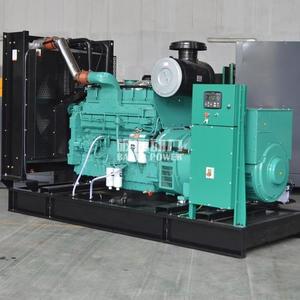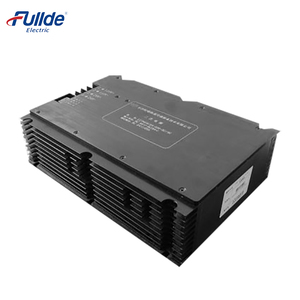
Explore our industrial OEM breaker panels, standby UPS systems, and mobile energy power units engineered for high-availability deployments.

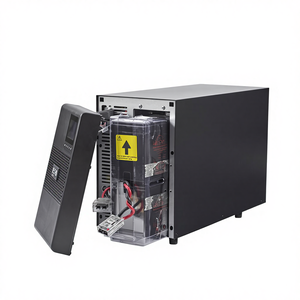
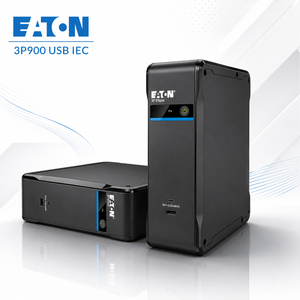
Engineering robust low-voltage DC and AC electrical protection systems for telecom, industrial automation, data centers, and public safety infrastructure.
Custom OEM breaker panels require high-conductivity solid copper busbars with tin or silver plating to minimize thermal drop across 12V, 24V, and 48V nominal DC rails. Multi-bus architectures isolate critical loads while preserving system footprint.
Modern industrial breaker panels integrate TCP/IP HTML5 web interfaces and SNMPv3 protocol suites. Site engineers gain remote per-circuit current metering, voltage telemetry, temperature logging, and remote load-shedding capabilities.
To ensure 99.999% uptime ("five nines"), custom manufacturing incorporates hydraulic-magnetic or trip-free thermal breaker modules that allow live replacement without de-energizing the main power distribution bus.
"In critical infrastructure, a breaker panel is not a passive junction box—it is the first line of operational defense. High-gain OEM customization balances thermal dissipation, selective coordination, and digital remote diagnostics."
Leveraging over 38 years of North American engineering heritage in low-voltage DC power conversion, customized distribution, and remote power management.
Since 1986, our factory engineering team has specialized in low-voltage DC buses (12V, 24V, 48V) and AC distribution panels tailored for remote cell towers, land mobile radio (LMR), and fiber huts.
Every OEM panel undergoes rigorous automated electrical testing, dielectric withstand verification, and thermal profiling under 100% full-load burn-in conditions prior to shipping.
From 1U rack-mount breaker panels to floor-standing NEMA 4X industrial distribution cabinets, we provide custom metal fabrication, tailored busbar geometry, and custom branding.
Our power conversion systems are specified by telecommunication carriers, utility grid integrators, and industrial automation firms across more than 60 countries worldwide.
Comparative design benchmarks across single bus, dual bus, smart Ethernet-monitored, and modular hot-swap configurations.
| Panel Architecture | Nominal Bus Voltage | Max Current Capacity | Circuit Protection Type | Monitoring & Control | Primary Target Application |
|---|---|---|---|---|---|
| Single Bus Standard | 12 VDC / 24 VDC / 48 VDC | 100A – 300A Continuous | Hydraulic-Magnetic Breakers / GMT Fuses | Form-C Alarm Relay Outputs | Standard LMR radio repeaters & edge network racks |
| Dual Bus (A/B Redundant) | 24 VDC / 48 VDC / 125 VDC | 200A – 600A Total (300A/Bus) | Dual-Pole Thermal-Magnetic MCCBs | Digital LED Voltmeter / Ammeter | Public safety dispatch centers & CO transmission equipment |
| Smart Ethernet Monitored | 12 VDC / 24 VDC / 48 VDC | 150A – 400A Continuous | Remote-Trip Electronic Circuit Breakers | Embedded Web Server, SNMPv2c/v3, TLS 1.3 | Unattended wireless ISP (WISP) towers & fiber pop huts |
| Modular Hot-Swap OEM | Custom AC (110-240V) & DC | Up to 1200A Scalable Shelves | Plug-in Hydraulic Breakers with Micro-Switches | GUI Touchscreen + Cloud MQTT/JSON API | Tier-3 Data centers, solar micro-grids & heavy industrial plant control |
Key technological shifts shaping the procurement strategy of global power engineering teams from 2025 to 2030.
Traditional mechanical thermal-magnetic breakers are increasingly augmented or replaced by solid-state semiconductor switches (MOSFET/GaN-based). SSCPs provide microsecond-level fault isolation (up to 100x faster than mechanical trip curves), preventing voltage sags on shared DC busbars during short-circuit events.
OEM factories are integrating smart sensor chips into breaker positions. By continuously tracking contact resistance, localized temperature rise (ΔT), and micro-arcing phenomena, the panel software predicts impending component failure weeks before a total outage occurs, eliminating unplanned downtime.
With the rapid proliferation of solar PV arrays, LiFePO4 battery energy storage systems (BESS), and EV charging hubs, modern custom breaker panels must handle bidirectional current flow. Factories are designing dual-voltage distribution enclosures optimized for high-voltage DC (HVDC 380V) and standard AC mains.
Decades of field experience engineered into every custom breaker panel and power shelf.
Direct technical answers for procurement directors, application engineers, and B2B system integrators.
Our OEM factory offers end-to-end custom engineering: customized busbar current capacities (50A to 1200A), custom breaker position counts (from 4-circuit 1U sub-panels to multi-rack distribution centers), custom voltage inputs (12V, 24V, 48V DC, or 110V/220V/480V AC), mixed fuse/breaker positions, specialized powder-coat finishes, laser-etched branding, and custom Ethernet/SNMP web interfaces.
For standard custom-modified rack-mount panels, our factory supports low MOQ pilot production runs starting at 10 to 50 units. Prototyping and sample engineering drawings (CAD/STEP files) are typically delivered within 5 to 7 business days, while full production batch lead times average 3 to 4 weeks depending on component sourcing requirements.
Smart breaker panels feature an integrated web server micro-controller running embedded HTTPS firmware. System administrators can log into the IP address via any standard browser to inspect per-channel current load, voltage drop, and temperature sensor data. The firmware supports SNMP traps to integrate directly into enterprise Network Management Systems (NMS) like SolarWinds, PRTG, or Zabbix.
All custom OEM breaker panels are manufactured in ISO 9001 certified facilities and engineered to comply with UL 60950-1, UL 62368-1, CE Mark, RoHS3, and FCC Class B requirements. High-reliability units designed for public safety LMR sites also satisfy IEEE standards for surge withstand capability (C62.41).
Yes. Dual bus distribution panels provide two isolated electrical buses (Bus A and Bus B) within a single mechanical enclosure. This enables dual-corded servers, critical switches, and redundant radio systems to draw power from independent power supplies or battery strings, preventing single-point power failures from crashing the site.
You can initiate a custom engineering review by submitting your single-line electrical diagrams, estimated peak current load budget, thermal constraints, and mounting requirements to our application engineering team. Click the inquiry button below to speak directly with an OEM engineering specialist.
Get direct access to our factory application engineers. We will review your load schematics, provide thermal calculations, and deliver a tailored prototype quote within 24 hours.
Contact Us