Explore our standard and customizable auxiliary power conversion, switching supplies, and high-reliability industrial power modules exported worldwide.
For over three decades, our engineering facilities have focused on a single mission: manufacturing low-voltage DC/AC conversion, battery backup, and remote power monitoring hardware engineered for sites that cannot afford a second of downtime.
Engineered for continuously energized 24/7/365 telecommunications, public safety, and SCADA environments. MTBF ratings exceed 400,000 hours under full rated thermal stress.
N+1 modular shelves accept hot-swappable power modules that share load current dynamically. Field engineers can replace modules live without interrupting power to the bus.
Embedded web servers deliver real-time voltage, current, and temperature monitoring per circuit. Advanced SNMP traps integrate seamlessly with your central NOC platform.

From custom PCB layout to complete rackmount power distribution assemblies, our factory powers critical installations worldwide.
An authoritative evaluation of modern auxiliary power architectures, switching topologies, thermal optimization, and smart energy management for global procurement directors and lead hardware engineers.
Auxiliary power supply units (AUX PSUs) are no longer secondary components in industrial automation, telecommunications, and high-performance audio/automotive setups. As system densities increase and operating environments become more extreme, auxiliary power systems have evolved into highly sophisticated subsystem managers. Three macro-technological trends are currently dictating OEM hardware roadmaps:

Procurement directors in Europe, North America, and the Asia-Pacific region are overhauling their auxiliary power supply vendor approval standards. Sourcing decisions are no longer driven purely by bill-of-materials (BOM) cost; instead, total cost of ownership (TCO) and multi-regional compliance hold dominant weight:
Selecting the optimal power supply architecture depends on system voltage nominals, power envelope, space constraints, and redundancy criteria. The following dynamic matrix outlines common OEM specifications across our export catalog:
| Platform Type | Nominal Input / Output | Efficiency Peak | Key Features & Applications | Redundancy / Control |
|---|---|---|---|---|
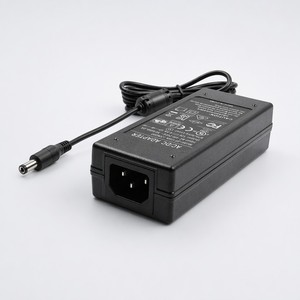
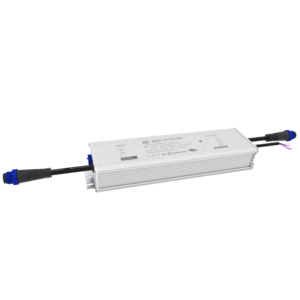
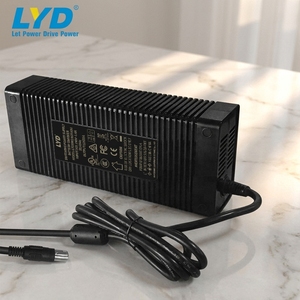
| Switching Power Adapters | 90-264VAC in / 5V-24VDC out (5W-200W) | 92% | Compact, fully enclosed desktop/wall adapter for commercial & IT devices. | Over-Current (OCP), Over-Voltage (OVP) |
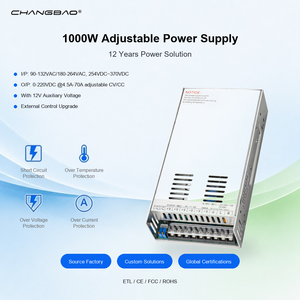
| Adjustable CC/CV Supplies | 110/220VAC in / 12V-220VDC (1000W+) | 94% | Variable voltage/current for laboratory testing, battery charging & heavy motor control. | Analog 0-5V control, CC/CV auto-switch |
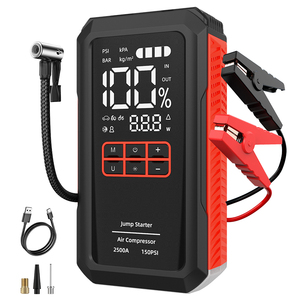
| Automotive Auxiliary Modules | 9-16VDC input / 12V 5A-4000A peak | 96% | Sub-battery isolation, vehicle ECU backup power, high-current jump starters. | Smart reverse polarity protection |
| Industrial OEM Power Supplies | 85-264VAC in / 15V-48VDC (500W-1500W) | 95% | Stage audio power, PLC automation, SCADA networks with PSE/UKCA certifications. | Power factor correction >0.98, SNMP optional |
| Hot-Swap Modular Rectifiers | 12V / 24V / 48VDC bus systems | 96.5% | Land Mobile Radio (LMR), 5G small cells, fiber huts, central office telecom racks. | N+1 Hot-Swap, Dual Bus A/B Distribution |
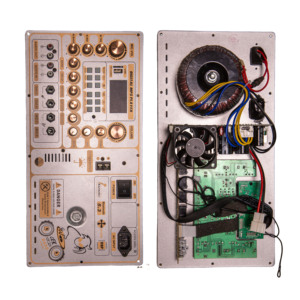
Thermal stress remains the primary root cause of field failures in switching auxiliary power supplies. During the custom OEM/ODM layout phase, our thermal engineering teams utilize Computational Fluid Dynamics (CFD) modeling to optimize heatsink geometry and forced-air flow vectoring. Key design considerations include:
1. Component Thermal Separation: High-temperature magnetic elements (planar transformers) and power switching MOSFETs are isolated from temperature-sensitive electrolytic smoothing capacitors by dedicated thermal barriers. Using 105°C long-life solid aluminum polymer capacitors guarantees prolonged lifespan even under elevated ambient enclosure temperatures (up to 70°C ambient).
2. Heavy Copper Thermal Vias: Custom OEM PCB designs utilize 2oz to 4oz double-sided copper planes with dense arrays of thermal micro-vias beneath surface-mount power devices, dispersing localized heat spots evenly across the chassis aluminum plate.
Answers to common technical, compliance, and custom design queries from B2B buyers and OEM integration engineers.
Our factory provides extensive OEM/ODM customization including custom output voltage calibration (e.g., non-standard 13.8V, 28V, or 54.5V float levels), custom cable harnesses, specialized chassis paint/branding, wide operating temperature components (-40°C to +75°C), conformal coating for high-humidity/saline environments, and custom Ethernet communication firmware (SNMP, Modbus, web interface).
N+1 redundancy is achieved by placing multiple identical power rectifier modules onto a common active backplane shelf. For example, if your connected system load requires 1400W, two 700W modules provide the necessary power (N). Adding a third 700W module provides the redundancy (+1). Current-sharing circuitry ensures each module supplies an equal 33.3% load fraction. If one module suffers an internal fault, internal OR-ing FETs isolate the defective unit while the remaining modules ramp up instantly without dropping bus output voltage.
Depending on product family, our auxiliary power hardware carries comprehensive international safety approvals including UL 62368-1, CE, PSE (Japan), UKCA (UK), FCC Class B for low EMI emissions, and RoHS/REACH environmental compliance. Certificate documentation is available directly to client compliance departments upon contract request.
A single bus power distribution panel connects all output circuit breakers or fuses to a single primary DC input. This simplifies installation for straightforward backup strings. A dual bus panel divides the outputs into two electrically isolated buses (Bus A and Bus B) inside a single chassis. This allows dual-corded critical servers or dual-radio installations to draw from isolated primary and secondary power channels for maximum fault tolerance.
Standard catalog items maintain a 2 to 3 week stock buffer for quick-turn samples and pilot orders. Volume OEM custom production runs typically operate on a 4 to 6 week turnaround cycle, backed by robust material requirement planning (MRP) and long-term strategic component buffer agreements with top-tier semiconductor suppliers.
Partner with a trusted manufacturer and global exporter of high-reliability auxiliary power systems. Contact our engineering team today to review your load schedules, custom form factors, and factory catalog access.