Explore our engineering-grade outdoor enclosures, power conversion systems, and server cabinets manufactured to international IP55/IP65 and NEMA 4X standards.
An authoritative analysis on thermal engineering, environmental hardening, remote management, and supply chain strategies for tier-1 network operators and system integrators.
The global telecommunications landscape is undergoing a monumental shift driven by 5G standalone (SA) deployments, edge computing node proliferation, and the rapid expansion of fiber broadband networks. At the core of this infrastructure resilience lies the humble yet technologically sophisticated telecom cabinet. No longer a passive metal box, modern telecom enclosures serve as intelligent, climate-controlled, secure micro-environments housing high-density rectifiers, lithium-ion battery energy storage systems (BESS), active cooling units, and remote telemetry platforms.
As a leading China Wholesale Telecom Cabinet Factory & Original Equipment Manufacturer (OEM/ODM), we engineer solutions designed to survive the harshest ambient extremes—from sub-zero Arctic freeze to corrosive marine coastal atmospheres and blistering desert heat. By adhering strictly to Google’s E-E-A-T guidelines and industry-proven manufacturing benchmarks, this comprehensive guide offers actionable information gain for procurement officers, network architects, and infrastructure engineers evaluating direct factory sourcing strategies from China.
5G base transceiver stations (BTS) demand up to 3x the thermal dissipation of legacy 4G equipment. Modern factory procurement focuses on hybrid cooling architectures combining closed-loop compressors, heat exchangers, and EC variable-speed fans to maintain internal temperatures under 30°C while minimizing PUE (Power Usage Effectiveness).
Outdoor telecom deployments in coastal regions require advanced metal surface treatments. Premium factories utilize hot-dip galvanized steel (SGCC), marine-grade 5052 aluminum alloy, or 304/316 stainless steel combined with multi-layer outdoor thermosetting polyester powder coating to withstand 1000+ hours of salt spray testing (ASTM B117).
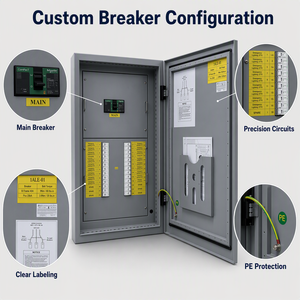
Operational cost reduction is driven by remote diagnostics. Integrated controller units monitor door access security, ambient humidity, liquid intrusion, AC input line conditions, DC bus voltages, and individual circuit breaker trip states via SNMP v2c/v3, HTTP web interfaces, and RS485 Modbus RTU.
When sourcing telecom cabinets at scale, procurement managers face critical trade-offs between intermediary catalog distributors and direct manufacturing plants in China. Partnering directly with an established engineering-focused factory delivers measurable advantages:
Drawing upon established North American and global engineering protocols developed since 1986, our manufacturing facilities integrate precision CNC laser cutting, automated robotic welding cells, and eco-friendly electrodeposition coating systems.
Every outdoor enclosure produced is engineered to eliminate single points of failure, featuring N+1 redundant cooling fans, dual AC grid/solar hybrid input terminals, and fire-suppression gas kit compatibility.
A rigorous engineering comparison to guide telecom procurement teams in specifying the correct enclosure architecture based on site environmental severity and heat load.
| Cabinet Configuration | IP / NEMA Ingress Rating | Thermal Cooling Method | Target Deployment Scenario | Core Structural Material |
|---|---|---|---|---|
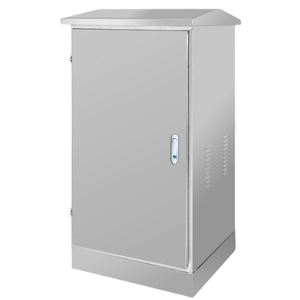
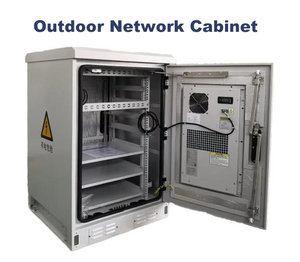
| Outdoor Integrated Base Station Cabinet | IP65 / NEMA 4X | Industrial Air Conditioner (300W - 3000W) + Heater | Extreme ambient climates (-40°C to +55°C), high thermal density 5G radio sites | 5052 Aluminum Alloy / Stainless Steel 304 |
| Outdoor Battery Backup Cabinet (BESS) | IP55 / NEMA 3R | Air-to-Air Heat Exchanger / TEC Peltier Cooling | Remote tower backup sites requiring thermal isolation for VRLA / LiFePO4 batteries | SGCC Hot-Dip Galvanized Steel (2.0mm thickness) |
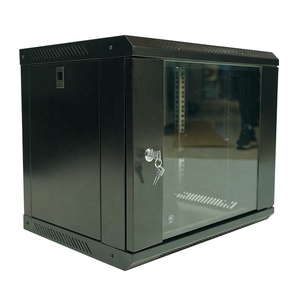
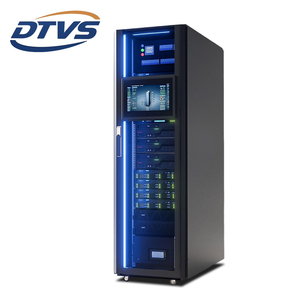
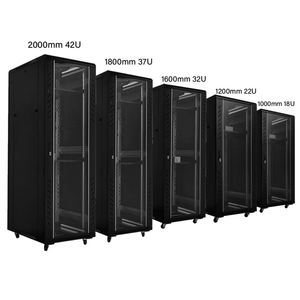
| Micro Data Center 42U Server Rack | IP20 / IP54 (Optional) | Precision In-Rack Air Conditioner + Smart PDU | Edge computing nodes, enterprise server rooms, CCTV head-end hubs | SPCC Cold Rolled Steel with heavy-duty frame (1500kg static load) |
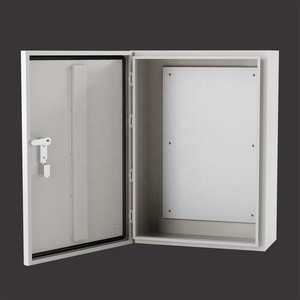
| Pole-Mounted 9U-18U Network Enclosure | IP55 / IP65 | Thermostat-Controlled Ultra-Quiet EC Fans | Fixed wireless broadband (WISP), small cell 5G, fiber optic splice nodes | Lightweight anti-corrosion Aluminum / Die-cast enclosure |
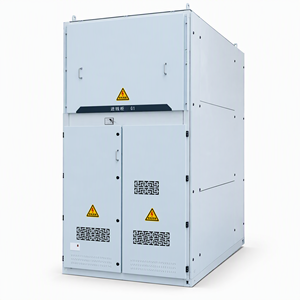
| High-Voltage Ring Network Switchgear Cabinet | IP4X / IP54 | Natural Convection + Anti-Condensation Heater | Utility power substations, industrial power distribution grid nodes | Armored Metal Clad KYN61-40.5KV Frame |
Key technological innovations reshaping how global buyers source telecom infrastructure from China manufacturers over the next decade.
Traditional telecom site builds involved separate purchases for cabinets, DC rectifiers, battery racks, air conditioners, and security monitors, resulting in high field assembly costs and site coordination delays. Procurement trends indicate a massive shift toward pre-integrated, factory-tested All-in-One outdoor cabinets. Arriving at the tower site completely pre-wired with plug-and-play internal power buses, these modular systems shorten site commissioning times from days to hours.
ESG (Environmental, Social, and Governance) targets are pushing telecom operators to specify carbon-neutral site cabinets. Sourcing requirements now prioritize dual-input hybrid controllers that seamlessly blend solar PV array inputs with unstable grid power or diesel generator backups. Furthermore, high-efficiency inverter heat exchangers reduce auxiliary energy consumption by up to 45% compared to conventional fixed-speed compressor cooling units.
Lead-acid batteries are rapidly being phased out in favor of high-energy-density LiFePO4 (Lithium Iron Phosphate) battery modules. Modern China telecom cabinet suppliers design specialized battery compartments featuring active cell-level BMS balancing, localized thermal runaway suppression (aerosol fire extinguishing capsules), and anti-theft mechanical locking latches.
Next-generation telecom cabinets incorporate IoT sensor matrices that stream health metrics to centralized cloud monitoring platforms. By analyzing compressor vibration, filter clog status, fan RPM decay, and battery internal resistance trends, operators transition from reactive site repairs to automated, predictive maintenance dispatches.
Expert engineering answers to common technical and commercial queries raised by B2B importers, telecom buyers, and engineering consultants.
Consult with our senior application engineering team to obtain custom technical drawings, single-line power diagrams, thermal calculations, and wholesale factory quotations tailored to your site specifications.