+1 877 930 0717 (NA Toll Free) Langley, BC, Canada DC Power Engineering Since 1986

China Top Lithium Battery Manufacturers & Supplier

Tier-1 Industrial Energy Storage Systems, LiFePO4 Cell Architectures & Solid-State Battery OEM/ODM Technical Solutions

Product Catalog & Technical Solutions

Featured Lithium Battery Packs & Storage Systems

Direct factory procurement solutions engineered for residential, commercial, industrial, telecom, and UAV high-energy densities.
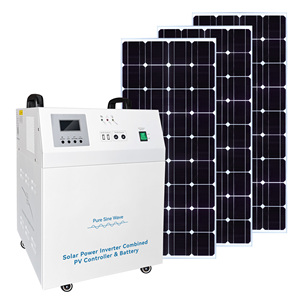
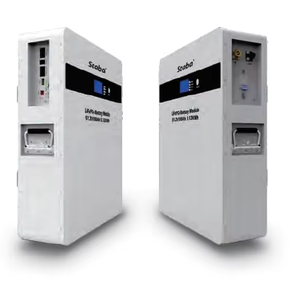
Solar Lithium Battery Home Energy Storage System

Solar Lithium Battery Home Energy Storage System Cells Solar Panel System Panneau Solaire

  • Integrated Smart BMS Architecture
  • 6,000+ Deep Cycle Life @ 80% DoD
  • Seamless Inverter Communication
Contact Us
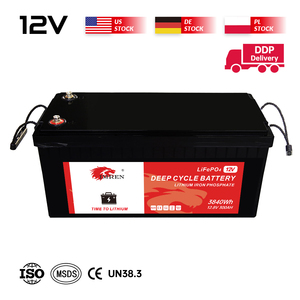
OEM EU Stock Portable 12v Lithium Batteries

OEM EU Stock Portable 12v 100ah 230ah 300ah 314ah 600ah 628ah Lithium Batteries For Solar Systems

  • Rapid EU Warehouse Logistics
  • Lead-Acid Drop-In Replacement
  • High-Current Discharge Resilience
Contact Us
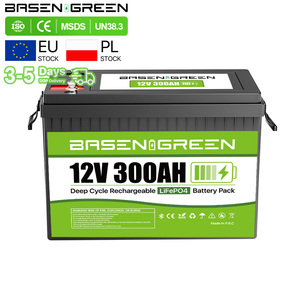
Poland Stock 12V 300Ah Lithium Ion LiFePO4 Solar Battery

Poland Stock 12V 300Ah Lithium Ion LiFePO4 Solar Battery Pack 12V 24V 48V 100Ah 200Ah 400ah

  • Zero Duty/Tax EU Sourcing Option
  • Prismatic Grade-A Cell Matrix
  • Robust IP65 ABS/Steel Enclosure
Contact Us
Energy Storage 48V 51.2V LiFePO4 Battery

Energy Storage 100ah 300AH 306ah 48v 314Ah 330ah 14kwh 15kwh 16kwh 51.2v LiFePO4 Battery

  • High Density 51.2V Architecture
  • Multi-Parallel Scalability up to 150kWh
  • CANbus/RS485 Protocol Native
Contact Us
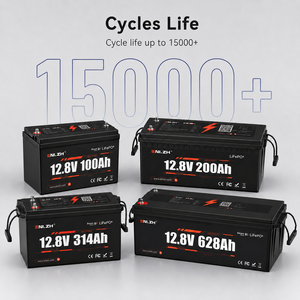
ENLZH Deep Cycle LiFePO4 Batteries

ENLZH 12V 50Ah, 100Ah, 150Ah, 200Ah, 314Ah, 320Ah, 628Ah, 640Ah LiFePO4 Batteries (6,000 Cycles)

  • Ultra-Long 6,000 Deep Cycles
  • Wide Capacity Spectrum (50Ah-640Ah)
  • Active Thermal Balancing Circuitry
Contact Us
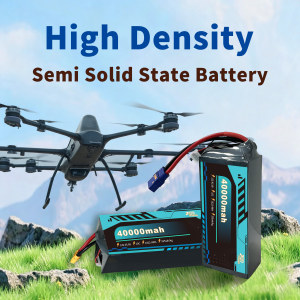
Solid State Battery Pack for Drones UAV

40AH OEM/ODM Solid State Battery Pack 6S-28S 350wh/kg LiNiMnCoO2 Cathode Drones/UAV

  • 350 Wh/kg Gravimetric Energy
  • Non-Flammable Solid Electrolyte
  • High C-Rate Continuous Discharge
Contact Us
LiFePO4 Battery Pack 51.2V UPS

LiFePO4 Battery Pack 51.2V 100Ah 200Ah 300Ah Deep Cycle Lithium Ion Battery For UPS & Solar

  • Sub-10ms Switching Telecommunications UPS
  • 19-Inch Cabinet Form Factor
  • Tier-1 Automated Cell Sorting
Contact Us
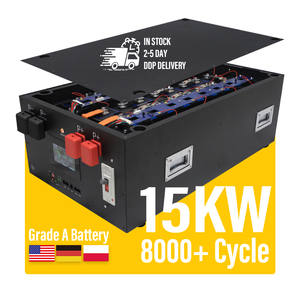
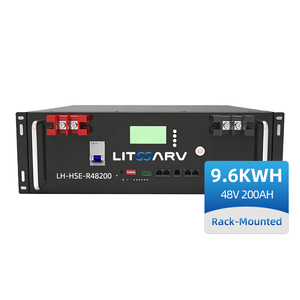
Rack Mounted LiFePO4 Battery Pack 48V 5Kwh 10Kw 15Kwh

OEM Rack Mounted LiFePO4 Battery Pack 48V 5Kwh 10Kwh 15Kwh Rack Mount Lithium Battery

  • Standard 3U/4U Rack Enclosure
  • Modular Capacity Stacking
  • Front-Facing Control & LED Telemetry
Contact Us
Engineering Precision & Benchmarks

Manufacturing Standards & Operational Scale

Quantifiable quality control indicators backing top-tier Chinese electrochemical manufacturing setups.

6,000+
Deep Life Cycles @ 80% DOD
350 Wh/kg
Solid-State Energy Density
314Ah+
Next-Gen Grid Form Factor
0.001%
Cell Voltage Matching Deviation

Navigating the Supply Chain of China's Top Lithium Battery Manufacturers

The global shift toward zero-emission grid infrastructures, decentralized solar energy storage systems (ESS), and high-reliability industrial power supplies has placed China at the epicenter of electrochemical energy technology. China currently controls over 75% of global lithium-ion cell manufacturing capacity and more than 80% of the raw material refining chain. For international procurement managers, engineering consultants, and OEM distributors, identifying high-quality China top lithium battery manufacturers requires looking beyond basic price-per-kilowatt-hour metrics to evaluate automated manufacturing execution systems (MES), cell matching protocols, safety compliance certifications, and intelligent Battery Management System (BMS) integration.

Procuring lithium energy storage systems directly from tier-1 Chinese manufacturers allows global buyers to leverage unprecedented economies of scale, cutting-edge chemical research, and localized warehousing ecosystems across Europe and North America. However, the structural diversity among suppliers—ranging from specialized cell assemblers to fully integrated gigafactories—demands a rigorous, data-driven procurement framework.

1. Cell Chemistry Architectures: LiFePO4 vs. NMC vs. Solid-State Solutions

Industrial lithium battery procurement is fundamentally defined by cathode chemistry, electrolyte phase, and mechanical cell design. A clear understanding of these parameters prevents operational failures under extreme climatic or electrical stress:

  • Lithium Iron Phosphate (LiFePO4 / LFP): Known for exceptional thermal stability, safety, and operational longevity. Featuring a crystal structure held by strong covalent P-O bonds, LFP cells resist thermal runaway up to 500°C. With lifespan ratings routinely surpassing 6,000 to 8,000 continuous deep cycles at 80% Depth of Discharge (DoD), LFP has established itself as the dominant standard for residential home storage, rack-mounted UPS systems, and large-scale utility grid containers.
  • Nickel Manganese Cobalt (NMC / LiNiMnCoO2): NMC chemistry continues to lead applications where volumetric and gravimetric energy density are paramount. By optimizing nickel ratios (such as NMC 811 or high-nickel formulations), NMC packs provide high specific energy (250–300 Wh/kg), making them critical for automotive electrification, portable emergency power units, and heavy-lift drones.
  • Next-Gen Solid-State Batteries: Utilizing solid inorganic or polymer electrolytes instead of flammable liquid organic solutions, solid-state batteries represent the technological frontier. With gravimetric energy densities reaching 350 Wh/kg to 500 Wh/kg, these packs deliver complete resistance to thermal dendrite puncture, ultra-wide operational temperature windows (-40°C to 85°C), and high continuous discharge currents essential for unmanned aerial vehicles (UAVs), tactical systems, and aerospace applications.

Prismatic Cell Precision

Aluminum-cased prismatic cells featuring laser-welded terminals engineered for maximum mechanical durability, high heat dissipation, and space-efficient pack construction.

Smart Active Balancing BMS

Integrated microcontrollers running dynamic active-balancing algorithms to equalize voltage deltas across cells, expanding battery pack lifespan by up to 25%.

Multi-Tier Safety Compliance

Full compliance with UN38.3, UL1973, UL9540A, IEC 62619, and CE certifications, validating drop resistance, thermal runaway mitigation, and seismic stability.

Strategic Procurement Analysis

Future Procurement & Sourcing Trends (2025–2030)

Key market dynamics transforming how B2B buyers spec, contract, and import Chinese battery technologies.

Global procurement of lithium-ion systems is shifting from simple spot-market buying to strategic OEM/ODM partnerships. To remain competitive, commercial buyers must align with manufacturers navigating three primary supply chain trends:

1. The Shift to High-Capacity Form Factors: 280Ah to 314Ah and 628Ah

The utility energy storage sector is rapidly phasing out standard 280Ah prismatic cells in favor of larger 314Ah, 320Ah, and 628Ah ultra-large capacity cells. Designed within standard containerized footprints, 314Ah cells increase system-level volumetric energy density by over 11% while reducing total electrical connection points, balance-of-plant (BOP) cabling costs, and installation labor. Top Chinese manufacturers have optimized their automated stacking lines to produce 314Ah cells without compromising thermal stability or cycle life.

2. EU Local Stocking & Duty-Free Warehouse Ecosystems

To overcome traditional 30-to-45-day sea transport timelines and volatile freight rates, leading Chinese battery manufacturers now maintain extensive regional inventory hubs across Eastern and Western Europe (most notably in Poland, Germany, and the Netherlands). Sourcing from **EU stock** allows EPC contractors and system integrators to secure fast delivery within 48 to 72 hours, eliminate import tariff compliance friction, and streamline localized RMA/warranty exchanges.

3. Battery Passport Transparency & ESG Traceability

With regulations like the European Union's Battery Regulation coming into effect, top-tier manufacturers in China are incorporating **digital battery passports**. Utilizing blockchain-backed supply chain tracking, these passports provide full transparency into raw material sourcing (cobalt, lithium, nickel), recycled content ratios, and manufacturing carbon footprints. B2B buyers prioritizing ESG compliance must insist on working with suppliers capable of delivering dynamic QR-coded operational history logs.

Battery Platform / Voltage Nominal Energy Capacity Optimal Application Field Cell Form Factor Cycle Life (80% DoD)
12.8V / 24V Portable Packs 100Ah – 628Ah Solar Backup, Marine, RV, Drop-in Lead Replacement Prismatic LiFePO4 > 4,000 Cycles
51.2V High-Density Server Rack 100Ah – 300Ah (5kWh - 15kWh) Telecom Base Stations, Server UPS, Microgrids 3U/4U Rack Prismatic > 6,000 Cycles
High-Voltage Stackable ESS 200V – 800V System Buses Commercial & Industrial Solar, Grid Peak Shaving 314Ah / 330Ah Cell Stacks > 8,000 Cycles
Solid-State Drone Formats 6S – 28S (40,000mAh) UAVs, Military Flight, High-Altitude Inspection Solid-State Polymer/NMC 1,000 – 1,500 Cycles
R&D Innovations

Product Development & Battery Technology Trends

Evaluating state-of-the-art developments in BMS intelligence, solid-state electrolytes, and thermal safety systems.

The difference between tier-1 tier manufacturers and standard assembly factories lies in continuous research and development. China's top battery producers are investing heavily in five core technological breakthroughs:

1. Smart Cloud-Linked BMS & Predictive AI Diagnostics

Modern battery management systems are evolving from passive protection boards into intelligent, IoT-enabled edge controllers. Advanced algorithms analyze internal resistance, thermal fluctuations, and micro-voltage drift in real time. Cloud connectivity allows plant managers to remotely monitor fleet-level health, perform OTA (Over-The-Air) firmware updates, and execute predictive maintenance protocols weeks before potential thermal or electrical issues occur.

2. Cell-to-Pack (CTP) and Cell-to-Chassis (CTC) Enclosure Design

By eliminating intermediate module housings, **Cell-to-Pack (CTP)** technology integrates prismatic cells directly into high-strength battery enclosures. This architecture boosts volumetric efficiency from 40% up to 60–70%, significantly cuts manufacturing assembly complexity, and reduces total pack weight. For stationary wall-mounted home storage and rack-mounted industrial UPS systems, CTP enables ultra-compact form factors that save valuable installation space.

3. Commercialization of Solid-State Electrolytes for Aviation and Robotics

While traditional liquid-electrolyte lithium cells face energy density plateaus around 260–280 Wh/kg, solid-state formulations push gravimetric performance past 350 Wh/kg. Featuring high-nickel LiNiMnCoO2 cathodes combined with solid inorganic electrolytes, these packs remove the risk of combustion under severe physical damage. Commercial drone manufacturers use solid-state packs to double flight times and expand operational capacity in sub-zero environmental conditions.

Enterprise Capabilities

Why Partner with Leading Chinese OEMs

Leveraging specialized manufacturing lines, rigorous quality assurance, and end-to-end custom engineering support.

Fully Custom OEM/ODM Design

Complete customization covering custom enclosure sheet metal, protocol matching (Victron, SMA, Growatt, Deye, Solis), custom branding, and specific voltage topologies.

Automated Cell Grading & Matching

Every single cell undergoes automated capacity testing, internal resistance sorting (≤0.5mΩ variance), and voltage matching to guarantee maximum pack balance.

Global Warranty & Local Technical Support

Comprehensive 5-to-10-year factory performance warranties supported by local European service hubs, fast replacement parts dispatch, and field technical support.

Procurement FAQ

Frequently Asked Questions by Industrial Buyers

Expert insights covering battery testing, shipping regulations, custom branding, and warranty policies.

What is the difference between Grade-A and Grade-B LiFePO4 cells?
Grade-A cells meet exact factory performance benchmarks for capacity, internal resistance, and physical dimensions, accompanied by official factory test reports. Grade-B cells exhibit minor capacity deficiencies (typically 2-5% below nominal capacity) or internal resistance imbalances and are discarded from primary automotive assembly. Reputable China top lithium battery manufacturers exclusively utilize certified Grade-A prismatic cells for commercial energy storage systems.
How do you ensure inverter compatibility with 48V/51.2V LiFePO4 battery packs?
Top Chinese suppliers incorporate multi-protocol CANbus, RS485, and RS232 communication interfaces directly into the battery BMS. Firmware protocols are pre-programmed to sync with leading global off-grid and hybrid inverters, including Victron Energy, SMA, Voltronic, Deye, Growatt, GoodWe, Solis, and Luxpower. Protocol switching can be performed via the front LCD touchscreen or DIP switches.
What certifications are required to import lithium battery packs into Europe and North America?
For maritime and air transit, UN38.3 testing reports along with Material Safety Data Sheets (MSDS) are mandatory. For market installation in Europe, CE, RoHS, and IEC 62619 safety standards are required. For North American utility and commercial deployments, systems must hold UL 1973 (stationary batteries) and UL 9540/UL 9540A (fire propagation testing) compliance certificates.
How does purchasing from Poland or EU stock benefit commercial buyers?
Sourcing directly from EU localized warehouses reduces shipping lead times from 35-45 days down to 2-5 business days. It allows regional buyers to avoid volatile sea freight surcharges, eliminates custom clearance delays, and allows smaller B2B orders to be fulfilled duty-paid (DDP terms) with minimal logistical friction.
What is the real-world operational life expectancy of a 51.2V 314Ah LiFePO4 pack?
Under standard operating conditions (0.5C charge/discharge rates at 25°C ambient temperature with an 80% Depth of Discharge), a Grade-A 314Ah LiFePO4 battery delivers over 6,000 to 8,000 continuous cycles. In daily cycling solar installations, this performance translates to an operational lifespan of 15 to 20 years before the pack reaches 70% of its original nominal capacity.