
Precision-engineered LiFePO4 battery modules, containerized ESS, hybrid PCS solutions, and high-speed DC EV charging infrastructure directly exported from certified Chinese gigafactories.
An authoritative analysis of industrial cell chemistry, vertical supply chain dominance, manufacturing standards, and strategic procurement frameworks for international EPC contractors.
The global transition toward renewable energy arbitrage and microgrid resilience has placed China at the epicenter of energy storage innovation. Tier-1 Chinese manufacturers have built complete supply chain verticality—from raw lithium refining and precursor chemical synthesis to automated cell tab welding and containerized Battery Energy Storage System (BESS) assembly.
By leveraging advanced automated mass-production processes, leading OEM factories maintain precise internal resistance matching (ΔACIR < 0.05 mΩ) across thousands of prismatic LiFePO4 cells. This precision eliminates passive balancing bottlenecks, extends operational life past 15 years, and guarantees system round-trip efficiency (RTE) exceeding 92%.

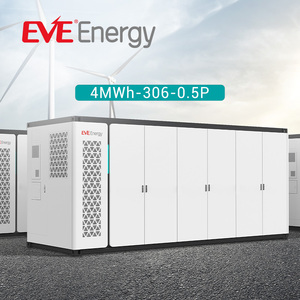
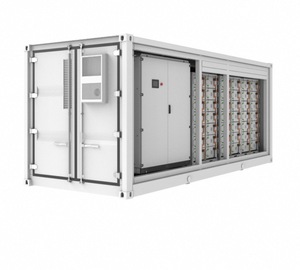
Next-generation 314Ah prismatic LFP cells replace legacy 280Ah form factors, expanding 20ft container capacity up to 5MWh without altering the volumetric footprint.
Advanced liquid-cooling plates deliver uniform temperature distribution across all cell modules, maintaining internal cell temperature variance under 2.5°C.
Smart BMS platforms support web-based SNMP interfaces, cloud telemetry, and automated cell balancing, reducing emergency truck rolls by over 70%.
Factory products carry full global safety certifications including UL1973, UL9540A thermal runaway failure analysis, IEC62619, CE, and UN38.3 transport safety.

As grid operators mandate stricter frequency regulation (FFR) and long-duration energy storage (LDES), procurement teams must transition from purchasing standalone battery packs to procuring fully integrated, dynamic software-hardware systems.
Key strategic shifts in energy storage procurement include:
Technical evaluation matrix for commercial integrators specifying battery chemistry, nominal voltage options, cooling architectures, and target application scenarios.
| Category | Typical Chemistry | Nominal Voltage | Cooling System | Key Target Application |
|---|---|---|---|---|
| Utility Grid-Scale BESS | LiFePO4 (306Ah / 314Ah) | 1000V DC - 1500V DC | Liquid Cooling Plate | Grid arbitration, Peak Shaving, Renewable Curtailment |
| C&I Modular Containers | LiFePO4 Prismatic | 768V DC / Custom | Forced Air / Liquid | Factory Backup, Commercial Solar Microgrids, Agriculture |
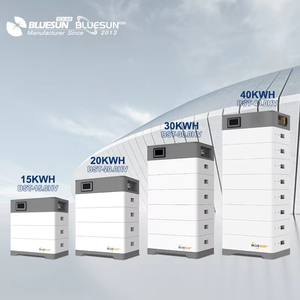
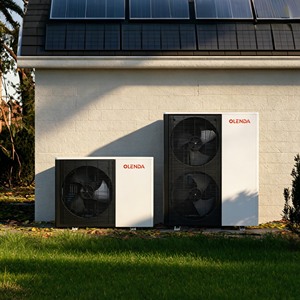
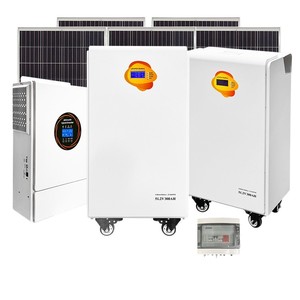
| Residential High-Voltage (HV) | LiFePO4 Modular Stack | 150V DC - 400V DC | Natural Convection | Whole-home Solar Backup, Time-of-Use Rate Optimization |
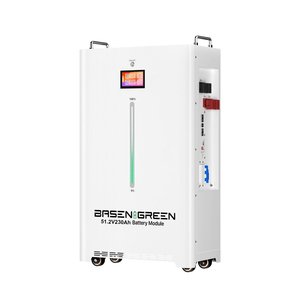
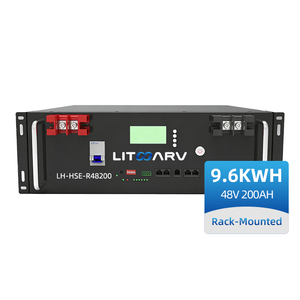
| Server Rack / Low-Voltage | LiFePO4 (48V / 51.2V) | 51.2V DC Nominal | Internal Air Cooling | Telecom Towers, Off-grid Cabins, Small Business Backup |
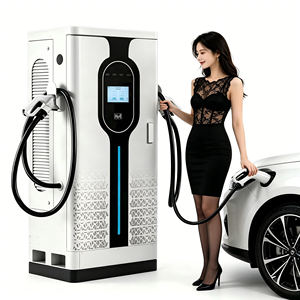
| Integrated EV Fast Chargers | Internal Buffer / Grid Hybrid | 200V - 1000V Output | Dynamic Air / Liquid | Highway Service Areas, Commercial EV Fleet Depots |
Our manufacturing complex combines rigid quality controls with global technical engineering support. We bridge the gap between Chinese gigafactory price advantages and international field-reliability requirements.

Technical and logistical answers for procurement managers, EPC contractors, and global distributors.
Our industrial and residential energy storage systems exclusively use high-grade Lithium Iron Phosphate (LiFePO4) chemistry. LiFePO4 offers superior thermal stability, immunity to thermal runaway compared to NMC chemistries, and an extended cycle lifespan exceeding 6,000 cycles at 80% Depth of Discharge (DoD).
Liquid cooling utilizes direct-contact cooling plates filled with glycol heat-transfer fluid, reducing cell temperature gradients to under 2.5°C. This leads to 20% higher energy density per square meter, lower internal energy consumption, and up to 33% longer overall system battery life compared to traditional forced-air container cooling.
All exported battery systems undergo rigorous international testing protocols. Depending on the product line, systems are compliant with UL1973 (battery units), UL9540A (large-scale fire safety failure testing), IEC62619 (industrial lithium safety), CE, and UN38.3 for dangerous goods transportation safety.
Yes. Our smart BMS platforms support pre-programmed CANbus and RS485 communication protocols compatible with major global inverter brands including Victron Energy, SMA, Deye, Growatt, Sol-Ark, GoodWe, and Sofar Solar.
Standard lead times for custom OEM rack batteries range from 15 to 25 days. Containerized systems (e.g., 20ft 4MWh BESS) require approximately 35-45 days for full integration, testing, and dangerous goods (Class 9 hazardous material) export clearance.
Our application engineering team provides complete technical consultation including single-line diagram reviews, load profile matching, thermal simulation analysis, and custom BMS protocol flashing prior to mass production.
Connect directly with our energy storage technical export engineers. Receive immediate assistance on battery sizing, load budget calculations, factory-direct OEM pricing, and global logistics options.