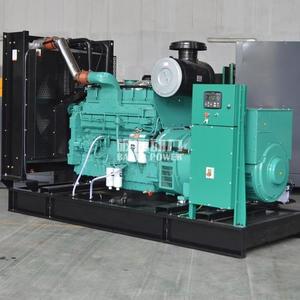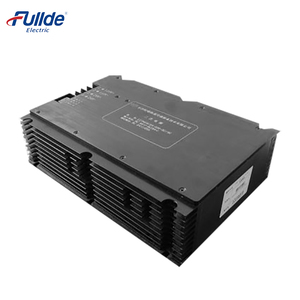
Engineered for high availability across communication towers, remote base stations, edge data centers, and critical industrial monitoring nodes.

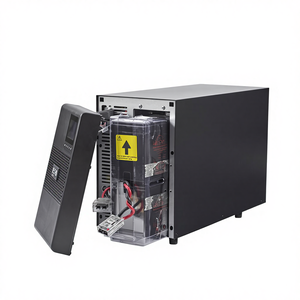
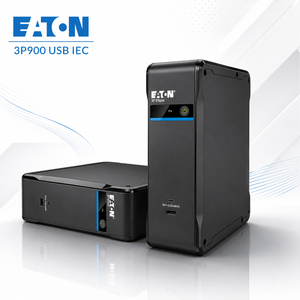

The global telecommunication ecosystem demands uncompromising 99.999% ("five-nines") availability across land mobile radio (LMR), fixed wireless broadband, fiber central offices, and 5G macro cell deployments. Power systems represent the backbone of this operational continuity.
Chinese telecom power manufacturers have emerged as world leaders by integrating cutting-edge power electronics, high-density modular topology, and automated manufacturing scalability. Partnering with top-tier exporters provides global telecom purchasing managers and network engineers with distinct advantages:
In the realm of telecommunications, the standard nominal bus voltage is -48VDC (with positive grounding to prevent electrochemical corrosion of buried telecom cabling). Modern DC power platforms convert incoming AC utility power into continuous, low-ripple DC power while simultaneously maintaining charge on standby battery banks. Should utility power fail, the battery system seamlessly supports the load without a microsecond of transfer interruption.
China's premier telecom power exporters specialize in multi-voltage architecture platforms supporting 12VDC, 24VDC, and 48VDC nominal buses. From 100W DIN-rail power supplies engineered for remote fiber huts and small cell nodes to multi-kilowatt hot-swappable rack-mount rectifier shelves, Chinese manufacturing capabilities cover the entire power conversion lifecycle.
Modern switched-mode rectifier modules feature peak power conversion efficiency above 97%, substantially reducing site cooling loads, carbon footprint, and annual OPEX for network operators.
Parallel live module hot-swapping allows live system scaling and maintenance without shutting down the main DC bus. N+1 redundancy guarantees continuous service during module failure.
Replacing traditional VRLA lead-acid batteries with Lithium Iron Phosphate chemistry provides 3x cycle life, superior high-temperature resistance (+60°C), and 70% weight reduction for elevated tower sites.
As telecom operators roll out 5G standalone networks, edge computing nodes, and off-grid remote satellite communication stations, power requirements are shifting rapidly. Leading exporters are implementing four key technological innovations into their standard OEM/ODM production lines:
1. Hybrid Renewable Energy Integration: Remote off-grid towers are increasingly transitioning to hybrid power systems. Chinese manufacturers are building integrated enclosures that accept multiple energy inputs—Solar PV, Wind Turbines, Utility Grid, and Diesel Generator backup—managed by an intelligent maximum power point tracking (MPPT) controller.
2. Embedded Remote Site Telemetry (SNMPv3 & Web HTML5): The days of sending technicians on expensive "truck rolls" to check simple breaker statuses or battery voltages are over. Next-generation Chinese telecom power units feature integrated Ethernet controllers supporting SNMPv3, HTTPS web interfaces, MODBUS RTU, and MQTT protocols for direct cloud platform analytics.
3. Dual Bus DC Distribution Panels: High-reliability network core facilities utilize dual bus (A/B side) power distribution. Dual bus chassis provide two electrically isolated DC distribution buses in a single physical rack space, allowing dual-corded server and radio hardware to draw power from completely separate battery and rectifier channels.
4. Intelligent Low-Voltage Disconnect (LVD): To safeguard expensive battery banks against destructive deep discharge during prolonged grid outages, smart telecom power controllers incorporate multi-stage Low-Voltage Disconnect systems. Non-critical loads are shed first, reserving remaining battery reserve capacity for mission-critical core emergency communications.
Quantifiable performance metrics demonstrated by leading Chinese export-grade power suppliers.
Customized power distribution and backup configurations designed for specific network topologies.
Fixed wireless access (FWA) towers and fiber-to-the-home (FTTH) distribution huts require compact, weatherproof power distribution. DIN-rail mountable DC power supplies and integrated battery chargers ensure continuous uptime for optical line terminals (OLT) and wireless backhaul radios.


Mission-critical emergency communication networks (P25, TETRA, DMR) used by first responders require maximum noise isolation and ultra-low electromagnetic interference (EMI). Standby power systems engineered for LMR applications feature ultra-clean DC outputs with minimal ripple voltage (<10mV RMS).
Use this reference table to evaluate power topology, voltage parameters, and monitoring capabilities across product classes.
| System Category | Nominal Bus Voltage | Max Capacity Range | Primary Redundancy | Monitoring Protocol | Target Application |
|---|---|---|---|---|---|
| Modular Hot-Swap Shelves | -48VDC / +24VDC | 1kW to 30kW+ | N+1 / N+2 Hot-Swap | SNMPv3, HTTPS, MODBUS | 5G Macro Sites, Core Central Offices |
| Single-Chassis Power Supplies | 12VDC / 24VDC / 48VDC | 300W to 2.4kW | Standalone / Dual Input | Web Interface / Dry Contact | LMR Repeater Sites, Wireless ISPs |
| DIN-Rail Power & Chargers | 12VDC / 24VDC / 48VDC | 100W to 960W | Diode ORing Parallel | Relay Alarm Output | Industrial SCADA, Microcells, Fiber Cabinets |
| DC-DC Voltage Converters | Step Up / Step Down | 100W to 1.5kW | Isolated Topology | Internal Diagnostics | Mixed-Voltage Equipment Racks (e.g. 48V to 24V) |
| Pure Sine Wave Inverters | 48VDC Input / 110/220VAC | 1kVA to 10kVA | Automatic AC Bypass | SNMP / RS485 | AC Equipment in DC-Dominant Telecom Huts |
| Hybrid Solar/Diesel Controllers | 48VDC Multi-Source | Up to 15kW PV Input | Multi-Source Auto-Switch | Cloud Telemetry / GSM / Ethernet | Off-Grid Remote Tower Stations |
How top-tier Chinese telecom power exporters maintain strict quality assurance and customization standards.
Top Chinese suppliers do not merely assemble components; they operate full-scale R&D engineering laboratories equipped with environmental burn-in chambers, surge generator test benches, and automated optical inspection (AOI) lines.
Every telecom power shelf undergo strict quality assurance gates prior to packaging and international shipping:

Clear, definitive engineering answers addressing real-world sourcing, technical parameters, and export logistics.
24VDC bus architecture is traditionally utilized in legacy land mobile radio (LMR) installations, vehicular dispatch setups, and industrial SCADA cabinets. Conversely, -48VDC is the global standard for cellular telecommunications, fiber transmission networks, and internet service provider core facilities. Negative 48VDC grounding minimizes galvanic corrosion on copper wiring in moist site conditions. Modern modular power shelves from China can often be configured for either output voltage depending on module selection.
N+1 redundancy means the power shelf contains one more rectifier module than required to support the maximum site load. For example, if a base station requires 2000W of DC power, and each rectifier module provides 1000W, a system configured with 3 modules (3000W total capacity) provides N+1 redundancy. The load is evenly shared across all modules during normal operation. If one rectifier fails, the remaining modules instantly pick up the load without interruption, while triggering an SNMP alarm for field replacement.
Yes. Premium telecom power supplies feature adjustable float, absorption, and equalization voltage parameters. Additionally, advanced controllers offer direct CAN-bus or RS485 communication protocols that interface seamlessly with smart Battery Management Systems (BMS) from major energy storage manufacturers. This ensures dynamic charge current adjustment based on real-time cell temperatures and voltages.
Most Intelligent DC power units come standard with an integrated Ethernet port supporting SNMPv1/v2c/v3, HTTPS, TELNET, and MODBUS TCP/IP. Network managers can compile the manufacturer's MIB (Management Information Base) file directly into monitoring platforms such as SolarWinds, PRTG, Zabbix, or proprietary carrier NOC systems to view live bus voltages, load currents, ambient temperatures, and individual circuit breaker trip statuses.
International buyers should ensure the supplier provides verified test reports for IEC/EN 62368-1 (Information Technology and Audio/Video Equipment Safety), ETSI EN 300 132-2 (Environmental/Power interfaces at telecom equipment inputs), CE EMC Directive (EN 55032 Class B), and RoHS/REACH material compliance. For North American deployments, check for UL 62368-1 or CSA equivalent compliance marks.
Standard catalog models usually ship within 2 to 3 weeks. Custom OEM/ODM projects (involving modified sheet metal chassis, specific DC distribution breaker counts, pre-wired wiring harnesses, or custom firmware MIBs) typically require 4 to 6 weeks for sample validation and initial mass production. Export products are packed in heavy-duty sea/air transport wooden crates with humidity-proof vacuum sealing.
Need customized rack layouts, specific DC distribution breaker options, or factory-direct bulk quotation? Speak directly with our senior power application engineers today.
Get Catalog