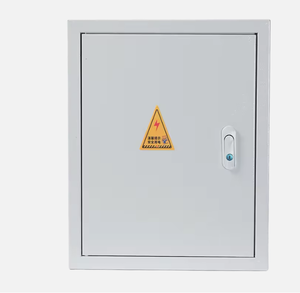
Engineered for harsh ambient conditions, mission-critical infrastructure, energy storage, and industrial power distribution.
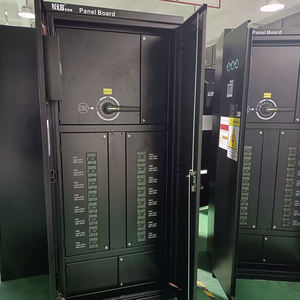
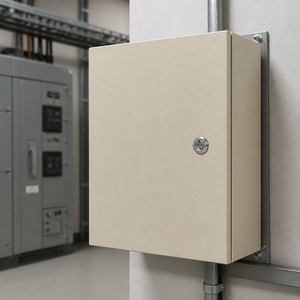
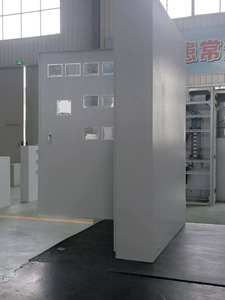
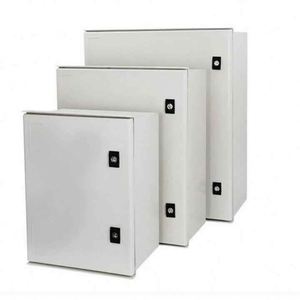
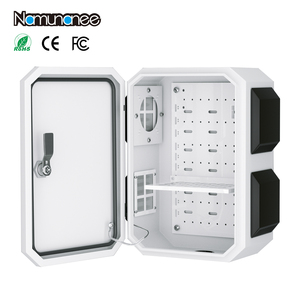
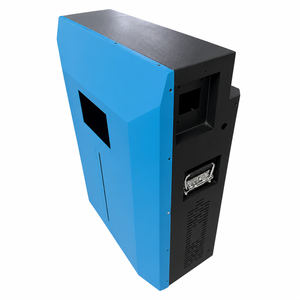
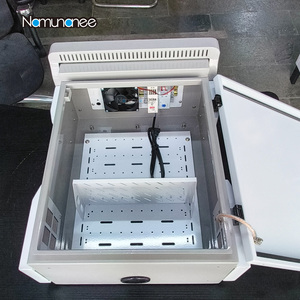
In the rapidly evolving power distribution, telecom, and renewable energy sectors, the integrity of an electrical enclosure directly governs system uptime, personnel safety, and operational longevity. As electrical infrastructure expands into extreme environmental zones—from coastal off-shore solar farms to high-humidity equatorial telecom towers—selecting top-tier China Power Enclosure Manufacturers & Exporters requires an authoritative understanding of metallurgy, ingress protection standards, thermal dynamics, and structural compliance.
A power enclosure is no longer merely a passive steel cabinet. Modern industrial enclosures act as active environmental shields, providing calibrated thermal management, electromagnetic compatibility (EMC) shielding, seismic structural integrity, and smart edge-monitoring capabilities. Premium Chinese manufacturers have shifted from contract sheet-metal fabricators to strategic technology partners delivering full-stack engineering design, finite element analysis (FEA), automated robotic production, and rigorous compliance testing under ISO 9001, UL 508A, IEC 62208, and NEMA standards.
Core Technical Insight: Information gain in modern power enclosure evaluation centers on total cost of ownership (TCO). While initial acquisition costs dominate initial RFQs, lifecycle degradation from localized micro-galvanic corrosion, gasket compression set failure, and inadequate thermal dissipation account for 78% of premature field equipment replacement.
The operational resilience of an electrical housing is fundamentally bound to its base material selection and precision sheet metal fabrication techniques:
| Material Type | Tensile Strength (MPa) | Corrosion Resistance | Ingress / Impact Rating Range | Target Application Fields |
|---|---|---|---|---|
| Cold-Rolled Steel (Powder Coated) | 270 – 410 | Moderate (Salt spray 500h-1000h) | IP54 to IP65 / IK08 | Indoor industrial control, power factor cabinets, domestic distribution |
| Stainless Steel 316L | 485 – 620 | Exceptional (Salt spray > 2000h) | IP66 / IK10 | Offshore wind, marine power distribution, chemical plants |
| Aluminum Alloy 5052 | 210 – 260 | High (Self-passivating oxide) | IP55 to IP66 / IK09 | Outdoor 5G micro-stations, CCTV junction boxes, pole mounts |
| Fiberglass (SMC/FRP) | 140 – 230 | Immune to Rust & Chemicals | IP66 / IK10 (High UV stability) | Solar PV combiners, corrosive chemical hubs, outdoor sockets |
Leading Chinese OEM/ODM exporters have revolutionized electrical enclosure manufacturing through heavy investment in Industry 4.0 automation. The transformation from manual punch pressing to integrated digital twin manufacturing enables batch-of-one customizability with short lead times and repeatable precision.
High-precision fiber laser cutting machines (utilizing 12kW to 30kW laser sources) cut complex cutouts, venting louvers, and DIN-rail mounting slots with zero thermal deformation and tolerances within ±0.05mm. CNC multi-axis servo press brakes execute precision bending sequences, ensuring crisp corner radii and flush-fitting doors that maintain seamless gasket contact across 360 degrees.
A critical differentiator in IP65 and IP66 rated enclosures is the sealing gasket methodology. Top manufacturers utilize 2-component continuous CNC polyurethane foaming machines. Unlike traditional glued rubber strips that degrade, shrink, or split over time, seamless poured-in-place PU foam gaskets bond directly to the metal substrate, maintaining elastic memory and elasticity under extreme temperature cycles (-40°C to +80°C).
Prior to powder application, sheet metal enclosures undergo multi-stage automatic pretreatment: degreasing, acid pickling, zinc phosphating or zirconium nanotechnology passivation, and deionized water rinsing. Electrostatic powder coating lines apply weatherable TGIC-free polyester coatings at controlled thicknesses (80 to 120 microns), cured at 200°C to achieve scratch-resistant, UV-proof surfaces tested against ASTM B117 salt spray exposure for over 1000 hours.
Sourcing engineers and procurement executives must align their supply chain strategies with shifting technology vectors in the power sector. Over the next decade, four key trends will define the global power enclosure ecosystem:
Power enclosures are transitioning into intelligent edge nodes. Modern distribution cabinets are increasingly pre-fitted with embedded ambient temperature/humidity sensors, flood detectors, door-intrusion switches, micro-vibration monitoring, and digital power factor meters. Automated Ethernet/RS485 modbus interfaces feed telemetry directly to central Network Operations Centers (NOC), facilitating predictive maintenance and reducing costly truck rolls.
The exponential growth of renewable energy microgrids has driven demand for specialized Wall-Mounted and Floor-Standing Battery Enclosures. These housings require integrated thermal isolation, active HVAC or liquid-cooling manifolds, fire suppression conduit routing, explosion-relief pressure venting, and reinforced structural loading to accommodate heavy lithium iron phosphate (LiFePO4) battery packs.
EPC contractors increasingly demand plug-and-play enclosure assemblies. Rather than receiving empty metal shells, buyers prefer pre-assembled solutions complete with pre-configured circuit breakers, busbars, power factor correction capacitors, surge protective devices (SPD), and internal wiring harnesses—drastically cutting site installation time and field commissioning risk.
In response to global ESG mandates and carbon boundary adjustments, Chinese Tier-1 exporters are adopting eco-friendly manufacturing processes. This includes utilizing low-carbon recycled aluminum, zero-VOC powder coatings, solar-powered fabrication facilities, and recyclable packaging materials to minimize Scope 3 supply chain carbon intensity.
Combining decades of precision engineering expertise, comprehensive certification, and agile OEM customization.
Full 3D CAD/CAM DFM assistance. From customized sheet metal dimensions, knockout hole placement, and internal mounting plates to rapid physical sample delivery within 5 to 7 business days.
Rigorously tested and certified IP54, IP55, IP65, and IP66 ingress protection ratings. Dust-tight seal design paired with high water jet resistance for extreme outdoor reliability.
In-house metal shearing, fiber laser cutting, CNC bending, robotic TIG/MIG welding, automated PU gasket foaming, and powder coating lines guarantee end-to-end quality control and competitive factory pricing.
Decades of experience exporting to over 60 countries across North America, Europe, Southeast Asia, and the Middle East. Complete international trade compliance, ocean-ready plywood crating, and drop-ship support.
Essential technical and procurement guidelines for sourcing industrial power enclosures from China.
Ingress Protection (IP) ratings define environmental sealing performance. IP54 offers protection against limited dust ingress and water spray from any direction (ideal for standard indoor distribution). IP55 adds protection against low-pressure water jets. IP66 provides complete dust-tight protection and resistance against powerful water jets from heavy rain or marine washdowns, making it suitable for severe outdoor infrastructure.
For standard outdoor urban environments or mild industrial settings, SUS304 provides superb oxidation resistance and cost efficiency. For coastal regions (within 5 miles of salt ocean air), chemical processing plants, marine vessels, or offshore installations, SUS316 (or SUS316L) is mandatory due to its molybdenum content, which prevents chloride pitting corrosion.
Yes. As a primary OEM/ODM manufacturer, we customize enclosure dimensions, door hinge orientation, mounting bracket configurations, cable gland knockout plates, louvered ventilation slots, fan cutouts, and clear acrylic viewing windows based on your exact DXF/DWG/STEP CAD files.
Depending on heat dissipation calculations (Watts loss), we offer passive solutions (louvered vents with insect filters, thermal conductive aluminum housings) and active solutions (forced-air IP55 fan packages with thermostats, thermoelectric Peltier coolers, or fully integrated side-mounted industrial AC air conditioners for sealed IP66 environments).
Every production batch undergoes comprehensive quality control: 1) Dimensional inspection using 3D laser scanners; 2) Coating thickness measurement and cross-hatch adhesion testing; 3) ASTM B117 salt spray corrosion testing; 4) IPX5/IPX6 high-pressure water chamber spray testing; 5) Earthing continuity and mechanical latch cycling tests.
Custom engineering 3D CAD approval takes 24–48 hours. Physical samples and prototypes are produced within 5 to 7 working days. Standard bulk export shipments (20ft or 40ft containers) are completed within 15 to 25 calendar days, supported by expedited sea, air, or rail freight packaging.
Connect with our senior application engineering team to receive instant technical advice, DFM review, 3D drawings, and factory-direct wholesale pricing within 24 hours.
Inquire Now