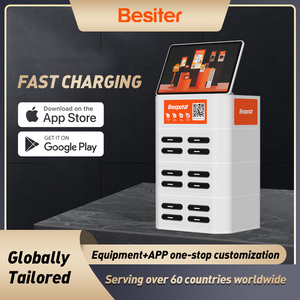
Besiter 12-Slot 22.5W Fast Charging Power Station
- Capacity: 12-Slot Rental Hub
- Output: 22.5W Fast Charge
- Interface: 10.1" Smart Screen

Explore high-efficiency DC-DC converters, online UPS platforms, and mission-critical standby power supply units engineered by premier Chinese manufacturing facilities.
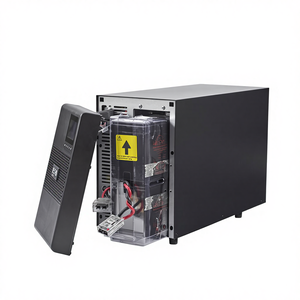
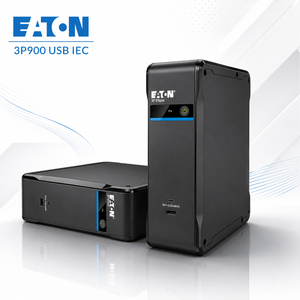
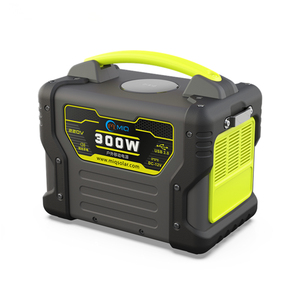
An authoritative analysis on global power conversion technology, manufacturing criteria, and OEM selection for system integrators.
In the global energy transition era, the demand for high-density, intelligent DC-DC power converters and switched-mode power supplies (SMPS) has scaled exponentially. As telecom networks deploy 5G architectures, industrial plants transition to Automated Guided Vehicles (AGVs), and renewable microgrids require precision DC voltage matching, choosing the right manufacturing partner in China has evolved from a simple cost exercise into a crucial strategic risk management task.
China accounts for over 65% of global power conversion module manufacturing. However, top-tier buyers look beyond raw assembly costs. Tier-1 factories distinguish themselves through wide-bandgap (GaN/SiC) semiconductor integration, automated planar transformer manufacturing, and Ethernet/SNMP telemetry protocols integrated directly onto the DC conversion board.
Modern power electronics require uncompromising reliability. A DC-DC converter deployed at an isolated Land Mobile Radio (LMR) tower or offshore wind terminal must withstand dirty input lines, extreme thermal shocks (-40°C to +85°C), and high continuous duty cycles. Partnering with top-tier Chinese manufacturing facilities provides direct access to mature supply chains, automated surface-mount technology (SMT) lines, and custom topology engineering designed for zero-downtime applications.
Core performance standards achieved across leading OEM power manufacturing facilities in China.
Key technological shifts and sourcing methodologies reshaping the global DC converter and standby power supply industry through 2030.
Next-generation DC-DC converters are transitioning from silicon MOSFETs to Gallium Nitride (GaN) and Silicon Carbide (SiC). This shift allows switching frequencies to surpass 500 kHz, reducing passive component sizes by 40% while raising efficiency curves above 97%.
Static analog converters are being replaced by digital PMBus, CANbus, and HTML/Ethernet-enabled units. Hardware specifiers now demand real-time telemetry—monitoring per-circuit current draw, ambient thermal margins, and degradation metrics directly from centralized NOC dashboards.
To eliminate single points of failure in telecom hubs and server facilities, procurement strategies prioritize modular hot-swappable converter shelves. Sub-modules can be replaced under live load conditions without dropping the downstream DC bus.
| Technology Generation | Typical Efficiency | Power Density | Thermal Dissipation | Primary Applications |
|---|---|---|---|---|
| Legacy Silicon (Si) PWM | 85% - 90% | 15 - 25 W/in³ | High (Requires large heatsinks) | Basic industrial panels, low-cost equipment |
| High-Freq Synchronous Rect. | 91% - 94% | 35 - 55 W/in³ | Moderate (Forced air cooling) | Standard Telecom rectifiers, Din-rail supplies |
| Next-Gen GaN / SiC Hybrid | 96% - 98.5% | 80 - 120+ W/in³ | Ultra-Low (Conduction/Planar cooling) | 5G Small cells, aerospace, automated robotics |
Leveraging deep OEM expertise, certified production standards, and vertically integrated engineering for global power distribution.
Leading Chinese plants do not simply build off-the-shelf commodities. Factories support high-mix, custom input/output tailoring across nominal bus rails (12VDC, 24VDC, 48VDC, 110VDC, and 380V High Voltage DC system architectures).
Tier-1 factories maintain ISO9001, ISO14001, and IATF16949 quality accreditations. Automated SMT optical inspection (AOI), automated X-ray testing for BGA components, and 100% full-load thermal burn-in ensure high reliability out of the box.
Export-grade products come pre-certified for international markets, including UL 62368-1 (IT & AV Equipment Safety), CE, FCC Class B EMC compliance, RoHS environmental standards, and EN 50155 railway standards.
Technical and commercial answers addressing common engineering inquiries during Chinese supplier evaluation.
Factories support a broad range of isolated and non-isolated configurations. Standard nominal inputs range from 9-36VDC wide-range automotive inputs up to telecom-grade 36-75VDC inputs. Common output rails include step-down 12VDC, 5VDC, 3.3VDC, as well as step-up 24VDC and 48VDC outputs tailored to specific battery float voltages.
Industrial-grade OEM converters utilize high-frequency planar transformers providing 1500VDC up to 3000VDC isolation ratings between input, output, and chassis ground. This prevents ground loops and protects delicate digital processing boards from high-voltage transient surges on industrial lines.
Manufacturers provide tailored cooling topologies based on your deployment enclosure. Options include baseplate-cooled modules designed for cold-wall conduction heat sinking, fanless natural convection units with extruded aluminum heatsinks, and forced-air intelligent fan-regulated modules for high-density rack shelves.
For custom PCB form factors or modified output voltages, prototype samples are typically delivered within 3 to 5 weeks post-engineering review. Non-Recurring Engineering (NRE) charges are routinely waived or credited back upon achieving pre-agreed annual volume production milestones.
Consult with technical specialists to review single-line diagrams, calculate load budgets, and source high-efficiency DC power systems.