
Technical Whitepaper: The Evolution of China’s Battery Cabinet Manufacturing Landscape
The global transition toward renewable energy integration, decentralized microgrids, and mission-critical 5G telecommunication infrastructure has drastically reshaped the requirements for energy storage system (BESS) housing. Selecting China's best battery cabinet manufacturers and suppliers is no longer merely a commercial procurement task—it is a critical engineering decision that dictates operational availability, system longevity, safety compliance, and total cost of ownership (TCO).
Contemporary battery cabinets operate under rigorous environmental and operational stress. Modern lithium-ion chemical formulations—specifically Lithium Iron Phosphate (LiFePO4) and Nickel Manganese Cobalt (NMC)—demand highly stable operating thermal envelopes to prevent accelerated capacity degradation, cell imbalance, and catastrophic thermal runaway. Consequently, top-tier Chinese manufacturers have shifted from traditional static sheet-metal enclosure assembly toward multi-physics engineered containment solutions that integrate active thermal management, intelligent remote telemetry, structural seismic resistance, and automatic fire suppression.
Information Gain Insight: Advanced battery cabinet engineering in 2025 and beyond requires structural containment capable of handling up to 150 kPa overpressure vents, certified C5-M marine-grade anti-corrosion exterior coatings, and dynamic air/liquid thermal fluid dynamics balancing cell-to-cell delta T within ≤ 2.5°C across all rack elevations.
As a leading engineering partner rooted in North American quality standards and automated Chinese production lines, our manufacturing framework incorporates decades of DC power expertise. By merging automated robotic metal fabrication with advanced thermodynamics and digital twin simulations, we supply global system integrators with enclosures that excel under extreme thermal fluctuations, high humidity, salty coastal atmospheres, and high-seismic zones.
Strategic Manufacturing Strengths & Quality Assurance Infrastructure
China's battery cabinet supplier ecosystem offers vast industrial scalability, but true enterprise leadership is defined by engineering precision, rigorous quality assurance (QA), and deep customization (OEM/ODM) capabilities. Below are the pillars of our engineering and manufacturing advantages:
Robotic Sheet Metal Fabrication
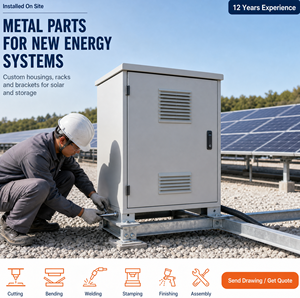
Utilizing high-precision CNC fiber laser cutting, automated 12-axis bending cells, and continuous robotic MIG/TIG welding. Enclosures achieve tolerance limits within ±0.1mm, ensuring perfect air-tight seals and structural rigidity.
C5-M Heavy Corrosion Resistance
Pre-treated through a multi-stage zinc phosphate immersion process followed by thermosetting outdoor polyester powder coating. Tested against ISO 12944 standard salt spray exposure exceeding 1,500 hours without red rust initiation.
Intelligent Ethernet & SNMP Telemetry
Embedded controller architecture supporting Web HTML, SNMPv3, and Modbus TCP/RTU interfaces. Enables remote NOC management for per-circuit load monitoring, temperature tracking, door security, and automated fan speed regulation.
Our production workflow incorporates mandatory end-of-line (EOL) testing. Every outdoor battery enclosure undergoes positive pressure bubble leak testing, IP65 water jet testing according to IEC 60529, high-voltage ground dielectric withstand tests, and full thermal cycle validation before leaving the factory.
Key Industry & Technological Trends Transforming Battery Cabinets
The energy storage ecosystem is rapidly advancing toward higher energy density, larger battery cell capacities (306Ah, 314Ah, and 500Ah+ utility-scale cells), and tighter footprint constraints. Procurement managers and lead design engineers must align their specifications with four prevailing industry technology trends:
1. Transition from Air Cooling to Liquid-Cooled Battery Cabinets
While traditional forced-air HVAC systems remain cost-effective for standby telecom sites and low-rate C-rate batteries, high-power grid support and fast-charging industrial energy storage systems are overwhelmingly adopting liquid cooling plate technology. Liquid-cooled cabinets integrate chillers, ethylene glycol circulating loops, and aluminum cold plates directly attached to battery module cells. This reduces internal parasitic energy consumption by up to 30% and keeps inter-cell temperature variances under 2.0°C, extending battery cycle life by 20% to 30%.
2. Multi-Stage Active Fire Suppression & Thermal Runaway Isolation
Following strict global safety frameworks such as NFPA 855, UL 9540, and UL 9540A, battery cabinet design has evolved from passive housing to active fire-extinguishing systems. Modern smart cabinets feature three-level safety isolation: early off-gas detection (VOC, CO, H2 sensors), localized module-level FK-5-1-12 (Novec 1230) gas flooding, and secondary deluge water connection ports alongside automatic mechanical deflagration pressure relief vents.
3. Modular Hot-Swap Architecture & Standardized 19-Inch/23-Inch Racks
Site operators demand zero-downtime maintenance. Standardized 19-inch rack enclosures with hot-swappable power conversion modules (PCS), modular battery tray slides, and dual-bus DC distribution panels allow field service personnel to replace modules under energized system conditions without interrupting site availability.
4. AI-Driven Edge Analytics and Dynamic Climate Control
Next-generation smart cabinets employ edge computing controllers that analyze ambient weather forecasts, solar generation curves, and internal load profiles to dynamically modulate compressor speeds and heater arrays, preventing internal condensation before humidity dew points are reached.
Future Procurement Trends: How Global Buyers Select Chinese Suppliers
Global B2B procurement of battery enclosures has evolved beyond simple unit pricing. Enterprise buyers now evaluate suppliers based on comprehensive lifecycle costs, supply chain resilience, and environmental compliance. Strategic sourcing directors should evaluate prospective Chinese partners against the following procurement matrix:
| Cabinet Category | Thermal Strategy | Target Application | Standard Compliance | Procurement Value Drivers |
|---|---|---|---|---|
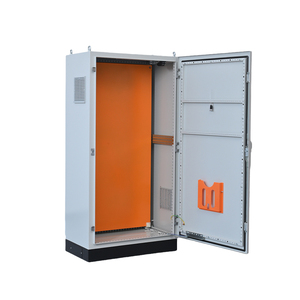
| Telecom Outdoor Cabinet | DC Air Conditioner / Heat Exchanger | 5G Base Stations, Fiber Huts, Remote Towers | IP55 / IP65, Telcordia GR-487, CE | Low footprint, solar radiation shield, dual bus backup |
| Industrial BESS Cabinet | Liquid Cooling / Chilled Water Plate | Microgrids, Peak Shaving, EV Fast Charge | UL 9540, UL 9540A, IEC 62619, UN38.3 | High energy density, low delta T, low parasitic load |
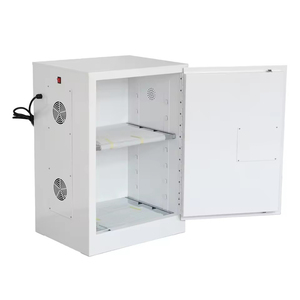
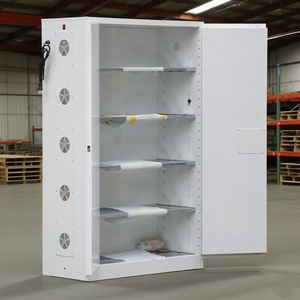
| Smart Lithium Fireproof Safe | Forced Air + Aerosol Flooding | Scooter Battery Swapping, Tool Charging | EN 14470-1, NFPA 855, IP54 | Individual cell compartment isolation, gas detection |
| Wall-Mount / Pole-Mount Enclosure | Natural Convection / Filtered Fan | CCTV Security, Solar Edge, IoT Nodes | NEMA 4X / IP66, IK10 Impact Rated | Lightweight aluminum/SS304, vandal resistance |
When issuing Requests for Quotation (RFQs) to Chinese OEMs, enterprise buyers should insist on full material traceability (mill test certificates for steel sheets), third-party IP ingress test reports from certified labs (such as TÜV, SGS, or Intertek), and clear warranty commitments covering both structural sheet metal and integrated active components (HVAC, fire sensors, PDU).
Frequently Asked Questions (FAQ) - Battery Cabinet Sourcing & Engineering
Below are technical and commercial answers to the most common inquiries received by our application engineering team from international EPC contractors, telecom operators, and BESS integrators.
Partner with China’s Leading Battery Cabinet Engineering Specialist
Need custom outdoor battery cabinets, telecom power enclosures, or UL-compliant BESS structures? Contact our application engineering team today to receive detailed technical CAD drawings, thermal simulation reports, and direct factory pricing.
Get Catalog & Custom Quote