
+1 877 930 0717 (NA Toll Free) Langley, BC, Canada DC Power Engineering Since 1986
CE Certified Engineering • ISO9001 Factory Direct

CE Certified Base Station Manufacturer & Exporter

High-Availability Telecommunication Power Infrastructure, Intelligent DC Rectifiers & Uninterruptible Backup Power Solutions for 4G/5G Wireless Networks

Enterprise Grade Equipment

Featured Base Station & Power Backup Systems

As an established CE-certified manufacturer and global exporter, we supply mission-critical power conversion, rectifiers, and standby energy backup platforms designed for continuous base transceiver station (BTS) resilience.

Besiter Fast Charging Rental Power Station
Besiter 12-Slot 22.5W Fast Charging Portable Power Rental Station 10.1" Screen Li-Polymer Battery Universal USA Plug

Modular mobile DC maintenance unit designed for field engineers and remote base station site maintenance support.
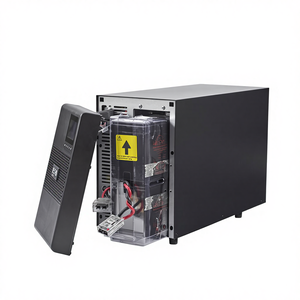
1-3KVA Online Tower UPS Power Supply
1-3KVA UPS Uninterruptible Power Supply 1000VA/900W Online Tower Regulated 9SX1000I Power Failure Standby

True double-conversion online tower UPS ensuring pure sine wave AC backup for base station management nodes.
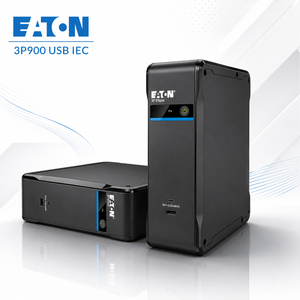
3P900UI Standby Single Phase UPS
For 3P900UI Single Phase Standby UPS for Computer-12V 9Ah Replaceable Battery 97% Efficiency <25dB Noise Level

Ultra-quiet 97% high-efficiency standby unit with fast replaceable battery cartridge for indoor micro-cells.
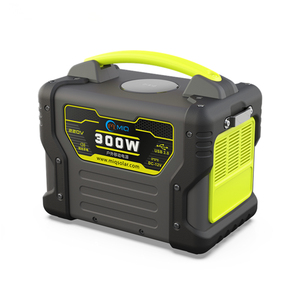
LiFePO4 Standby Rechargeable Emergency Power Unit
Emergency Standby Power Supply LiFePO4 Battery Mobile Power Supply 220V Portable Rechargeable Power Supply

High-cycle LiFePO4 chemistry emergency power station built for rugged outdoor base station emergency dispatch.
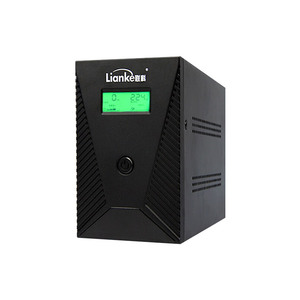
LK 800VA Offline Standby Power Supply
LK 800VA Offline UPS Uninterruptible Power Supply 480W Standby UPS For Computer Monitoring

Compact offline standby power module providing cost-effective backup for station surveillance and telemetry sensors.
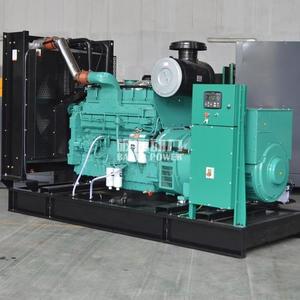
Heavy Duty Diesel Generator Standby Unit
Heavy Duty Diesel Generator Standby Power Supply for Factory Building & Regional Telecom Hubs

High-output primary/standby diesel genset tailored for prolonged grid blackouts across macro tower sites.
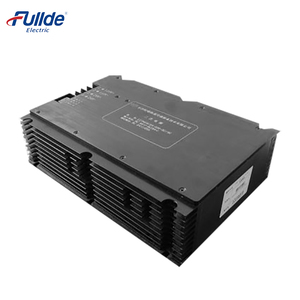
High Tech Special Standby Emergency Power Module
Standby Emergency Power Supply High Tech Special Power Supply for Critical Telecom Infrastructure

Customized high-grade DC power converter cabinet with hot-swappable redundancy for high-load 5G base stations.
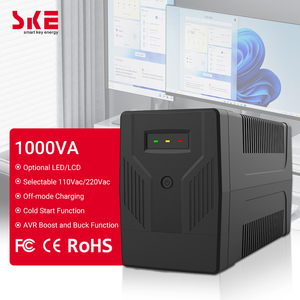
SKE Offline AVR Standby Power Supply
SKE Offline UPS 1000VA 600W AVR Standby Ups Power Supply 12V 9AH Battery Backup Energy Power Supply

Integrated AVR line-interactive power system offering voltage regulation and instantaneous battery takeover.

38+
Years Manufacturing Excellence
100%
CE & RED Compliant
60+
Export Nations Served
99.999%
Uptime Engineering Design
Enterprise E-E-A-T Capabilities

A Premier CE Certified Base Station OEM/ODM Exporter

Established with a singular commitment to power reliability since 1986, our organization stands at the forefront of power conversion technology. As a world-class CE Certified Base Station Manufacturer & Exporter, we specialize in designing, engineering, and mass-producing high-density DC power rectifiers, intelligent power distribution units (PDUs), pure sine wave inverters, and battery backup topologies for mission-critical telecom deployments.

Operating from state-of-the-art manufacturing infrastructure with strict ISO 9001 and ISO 14001 quality frameworks, our product architectures are directly tailored to meet the relentless availability standards demanded by Tier-1 telecom operators, Land Mobile Radio (LMR) networks, wireless internet service providers (WISPs), and emergency 911 communication sites worldwide.

  • CE RED & EMC Directive Compliance: Rigorously tested under EN 301 489, EN 62368-1, and CISPR 32 standards to ensure zero radio frequency interference (RFI) with co-located base station transceivers.
  • Complete North American Engineering Traceability: Domestic design, firmware development, hardware validation, and technical support ensuring complete component supply-chain control.
  • Hot-Swappable N+1 Topology: Modular power shelves enabling live module expansion and zero-downtime maintenance while powering active 12V, 24V, and 48V DC buses.
  • Ethernet Telemetry & SNMPv3 Control: Embedded web server monitoring with granular per-circuit power distribution control and automated alarm notifications.
Get Catalog
Telecommunication towers powered by CE certified base station power units
Technical Deep-Dive

Engineering High-Availability Telecom Base Station Power Systems

Modern cellular base stations—spanning 4G LTE macro cells, 5G NR Massive MIMO installations, and rural satellite backhaul nodes—impose complex electrical loads. A loss of DC power translates directly to network outages, breached SLAs, and revenue loss.

Active Power Factor Correction (PFC)

Our rectifiers feature advanced active PFC circuitry (>0.99 power factor at full load) with Total Harmonic Distortion (THD) kept below 3%. This prevents harmonic pollution on local utility grids and generator power sources during emergency switchover.

Low Voltage Disconnect (LVD) & Battery Care

To prevent irreversible deep discharge of connected lead-acid or LiFePO4 battery banks, our integrated power systems incorporate smart dual-stage LVD contactors, electronic temperature compensation, and programmable float/equalize charging routines.

Galvanic Isolation & Noise Filtering

Base station RF sensitivity demands extremely clean DC voltage. Our systems deliver industry-leading ripple and noise suppression (<15mV RMS), protecting sensitive remote radio heads (RRHs) and baseband units (BBUs) from crosstalk.

Technical Comparison: Legacy vs. Next-Gen Intelligent Base Station Power

Performance Specification Legacy Telecom Rectifiers CE Certified Next-Gen Intelligent Systems Impact on Station Architecture
Power Conversion Efficiency 85% - 89% Efficiency 96% - 98% Ultra-High Efficiency Reduces thermal dissipation, saving up to 30% air-conditioning power consumption.
System Redundancy 1+1 Single Standby (Bulky) N+1 Hot-Swappable Modular Shelves Modules swapped in <60 seconds without dropping live 48V DC load.
Remote Management Protocol Basic Contact Closure Alarms Embedded HTML Web Server, SNMPv3, RESTful API Eliminates unnecessary physical maintenance visits (truck rolls) via browser rebooting.
Battery Compatibility VRLA Lead-Acid Only Universal LiFePO4 / VRLA / AGM Support Extends site operational life up to 15 years with lithium chemistry integration.
Operating Temperature -10°C to +45°C -40°C to +75°C Industrial Range Guarantees continuous uptime inside unconditioned outdoor pole enclosures.
Strategic Sourcing Insights

Future Procurement Trends in Base Station Power Infrastructure

Global telecommunications procurement officers, infrastructure directors, and EPC contractors are navigating a transformative decade. The convergence of 5G network density, rising energy tariffs, and aggressive corporate decarbonization mandates is reshaping how telecom energy assets are specified, evaluated, and purchased.

1. Shift Toward Modular 48V DC Micro-Grids

Procurement teams are moving away from centralized AC UPS setups toward high-efficiency 48V DC distributed power architectures. By eliminating redundant AC-to-DC and DC-to-AC conversion steps, telecom operators achieve a 12% to 18% net reduction in site power loss.

2. Dominance of LiFePO4 Lithium Energy Storage Systems (ESS)

While VRLA batteries historically commanded lower upfront capital cost (CapEx), total cost of ownership (TCO) evaluation now heavily favors Lithium Iron Phosphate (LiFePO4). With 4,000+ deep discharge cycles at 80% DoD versus 500 cycles for lead-acid, procurement tenders now mandate lithium integration.

3. Mandated SNMPv3 Cybersecurity & Cloud Telemetry

Modern procurement frameworks demand encrypted communication protocols (SNMPv3, HTTPS, SSH) built directly into base station power controllers. Standalone unmonitored power supplies are increasingly disqualified due to network security vulnerabilities and lack of NOC integration.

Remote base station power management software interface on laptop screen
R&D and Engineering Roadmap

Technology Development Trends in Base Station Energy Systems

The rapid evolution of wireless base station hardware—characterized by high-power 64T64R Massive MIMO active antenna units (AAUs)—creates dynamic power consumption profiles. Peak power demand can fluctuate wildly within milliseconds based on mobile traffic volume. Future-proof base station power design relies on four critical technological advances:

Gallium Nitride (GaN) Semiconductors

Transitioning from silicon MOSFETs to GaN and Silicon Carbide (SiC) switching devices allows rectifiers to operate at significantly higher switching frequencies. This dramatically reduces transformer magnetic volume, achieving power densities exceeding 45W/in³.

Software-Defined Dynamic Peak Shaving

Next-gen intelligent rectifiers interface directly with the baseband unit (BBU). During peak cellular traffic, the power controller instantly supplements grid power with battery storage, preventing utility demand charges and transformer overloading.

AI-Driven Predictive Maintenance Analytics

By capturing high-frequency voltage ripple, internal impedance, and temperature differentials, machine learning algorithms embedded in power systems predict fan failures and battery capacity degradation months before a functional failure occurs.

Multi-Environment Application Scenarios

Land Mobile Radio Tower Site

Land Mobile Radio & Public Safety

P25 and DMR mission-critical radio towers demand zero outage tolerance. Modular 12V/24V/48V rectifiers provide continuous backup power to police, fire, and emergency response dispatch relays.

Industrial Telecom DC Cabinet

Industrial Utility & SCADA Nodes

Ruggedized DIN-rail DC supplies and pure sine wave inverters operating in high-vibration, high-EMI electrical substations, oil & gas pipeline monitoring, and railway signalling shelters.

5G Micro Base Station Power Module

5G Small Cell & Micro Base Stations

Ultra-compact, weather-sealed outdoor DC power conversion modules installed on street lamps, utility poles, and building facades to power urban micro-cell deployments.

Procurement & Engineering FAQs

Frequently Asked Questions for Base Station Procurement

Detailed technical and commercial answers addressing common engineering queries from base station site designers, system integrators, and procurement officers.

What CE directives and international safety standards do your base station power systems comply with?

Our entire base station power product line holds full European CE certification, conforming strictly to the Radio Equipment Directive (RED) 2014/53/EU, Low Voltage Directive (LVD) 2014/35/EU, and Electromagnetic Compatibility (EMC) Directive 2014/30/EU. Specifically, safety testing complies with EN 62368-1 / IEC 62368-1, while EMC emissions and immunity adhere to EN 301 489-1/-17 and CISPR 32 Class B, ensuring non-interference with co-located RF transceivers.

How does an N+1 hot-swappable modular rectifier shelf enhance site availability?

In an N+1 configuration, total site load is shared across multiple active power modules, plus one additional redundant module (e.g., three 1000W modules for a 2000W load). If one rectifier module experiences an internal component failure, the remaining modules instantly accept the load with zero voltage drop. Field engineers can remove and replace the damaged module while the DC bus remains fully energized and online, avoiding site shutdown.

Which nominal DC output voltages are supported for telecom applications?

We engineer equipment for the three industry-standard DC system voltages: 48 VDC (the international benchmark for cellular base station BBUs and RRHs), 24 VDC (commonly specified in industrial automation and fixed wireless broadband), and 12 VDC (widely utilized in legacy land mobile radio repeaters and vehicular command units). Output voltages are continuously adjustable via software to match float/equalize requirements of specialized battery chemistry.

Can your intelligent DC systems manage remote site reboots over Ethernet?

Yes. Our intelligent power distribution panels feature individual circuit-level power control via an embedded HTTPS web server and SNMPv1/v2c/v3 interface. Network Operations Center (NOC) engineers can log in remotely, view real-time current draw per port, and toggle or power-cycle specific loads (such as a frozen radio, router, or microwave backhaul unit), eliminating expensive maintenance dispatches.

What custom OEM/ODM options are available for global exporters and distributors?

As a direct manufacturer, we offer comprehensive original equipment manufacturing (OEM) and custom design (ODM) capabilities. This includes custom backplane wiring, tailored form factors (1U/2U/3U rackmount or pole-mount IP65 enclosures), custom SNMP MIB integration, branded front-panel silkscreening, and pre-set battery management profiles optimized for regional climate conditions.

How do your base station power units handle harsh ambient temperatures and dirty utility power?

All outdoor-grade base station power systems are built with industrial-grade components rated for operation from -40°C to +75°C. The AC input stage features wide input range acceptance (90 VAC to 300 VAC) with integrated Class II AC surge protective devices (SPD), defending sensitive internal power electronics against utility voltage sags, surges, and lightning transients.
Global logistics and domestic design manufacturing map for telecom export
Global Supply Chain Excellence

Seamless International Export & Engineering Support

Exporting power systems to over 60 countries requires more than just manufacturing capacity—it demands rigorous international compliance documentation, robust packaging logistics, and direct access to power engineers.

  • Full Regulatory Documentation: Complete technical construction files (TCF), CE declarations of conformity, RoHS material analysis, and factory acceptance test (FAT) certificates supplied with every order.
  • Global Logistics & Customs Support: Experienced export packaging meeting ISPM 15 standards, harmonized tariff code classification, and direct air/sea freight integration to major ports worldwide.
  • Pre-Sales Application Engineering: Our senior engineering staff reviews your base station single-line diagrams, load budgets, and battery autonomy metrics before production begins.

Partner with a Leading CE Certified Base Station Manufacturer

Accelerate your network deployment with field-proven, highly efficient DC power systems, rectifiers, and standby power solutions tailored to your exact specifications. Contact our engineering team today for technical catalogs, pricing, and project design reviews.

Get Catalog