
A DC power system may look quiet, but its rectifier is doing essential work: converting incoming AC electricity into controlled DC for equipment that cannot tolerate unstable power. Modular DC Power Rectifiers perform this task through multiple converter units connected to a common DC bus. In a telecom cabinet, for example, several modules can feed a 48-volt system while batteries support the load during an outage. Small units. Shared responsibility.
The design is useful where uptime, maintenance, and capacity changes matter. Operators can often add or replace modules without rebuilding the entire power plant, although hot-swap capability depends on the specific system. Parallel modules may also provide redundancy, such as an N+1 arrangement, but only when controls, wiring, and protection are properly designed. That detail is easy to overlook.
Demand for reliable power is also growing in digital infrastructure. The International Energy Agency’s Electricity 2024 report estimates that global data-centre electricity consumption could rise to around 1,000 terawatt-hours in 2026, roughly twice its 2022 level. This forecast does not mean every facility needs the same rectifier architecture. It does show why power conversion efficiency, serviceability, and monitoring deserve close attention. A rectifier specification should therefore be judged by more than rated output: check efficiency across realistic loads, DC voltage range, thermal limits, alarms, and battery compatibility. Modularity can simplify expansion, but it cannot fix a poorly planned power system. A useful introduction starts there.
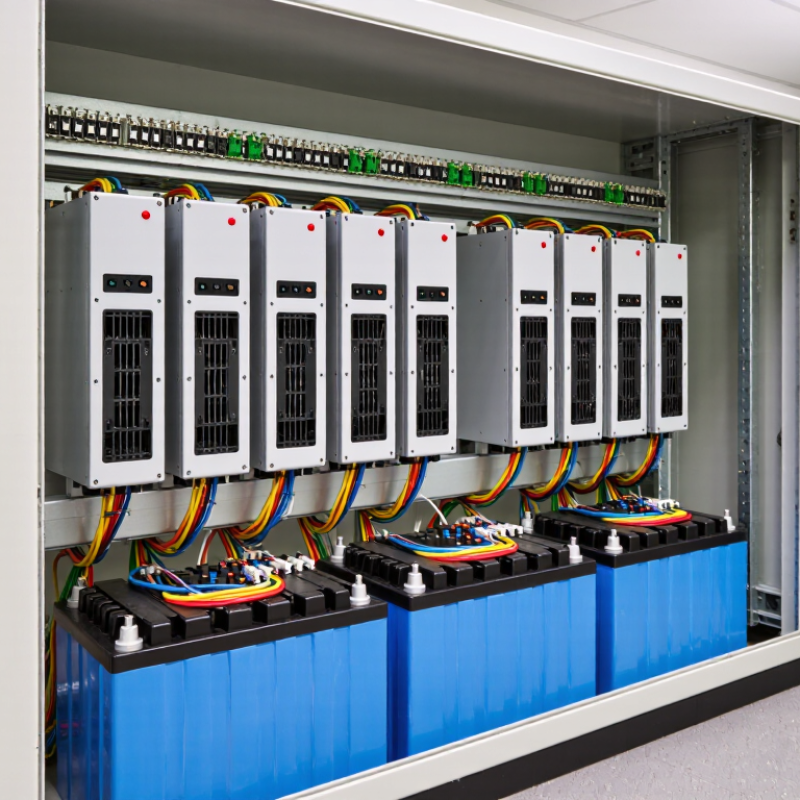
A modular DC power rectifier converts incoming alternating current into controlled direct current through separate, replaceable power modules. The modules fit into a shared rack or cabinet and supply a common DC bus. That bus can power telecom equipment, industrial controls, or battery-charging circuits. Each module handles power conversion and regulation, while a controller may monitor voltage, current, temperature, and alarms.
Useful, but not magic. In many systems, modules operate in parallel, sharing the load so one unit can be serviced while others continue supplying power. The actual result depends on the system’s design and configuration. Adding a module may increase capacity, but only when the bus, wiring, cooling, and controls support it. A technician should also check module compatibility and the manufacturer’s specified replacement procedure.
In a equipment room, the practical difference can be visible: a failed module may slide out of the rack without disturbing every other unit. Still, modular construction does not guarantee uninterrupted power. Poor airflow, an overloaded bus, or a faulty shared controller can affect multiple modules at once. Review load requirements, redundancy, and alarm behavior before choosing a system. Even a small mismatch can matter.
A modular DC power rectifier converts AC input power into regulated DC power using replaceable rectifier modules installed in a shared system. The values below describe common design options; actual specifications vary by application and equipment.
| Dimension | Description | Typical options or examples |
|---|---|---|
| Primary function | Converts incoming AC electricity into controlled DC power for equipment and, where included, battery charging. | AC-to-DC conversion with output regulation and system monitoring. |
| Modular construction | Individual rectifier units plug into a common shelf or cabinet and operate together as one power system. | Capacity can be increased by adding compatible modules within the system’s limits. |
| DC output voltage | The output voltage is selected to match the connected load and system design. | Common nominal DC systems include 24 V, 48 V, and 110–125 V. |
| AC input | The input supply depends on the rectifier design, available site power, and required output capacity. | Designs may use single-phase or three-phase AC; check the unit’s rated input range. |
| Load sharing | Parallel modules can share the DC load, helping distribute output current across the installed units. | Sharing behavior and accuracy depend on the system’s control design. |
| Redundancy | A system may include spare capacity so the remaining modules can continue supporting the load if one module is unavailable. | An N+1 arrangement uses one more module than the minimum number required for the planned load. |
| Battery support | In systems designed for batteries, the rectifier can supply DC loads and maintain or recharge a connected battery within specified limits. | Battery chemistry, charging settings, and protection must be compatible with the system. |
| Monitoring and protection | Control features may report operating status and detect conditions that require an alarm or protective response. | Possible functions include voltage and current monitoring, over-temperature alerts, and module fault indication. |
| Typical applications | Provides DC power for installations that require a managed, expandable supply or a DC bus. | Examples include telecommunications, data centers, industrial control, and utility or substation systems. |
| Selection considerations | The complete system should be sized for the load, site conditions, required availability, and future growth. | Verify output voltage and current, AC input, battery requirements, environmental ratings, and maintenance access. |
Note: These are general characteristics, not guaranteed ratings for a specific rectifier system.
It converts incoming AC power into regulated DC power for connected equipment. Filters reduce electrical noise, while control circuits smooth and regulate the output.
Modules connect to a shared DC bus and contribute portions of the required current. A controller can help balance their output within each module’s rated limits. That matters.
Possibly. Remaining modules can support the load only if they have enough spare capacity. Redundancy is designed, not automatic.
It typically tracks voltage, current, temperature, and module status. Configured alarms can give technicians a starting point. They do not replace inspection.
Fans move heat away from the modules. Dust can restrict airflow even when electrical readings appear normal. Small details matter.
Some systems allow this; others require shutdown. Check the equipment instructions and service procedures before replacing a module. Not always.
Match the AC input range, required DC voltage, peak demand, and rated capacity to the equipment. Check wiring and ventilation clearance too.
Battery connections may provide backup, but charging behavior must match the battery specifications. A screen can reassure you, perhaps too much; inspect the wiring and hardware as well.
A modular DC power rectifier converts incoming AC electricity into stable, regulated DC power using a set of coordinated components. These typically include input protection, a conversion stage, filtering elements, control circuits, and monitoring features. Together, they transform AC into DC, smooth voltage fluctuations, and help maintain a dependable output as operating conditions change.
Modular DC Power Rectifiers are built from individual rectifier modules that can share the system’s load. This arrangement can make it easier to adjust capacity, support continuity if a module needs attention, and expand a power system as requirements grow. They are commonly used wherever reliable DC power is needed, including telecommunications, industrial equipment, and energy infrastructure. When selecting a system, consider the required voltage and current, capacity for future growth, efficiency, environmental conditions, protection features, and ease of maintenance.