
China’s intelligent power ecosystem is expanding with electrification, automation, and data-intensive manufacturing. Intelligent DC Power Supply systems now support battery testing, semiconductor production, telecommunications, laboratory research, and industrial control.
The market is moving. According to the International Energy Agency’s Global EV Outlook 2024, global electric car sales exceeded 14 million units in 2023. China represented approximately 60% of those sales. The China Association of Automobile Manufacturers also reported 9.495 million new energy vehicles sold domestically in 2023. These figures indicate stronger demand for programmable DC sources, regenerative test systems, and high-precision power equipment. However, vehicle growth alone does not prove a manufacturer’s technical leadership.
This guide examines China’s top 10 Intelligent DC Power Supply manufacturers through practical and verifiable criteria. These include output accuracy, voltage and current range, dynamic response, protection functions, communication protocols, software integration, certification, delivery capability, and after-sales support. The evaluation also considers applications such as EV component testing, energy storage validation, and automated production lines. Reports such as the IEA Global EV Outlook 2024 and China’s official automotive data provide market context, not direct supplier rankings. That distinction matters. No ranking is perfect. Public specifications may overlook long-term reliability, thermal performance, or service quality in overseas projects. Buyers should therefore confirm test records, calibration documents, warranty terms, and customer references before making a final decision. The following overview offers a structured starting point, while real application conditions may still change the result.
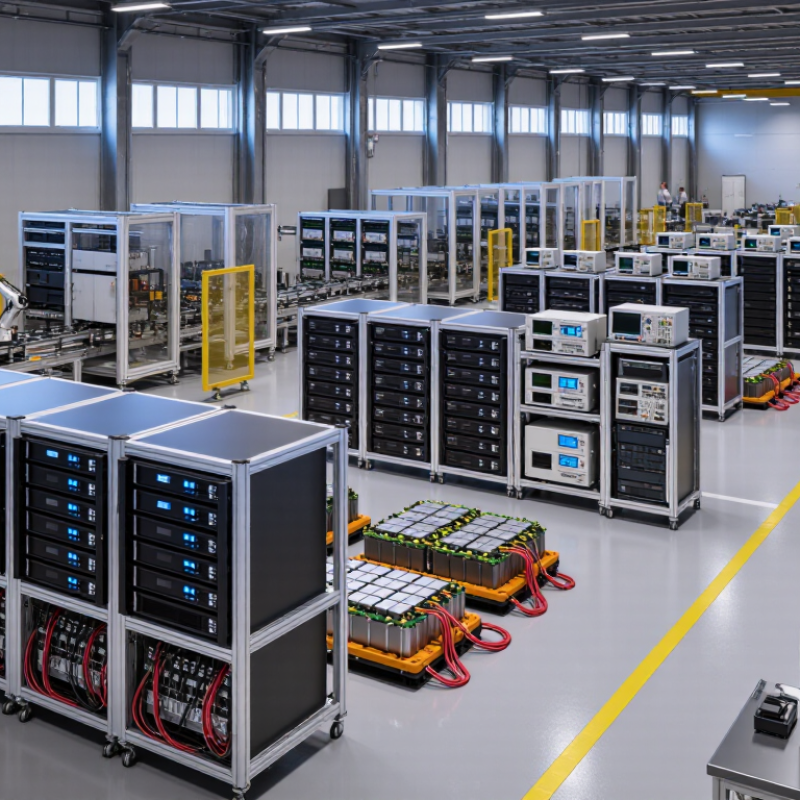
An intelligent DC power supply converts AC electricity into stable direct current while sensing, recording, and adjusting output conditions. Unlike a basic bench supply, it can communicate with control systems through digital interfaces. Operators can set voltage, current limits, ramp rates, and protection thresholds with greater precision. In China, these units support electronics testing, battery production, telecommunications, automation, and laboratory research.
Their role extends beyond delivering power. Built-in sensors monitor voltage, current, temperature, and overload events in real time. A factory technician can review a fault record instead of guessing after a test fails. Remote control also reduces repeated manual adjustments, especially when several production lines operate continuously. High-quality models usually include short-circuit protection, over-temperature protection, calibration functions, and data export for traceability.
The market includes many specialized manufacturers serving different voltage ranges and application needs. However, “intelligent” does not always mean dependable. Some systems provide attractive software but limited measurement accuracy. Others collect data without making it easy to interpret. Engineers should verify ripple performance, response speed, communication stability, and after-sales calibration support. A useful power supply should remain predictable under changing loads, not merely display polished numbers. This distinction is easy to miss. Practical testing still matters.
Anonymized, application-based comparison of representative Chinese intelligent DC power supply manufacturing segments
| No. | Manufacturer Category | Typical Intelligent DC Product | Typical Output Range | Monitoring and Communication | Main Applications in China | Common Standards and Requirements | Definition and Industry Role |
|---|---|---|---|---|---|---|---|
| 1 | Telecom Power System Manufacturers | Modular DC rectifier systems with battery management and hot-swappable power modules | -48 V DC; approximately 3–30 kW per system module group | CAN, RS-485, Ethernet, SNMP, remote alarms and cloud monitoring | Mobile base stations, fiber-optic networks, communication rooms and transmission sites | GB/T 17626 series, IEC 61000 series, telecom power-system requirements | Converts AC utility power into stable DC power while coordinating rectifiers, batteries, load distribution, energy saving and fault protection. |
| 2 | Data Center DC Power Manufacturers | High-efficiency modular rectifiers, DC distribution units and intelligent backup power systems | 48 V or 240 V DC; approximately 10–100 kW system capacity | Ethernet, Modbus TCP/RTU, CAN, SNMP, current sharing and predictive alarms | Data centers, edge-computing facilities, cloud infrastructure and network operation centers | GB 50174, GB/T 17626 series, IEC 62040-related power quality practices | Improves power availability and energy efficiency through centralized monitoring, modular redundancy, load analysis and battery-state management. |
| 3 | Programmable Industrial DC Supply Manufacturers | Programmable single-output and multi-output DC power supplies with precision regulation | 0–30 V, 0–60 V, 0–600 V; approximately 0.5–30 kW | SCPI, USB, LAN, RS-232/485, CAN and automated test software interfaces | Industrial automation, electronics testing, component qualification and production lines | GB/T 17626 series, IEC 61000-6-2, IEC 61000-6-4 and electrical safety requirements | Provides accurately controlled DC voltage and current for testing, calibration, simulation, burn-in and automated manufacturing processes. |
| 4 | Electric Vehicle Charging Power Module Manufacturers | High-frequency isolated DC charging modules and intelligent charging power cabinets | Approximately 200–1,000 V DC; commonly 20–60 kW per module | CAN, Ethernet, Modbus, charger-controller interfaces, output current sharing and thermal monitoring | Public charging stations, fleet charging, highway charging hubs and bus depots | GB/T 18487, GB/T 20234, GB/T 27930 and relevant EMC requirements | Converts grid power into controlled DC charging power while managing voltage, current, temperature, charging safety and communication with electric vehicles. |
| 5 | Rail Transit Power Supply Manufacturers | DC auxiliary power supplies, battery chargers and train-control power converters | 24 V, 48 V, 72 V, 110 V or 220 V DC; approximately 1–20 kW | CAN, RS-485, Ethernet, event recording, insulation monitoring and remote diagnostics | Metro systems, high-speed rail, locomotives, signaling systems and station equipment | EN 50155, EN 50121, GB/T 25119 and railway EMC requirements | Supplies reliable DC power to control, signaling, communication, lighting and safety equipment under vibration, temperature and electrical disturbance conditions. |
| 6 | Energy Storage and Battery Test Manufacturers | Bidirectional DC sources, battery cyclers and programmable charging and discharging systems | 0–1,000 V DC; approximately 10–500 kW, depending on system architecture | CAN, Modbus TCP/RTU, Ethernet, digital I/O, regenerative energy feedback and data logging | Lithium battery testing, energy storage systems, battery packs, power electronics and research laboratories | GB/T 34120, GB/T 36547, GB/T 36276 and applicable battery safety requirements | Simulates charging and discharging conditions, evaluates battery performance and supports state-of-charge, efficiency, thermal and lifetime analysis. |
| 7 | Semiconductor and Electronics Manufacturing Power Suppliers | Low-ripple programmable DC sources, bias supplies and multi-channel process power systems | 0–100 V, 0–600 V or 0–1,000 V; approximately 1–100 kW | LAN, USB, RS-485, SCPI, PLC integration, recipe control and process data acquisition | Semiconductor production, display manufacturing, electronic assembly and component aging tests | GB/T 17626 series, IEC 61000 series and factory process-control requirements | Delivers stable, low-ripple and repeatable DC power for sensitive electronic processes where voltage accuracy, current stability and traceability are essential. |
| 8 | Electroplating and Industrial Rectifier Manufacturers | High-current intelligent rectifiers with pulse, reverse-pulse and programmable output functions | Approximately 0–24 V or 0–100 V; from several kilowatts to multi-megawatt systems | PLC, HMI, Modbus, Ethernet, current-density control, recipe management and production records | Electroplating, anodizing, surface treatment, chlor-alkali production and metallurgical processes | GB/T 17626 series, industrial electrical safety rules and process-specific requirements | Controls high-current DC output with programmable waveforms to improve coating consistency, process efficiency, material utilization and product quality. |
| 9 | Medical and Laboratory DC Power Manufacturers | Low-noise regulated DC supplies, embedded power modules and laboratory programmable sources | 5–60 V DC; approximately 0.1–5 kW for typical laboratory and embedded applications | USB, LAN, RS-232/485, SCPI, voltage and current limit protection and event logging | Medical-device development, laboratory instruments, analytical equipment and precision measurement | IEC 60601-1 for applicable medical equipment, GB/T 17626 series and electrical safety requirements | Provides clean and tightly regulated DC power for precision instruments where low noise, protection, repeatability and electrical safety are important. |
| 10 | Aerospace, Transportation and Special-Test Power Manufacturers | High-power programmable DC sources, regenerative loads and automated power test platforms | 0–1,000 V DC; approximately 1–300 kW, with higher ratings available in integrated systems | Ethernet, PXI or LXI interfaces, SCPI, CAN, synchronized data acquisition and test sequencing | Aerospace electronics, aircraft systems, traction equipment, power converters and qualification laboratories | GB/T 17626 series, IEC 61000 series and sector-specific environmental and EMC standards | Reproduces complex DC power conditions for design verification, environmental testing, qualification, fault simulation and automated acceptance testing. |
Compare identical voltage and current specifications. Check output accuracy, voltage stability, ripple, efficiency, and response speed under changing loads. Catalog ratings can mislead.
They show measured performance under real loads. Request load-test curves, efficiency data, and sample inspection records. Manufacturer claims need practical evidence.
Review calibration records, component traceability, final inspections, and thermal testing. During an audit, inspect cable routing and maintenance access. Small details matter.
Very important. Engineers should offer remote diagnosis and on-site commissioning when needed. Slow support can interrupt a complete testing schedule. I might value service more than expected.
Check remote monitoring, data logging, alarm settings, and communication protocols. Test the interface with real operators before purchase. Advanced functions become useless when setup feels confusing.
They support laboratories, data centers, telecom rooms, factories, hospitals, and transport infrastructure. Sensors can track voltage, current, temperature, and battery condition continuously.
Modular designs allow one power module to be replaced without stopping the whole rack. Bidirectional conversion supports renewable-energy and storage testing. Results still depend on correct configuration.
Poor sensor placement may create false alarms. Weak network security can expose operating data. Incorrect settings may create false confidence. Human review remains necessary during unusual faults.
China’s intelligent DC power supply industry is developing rapidly as demand grows for stable, efficient, and digitally managed electricity in telecommunications, data centers, industrial automation, renewable energy, transportation, and laboratory equipment. An Intelligent DC Power Supply converts and regulates electrical energy while using monitoring, communication, protection, and control functions to improve reliability and operational efficiency. Leading manufacturers commonly focus on high-frequency conversion, digital control, modular architecture, remote monitoring, energy management, and advanced protection against overload, overheating, and voltage fluctuations.
This article introduces ten leading categories of Chinese manufacturers by evaluating product quality, output stability, efficiency, customization capability, safety standards, technical support, production capacity, and market experience. It also explains how intelligent DC systems can reduce maintenance needs, support precise power management, and integrate with larger energy networks. As industries pursue automation and lower energy consumption, future development is expected to emphasize smarter diagnostics, higher power density, improved compatibility with renewable sources and batteries, and more connected, flexible, and sustainable DC power solutions.