
Remote Telecom Site Power Management is becoming a practical requirement, not merely an efficiency target. Remote towers often operate beside dusty roads, weak grids, and unstable fuel supplies. A short power failure can interrupt voice, data, emergency communication, and local business activity. Battery temperature, generator runtime, solar output, and rectifier performance must therefore be monitored together.
Mats Granryd, Director General of the GSMA, has said, “The mobile industry is uniquely positioned to drive the digital transformation needed to achieve the UN Sustainable Development Goals.” That vision depends on dependable energy infrastructure. In remote locations, intelligent controllers can balance solar generation, batteries, diesel generators, and grid power. They can also identify abnormal voltage, battery aging, or repeated generator starts before a site fails. Small details matter.
This guide examines China’s top ten Remote Telecom Site Power Management suppliers through practical criteria. These include system reliability, monitoring functions, hybrid-energy expertise, battery integration, after-sales support, certifications, and experience with harsh environments. Supplier scale alone does not guarantee field performance. A polished dashboard cannot compensate for weak maintenance coverage or poor spare-parts availability. That is an uncomfortable point, but it deserves attention.
The ranking should not be treated as permanent. Project conditions differ. A supplier that performs well in a coastal macro site may struggle in a high-altitude solar installation. Buyers should verify references, test interoperability, inspect warranty terms, and request measurable energy data. This introduction provides a grounded starting point for comparing manufacturers, while acknowledging that real-world results depend on design, installation, and disciplined operation.
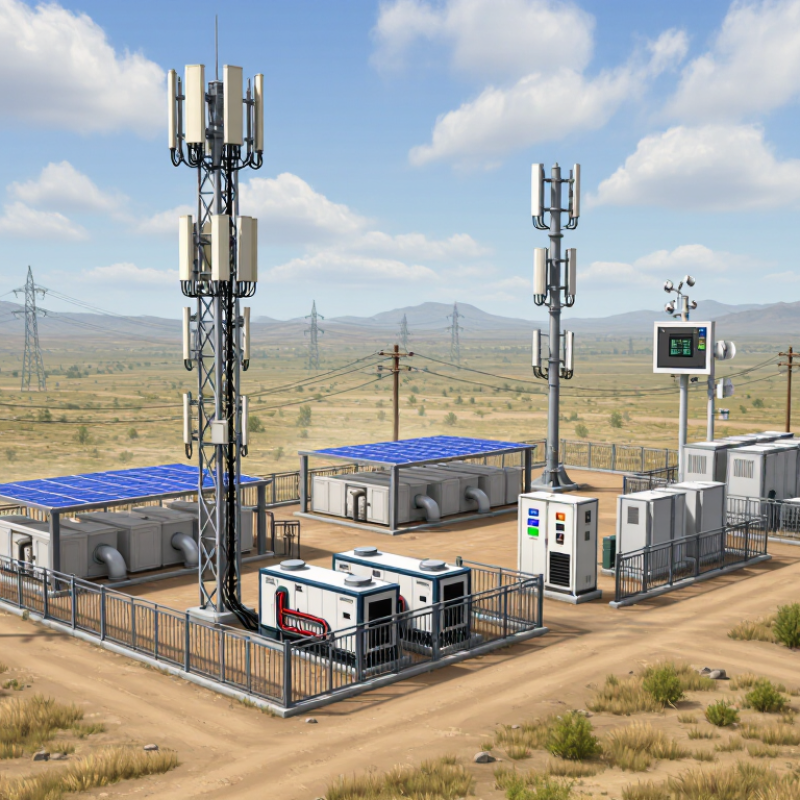
Remote telecom site power management suppliers provide more than batteries and control cabinets. They design systems for towers far from stable grids, where dust, heat, flooding, and weak roads affect daily operation. Typical solutions include solar generation, lithium or lead-acid storage, diesel backup integration, remote monitoring, and intelligent load control. Field engineers may also assess tower altitude, battery temperature, fuel access, and seasonal sunlight before selecting equipment.
Tips: Ask for measurable performance data. Check battery autonomy, controller efficiency, alarm accuracy, and monitoring response times. Request maintenance procedures for remote locations. A practical supplier should explain replacement intervals, communication failures, and emergency access requirements. Small details matter. A cabinet that opens easily can save hours during a night repair.
Experienced suppliers usually provide site surveys, energy modeling, installation guidance, and after-sales technical support. Their platforms can report voltage, current, fuel levels, battery health, and cabinet temperature from a central dashboard. This helps operators identify unusual discharge patterns before service quality declines. However, monitoring is not magic. Sensors can drift, networks can fail, and estimated battery health may be imperfect. Reliable providers document these limits instead of promising flawless control. Buyers should compare test records, warranty conditions, spare-part availability, and technician response times. A lower purchase price may become expensive when a remote generator consumes more fuel than expected.
China’s remote telecom power management market is judged by field performance, not catalog promises. Evaluators examine uptime, battery health, energy efficiency, and recovery after grid failures. They also test equipment across deserts, mountain sites, coastal humidity, and winter temperatures. These conditions expose weak points.
A reliable supplier should provide clear test records, traceable component sourcing, and practical maintenance procedures. Independent laboratory reports help, but site audits carry greater weight. Engineers often inspect alarm accuracy, remote switching, thermal protection, and compatibility with existing network equipment. Response time matters too. A distant service team can turn a minor battery fault into prolonged downtime.
Cost remains important, yet the lowest purchase price rarely tells the full story. Reviewers compare five-year energy use, replacement intervals, software updates, spare-part access, and technician training. Cybersecurity controls should be assessed alongside electrical safety and data integrity. Paper claims are easy. Field evidence is harder.
Evaluation is not perfectly objective. Some operators report incomplete maintenance data, while rural sites may lack consistent monitoring records. This creates uncertainty in supplier comparisons. A stronger assessment uses repeated measurements, customer references, documented failure cases, and transparent scoring rules. Suppliers that acknowledge limitations often appear more credible than those promising flawless performance.
China’s Top 10 Remote Telecom Site Power Management Suppliers
China’s remote telecom power market is expanding with network density and rural coverage. The Ministry of Industry and Information Technology reported more than 4.25 million 5G base stations in China by the end of 2024. Each distant site needs stable power, remote alarms, battery protection, and fast maintenance decisions.
The leading ten suppliers should be assessed through field performance, not brochures. Key indicators include rectifier efficiency, battery cycle life, solar-diesel coordination, and network uptime. GSMA Intelligence reported that the global mobile industry contributed about 5.8% of worldwide GDP in 2023. That economic weight increases pressure on operators to reduce outages and energy waste. Hybrid systems can lower diesel use, especially at mountain and island sites. Small details matter. A blocked ventilation filter can shorten battery life. A delayed alarm can become a costly truck visit.
Market reports from MarketsandMarkets identify remote monitoring and energy optimization as major growth areas in telecom power systems. However, rankings remain imperfect. Some suppliers publish limited field data, while performance varies with climate, load, and maintenance quality. Not absolute. Buyers should request measured uptime, five-year battery records, response-time evidence, and cybersecurity testing. GSMA’s Mobile Net Zero research also highlights energy efficiency as a central pathway for reducing telecom emissions. In China’s western regions, practical suppliers will need equipment that survives dust, heat, weak grids, and long service intervals. Fancy dashboards help, but reliable hardware matters more.
Key technologies determine whether a remote telecom site stays online during storms, heat, and unstable grid conditions. Hybrid power systems combine solar panels, batteries, and diesel generators. An energy management controller selects the lowest-cost available source. It also protects battery life.
Lithium battery systems now support fast charging and deeper discharge cycles. Battery management systems monitor voltage, temperature, current, and cell balance. Solar controllers using maximum power point tracking improve energy capture during changing sunlight. At a mountain site, this can mean several extra operating hours after sunset. Thermal control remains essential. Enclosures need ventilation, insulation, or controlled heating in harsh climates.
Remote monitoring links the site controller with a secure operations platform. Technicians can view fuel levels, battery health, load demand, and alarm history without traveling several hours. Predictive analytics may detect abnormal discharge before an outage occurs. Yet prediction is not magic. Dust, loose cables, and poor sensor calibration can create misleading data. A clean dashboard may still hide a failing connector.
Reliable systems also use load prioritization, surge protection, and automatic generator testing. These functions reduce unnecessary fuel use and protect critical radio equipment. Cybersecurity matters because connected controllers require access control, encrypted communication, and regular software updates. In practice, every design needs local testing. Weather records rarely match real conditions perfectly. Small oversights can become expensive lessons.
Selecting a Chinese telecom power supplier requires more than comparing catalog prices. Remote sites face heat, dust, unstable grids, and difficult maintenance access. Ask whether the supplier has real deployment experience in similar climates and terrain. Request project references, test reports, and clear information about battery life, controller efficiency, surge protection, and remote monitoring.
A reliable supplier should explain its design choices in plain language. Check factory quality procedures, component traceability, warranty terms, and spare-part availability. Confirm that the equipment supports your site voltage, load profile, solar conditions, and communication protocol. Independent testing is valuable, especially for insulation, temperature performance, overload protection, and system efficiency. Do not accept vague claims.
Test before trust. Arrange a sample evaluation under realistic loads. Record cabinet temperature, alarm response, charging behavior, and recovery after a power failure. Ask who provides technical support after installation and how quickly replacement parts can arrive. A low initial price may hide integration work or frequent battery replacement. I have seen supplier comparisons fail because shipping, software access, and commissioning were ignored. That mistake is easy to repeat. Review contracts carefully, including performance limits, documentation, training, and responsibility for field faults. The strongest choice is not always the cheapest or the most famous; it is the supplier that can prove consistent performance and communicate honestly when its design has limitations.
Evaluate field performance, not brochure promises. Check uptime, battery health, energy use, and recovery after grid failures. Repeated measurements reveal more than attractive claims.
Test systems in deserts, mountains, coastal humidity, and winter cold. Dust can block a ventilation filter. Weak insulation may reduce battery performance.
Request test records, component traceability, site audits, and maintenance procedures. Customer references and documented failures are useful. Perfect records are uncommon.
Monitoring shows battery voltage, temperature, fuel levels, load demand, and alarm history. Technicians can investigate problems without driving several hours. A clean dashboard can still hide a loose connector.
Solar panels, batteries, and generators can share the load automatically. Controllers select available energy and reduce unnecessary fuel use. Results vary with sunlight, weather, and maintenance.
Check cycle life, charging speed, temperature control, and cell balance. Battery systems should record voltage and discharge behavior. Five-year records are better than estimates.
Connected controllers need access control, encrypted communication, and regular software updates. Data integrity matters during alarms and remote switching. Security testing should accompany electrical safety checks.
Compare energy use, replacement intervals, spare-part access, software updates, and technician training over five years. The lowest purchase price may create higher service costs. Cheap can mislead.
This article presents a practical overview of China’s Remote Telecom Site Power Management industry, focusing on the solutions and services available for telecommunications facilities in isolated, rural, and difficult-to-access locations. It explains how suppliers support reliable power generation, energy storage, monitoring, backup, and maintenance while helping operators improve network uptime, reduce operating costs, and manage challenging environmental conditions. The article also introduces the main criteria used to evaluate the market, including product reliability, system efficiency, customization capability, technical support, delivery performance, and long-term service capacity.
It further outlines China’s top ten supplier categories and the technologies commonly used in telecom site power solutions, such as hybrid energy systems, lithium battery storage, intelligent controllers, remote monitoring platforms, and renewable energy integration. Finally, it provides practical guidance for selecting a suitable Chinese supplier by comparing technical specifications, project experience, quality assurance, compatibility, lifecycle costs, and after-sales support.