
+1 877 930 0717 (NA Toll Free) Langley, BC, Canada DC Power Engineering Since 1986
0%

Industrial DC Power Systems are becoming critical infrastructure for telecom networks, data centers, utilities, transportation, and process industries worldwide. Global buyers now expect stable output, efficient energy use, remote monitoring, and dependable operation under demanding conditions. A system may work perfectly in a clean laboratory, yet struggle with heat, dust, humidity, or unstable utility power. Field reality differs.

This guide examines leading Industrial DC Power Systems for 2026 through practical buying criteria. These include voltage configuration, rectifier efficiency, battery chemistry, backup duration, load compatibility, protection design, and service availability. It also considers certifications, environmental ratings, cybersecurity controls, and documentation quality. Buyers should compare measured performance, not only attractive catalog figures. Independent testing and clear warranty terms add useful confidence. So does a proven maintenance record.

Regional requirements can change the final decision. A system designed for a North American facility may need different certification or installation practices elsewhere. Local grid conditions also affect battery sizing and autonomy calculations. That assumption can fail. Cost should include installation, spare parts, energy consumption, monitoring, and replacement planning. The strongest supplier is not always the one offering the lowest quotation. It may be the manufacturer that provides responsive engineering support after commissioning. Still, no ranking can replace a site survey. This overview offers a careful starting point, while acknowledging that performance depends on real loads, operating environments, and disciplined maintenance. Details matter.
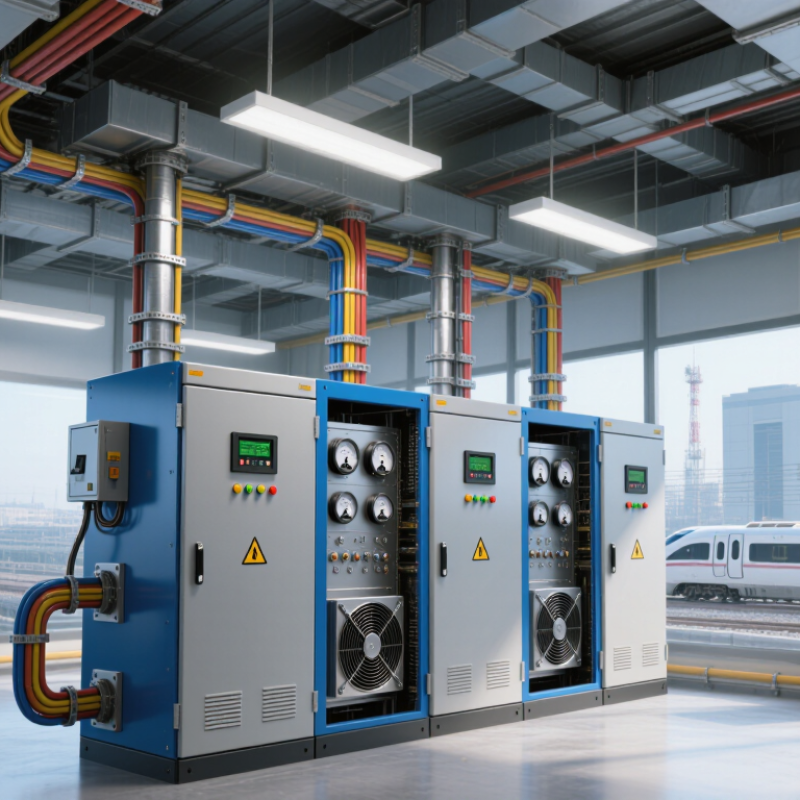
2026 Top Industrial DC Power Systems for Global Buyers

Industrial DC Power Systems: Definition, Scope, and Main Applications

Industrial DC power systems deliver controlled direct current to equipment that cannot tolerate unstable supply. They convert, regulate, store, and distribute electrical energy. Unlike ordinary backup units, they support continuous industrial operation.

A typical installation includes rectifiers, battery banks, distribution panels, monitoring controls, and protective devices. Battery chemistry, voltage levels, and redundancy vary by site. That is the working core.

The scope covers equipment selection, system integration, installation, testing, and lifecycle maintenance. In 2026, global buyers also examine energy efficiency, remote monitoring, thermal management, and regional compliance requirements.

Systems may serve small control cabinets or entire production facilities. They can operate beside utility power, generators, renewable sources, or independent battery storage.

A neat specification sheet can still mislead. Real performance depends on cable distance, ambient temperature, load changes, and maintenance access. Field inspections often reveal crowded panels and poorly labeled circuits.

Telecommunications sites use DC systems for uninterrupted network equipment. Rail and traffic infrastructure powers signaling, controls, and emergency communication. Manufacturing plants support PLCs, sensors, robotics, and safety circuits.

Utilities depend on DC power for substations, protection relays, and switchgear operation. Data centers increasingly use high-capacity DC architectures to reduce conversion losses.

Selection depends on load profile, backup duration, fault protection, space, and future expansion. Engineers should test batteries under realistic conditions, not only review monitoring screens.

Small oversights become expensive outages. Do not size for today’s load alone.

Core Components and Operating Principles of Industrial DC Systems

2026 Top Industrial DC Power Systems for Global Buyers

Core Components and Operating Principles of Industrial DC Systems

Industrial DC systems begin with a controlled conversion path. An incoming AC supply feeds a transformer and rectifier, producing regulated DC voltage. The DC bus then supplies control equipment, protection devices, motors, and communication circuits.

Key components include rectifier modules, battery chargers, energy storage, distribution panels, fuses, circuit breakers, and monitoring units. During normal operation, rectifiers carry the load and maintain the battery in float charge. If AC power fails, the battery immediately supports the DC bus. There is no waiting period. A static switch or inverter may provide AC output when connected equipment requires it.

Voltage stability matters more than simple capacity. Excessive ripple can shorten battery life and disturb sensitive controls. Thermal sensors, insulation monitoring, and current sharing help operators detect weak modules before failure. Practical designs also include N+1 rectifier redundancy, separated battery strings, and clear maintenance access.

The International Energy Agency’s Electricity 2024 report forecasts global electricity demand growth of about 3.4% annually through 2026. That growth increases pressure on industrial power continuity. Uptime Institute’s 2024 Global Data Center Survey also reported that 54% of respondents experienced outage costs above 100,000 dollars, showing the financial weight of power failures.

Standards provide discipline, not perfection. Field wiring, aging batteries, and poor testing still create weak points. Engineers should verify autonomy under real temperature and load conditions. Nameplate ratings can mislead. Real sites are rarely clean.

Key Criteria for Comparing Industrial DC Power Systems in 2026

In 2026, industrial buyers should compare DC power systems by measurable risk, not catalog labels. The IEA’s Electricity 2024 report projects data-center electricity demand will exceed 1,000 TWh by 2026. This trend increases pressure on efficiency, thermal control, and service continuity. Ask for efficiency curves at 25%, 50%, and 100% load. Peak figures can mislead.

Review voltage stability, ripple, battery autonomy, recharge time, and fault isolation. For harsh sites, test performance across dust, humidity, vibration, and temperature ranges. IEC 62477-1 offers a recognized safety framework for power electronic converter systems. EN 50171 also supports evaluation of centralized emergency DC supplies. Do not accept generic compliance claims. Request test reports, protection settings, and failure-mode evidence. Uptime Institute’s 2024 Global Data Center Survey identified power problems among the most common causes of impactful outages.

Tips: Build a five-year total-cost model. Include energy losses, battery replacement, commissioning, remote monitoring, spare modules, and technician travel. Compare mean time to repair, not only mean time between failures. Check local service capacity and documented response times. Pilot one production line when possible. Real operating data beats elegant assumptions. Still, even a careful scorecard misses operator judgment and weak site preparation.

2026 Top Industrial DC Power Systems for Global Buyers

Key Criteria for Comparing Industrial DC Power Systems in 2026

The chart shows common nominal DC voltage levels used in industrial control, telecommunications, railway, and utility substation applications. Global buyers should compare voltage compatibility, battery autonomy, rectifier efficiency, operating temperature, enclosure protection, monitoring functions, and compliance with applicable IEC standards before selecting a system.

Top System Types for Different Global Industrial Requirements

Industrial buyers rarely need the same DC architecture, even when their loads look similar. A centralized DC power system suits large plants with one electrical room and predictable distribution routes. It simplifies monitoring, battery maintenance, and fault coordination. For remote mines or processing sites, however, long cable runs can increase voltage drop and service difficulty. A distributed system places rectifiers, batteries, and protection closer to critical loads. That arrangement can improve resilience, but it demands disciplined local isolation and clear documentation.

Modular systems allow capacity to grow with production, rather than forcing an oversized installation on day one. This matters for expanding factories, warehouses, and transport infrastructure. Hot-swappable modules reduce downtime, yet technicians still need safe working space and compatible spare units. Hybrid systems combine AC input flexibility, renewable sources, storage, and generator support. They fit regions with unstable grids, though energy forecasts are often less certain than procurement teams expect.

Selection should begin with load profiles, autonomy targets, ambient conditions, and maintenance skills. Engineers should verify voltage tolerance, short-circuit ratings, battery temperature limits, and applicable IEC, UL, or local requirements. Field inspections often reveal problems hidden by clean drawings. Dust, heat, salt air, and rushed maintenance can change the preferred design. No design is perfect. A system that looks efficient on paper may become awkward beside a wet factory floor. Oversized batteries also deserve scrutiny; they add cost, weight, and replacement obligations without always improving availability.

Installation, Safety Standards, Maintenance, and Future Developments

Installing an industrial DC power system starts with the load profile, not the cabinet. Calculate continuous demand, startup current, battery autonomy, and future expansion space. Leave clear access around terminals and ventilation paths. Keep cables short, labeled, and mechanically supported. A small polarity error can damage equipment within seconds.

Safety depends on design and daily habits. Use insulated tools, guarded terminals, lockout procedures, and visible warning labels. Grounding and bonding should follow applicable local rules, IEC 60364 principles, and equipment safety requirements such as IEC 62477-1. Buyers should request test records, protection settings, and emergency instructions. Do not assume one certificate covers every country. That assumption often creates delays.

Maintenance needs simple evidence. Inspect battery connections for heat marks, measure voltage trends, check alarms, and clean filters before dust becomes a fault. Thermal scanning can reveal a loose connection early. Keep service logs with dates, readings, and corrective actions. Some teams replace batteries too early; others wait too long. Both choices waste money. A condition-based schedule is better, although it needs trained staff and reliable data. Newer systems are adding remote monitoring, modular converters, lithium-based storage, and predictive diagnostics. Cybersecurity must develop with them, especially when systems connect to industrial networks. The future looks efficient, but not effortless.

2026 Top Industrial DC Power Systems for Global Buyers - Installation, Safety Standards, Maintenance, and Future Developments
System Category Typical DC Output Typical Power Range Common Industrial Applications Installation Requirements Key Safety Considerations Maintenance Priorities Relevant International Standards and Practices 2026 Development Direction
Low-Voltage Control and Instrumentation DC System 12 VDC, 24 VDC, or 48 VDC 0.1–10 kW PLC control Sensors Industrial automation Emergency controls Install in a dry, ventilated enclosure with clear separation between AC input, DC output, and signal wiring. Use correctly rated overcurrent protection, labeled terminals, suitable cable sizing, and a reliable protective-earth connection. Protect against short circuits, reverse polarity, electric shock, and overheating. Maintain required creepage and clearance distances and use touch-safe terminals where personnel may access the enclosure. Check output voltage, alarm contacts, terminal tightness, ventilation openings, corrosion, and stored fault records. Verify backup batteries according to the battery manufacturer’s inspection schedule. IEC 60204-1 for electrical equipment of machinery; IEC 61131-2 for programmable controller equipment; IEC 62477-1 for safety requirements of power electronic converter systems. Greater use of digitally monitored power supplies, selective electronic protection, remote diagnostics, high-efficiency conversion, and compact DIN-rail or modular architectures.
Telecommunications and Network DC Power System −48 VDC nominal, commonly with a 48 V battery bus 1–100 kW per power shelf or system Telecom sites Data networks Remote communications Edge infrastructure Provide rectifier modules, a battery connection, distribution protection, low-resistance busbars, and adequate airflow. Confirm polarity conventions, grounding design, rack loading, and generator or utility coordination before commissioning. Use insulated tools, controlled access, arc-flash procedures where applicable, battery disconnects, and clearly marked polarity. Battery rooms or cabinets require appropriate ventilation and temperature control. Review rectifier sharing, bus voltage, battery conductance or impedance trends, thermal conditions, alarms, and autonomy results. Replace failed modules promptly to preserve redundancy. ETSI EN 300 132-2 for telecommunications equipment power supply interfaces; IEC 62477-1; IEC 60364 series for low-voltage electrical installations; applicable local battery and fire regulations. Higher-density rectifier shelves, lithium-ion battery integration with battery-management systems, peak-load optimization, remote asset monitoring, and improved compatibility with renewable energy sources.
Industrial UPS DC Battery System 24–220 VDC battery strings, depending on load and design 1–500 kW Process control SCADA Safety systems Critical instrumentation Install with a rectifier or charger, battery bank, DC distribution, bypass or isolation equipment, and monitoring circuits. Provide sufficient ventilation, service clearance, environmental control, and a tested earthing arrangement. Follow battery-specific procedures for lead-acid or lithium-ion technologies. Control access, prevent short circuits across battery terminals, provide insulated barriers, and assess arc-flash and thermal-runaway risks. Perform periodic charger tests, battery float-voltage checks, capacity or discharge testing where appropriate, alarm verification, torque inspections, and visual checks for swelling, leakage, heat, or corrosion. IEC 62040 series for uninterruptible power systems; IEC 62477-1; IEEE 1188 for stationary valve-regulated lead-acid battery maintenance practices; IEEE 450 for vented lead-acid batteries. Increased adoption of online condition monitoring, modular redundant UPS architecture, lithium-ion storage, predictive battery replacement, and automated transfer-test reporting.
Substation and Utility Protection DC System 48 VDC, 110 VDC, or 220 VDC 5–300 kW Protection relays Circuit breakers Switchgear Control and indication Use a dedicated charger, battery bank, DC distribution board, protective devices, insulation-monitoring equipment, and segregated wiring. Verify the required autonomy and fault-clearing coordination with the protection engineer. A single ground fault must be detected without creating an unsafe operating condition. Maintain battery-room ventilation, protection against accidental contact, correct polarity, and documented isolation procedures. Test charger redundancy, battery autonomy, DC insulation resistance or leakage alarms, breaker trip circuits, fuses, relays, and annunciation. Keep an auditable maintenance and test history. IEC 61936-1 for power installations exceeding 1 kV AC and associated requirements; IEC 62477-1; IEC 60364 series where applicable; IEEE 450 or IEEE 1188 according to battery type. More intelligent DC system supervision, online battery diagnostics, condition-based maintenance, improved fault localization, and integration with substation automation and cybersecurity controls.
Railway and Transportation DC Power System 24 VDC, 72 VDC, 110 VDC, or application-specific levels 1–250 kW Signaling Station control Passenger information Emergency lighting Design for vibration, dust, temperature variation, electromagnetic compatibility, and restricted installation spaces. Use mechanically secure mounting, fire-resistant materials where required, and documented cable segregation. Apply electrical isolation, grounding, EMC control, fire protection, and safe access procedures. Confirm that the DC system remains reliable during traction-system disturbances and emergency conditions. Inspect connectors, cooling paths, battery condition, vibration damage, insulation, alarms, and emergency operating functions. Test changeover and autonomy according to the safety case and operating schedule. EN 50155 for electronic equipment on rolling stock; EN 50121 series for railway EMC; EN 50126, EN 50128, and EN 50129 for railway RAMS and safety-related systems where applicable. More rugged modular converters, condition monitoring, higher energy efficiency, improved EMC performance, and integration with railway digital signaling and resilient station infrastructure.
Renewable-Energy and Microgrid DC Coupling System 24–1,500 VDC, depending on architecture 5 kW–5 MW Solar and storage Industrial microgrids Remote facilities DC distribution Coordinate photovoltaic inputs, battery storage, DC/DC converters, inverters, disconnects, surge protection, protection devices, and energy-management controls. Confirm maximum system voltage, fault current, and equipment compatibility. DC arcs can persist and may be difficult to interrupt. Use appropriately rated disconnects, insulation monitoring, arc-fault protection where required, lockout/tagout, thermal sensors, and battery fire-safety measures. Check insulation resistance, connector heating, surge protection, converter efficiency, battery state of health, firmware alarms, ventilation, and energy-management data. Inspect outdoor equipment for water ingress and UV damage. IEC 62477-1; IEC 60364-7-712 for photovoltaic installations; IEC 62933 series for electrical energy storage systems; IEC 62619 for industrial lithium secondary batteries where applicable. Wider use of high-voltage DC buses, bidirectional converters, grid-forming storage, digital energy management, hybrid storage, and predictive control based on load and weather data.
High-Power DC Process and Electrochemical System 100–1,500 VDC, application-specific 100 kW–10 MW or higher Electrolysis Electroplating Industrial heating Battery manufacturing Provide engineered rectifier transformers or front ends, busbars, cooling systems, harmonic mitigation, high-current connections, interlocks, and process-specific isolation. Conduct a full short-circuit and thermal study before installation. Treat exposed conductors as high-energy hazards. Use barriers, interlocked access, discharge and grounding devices, arc-flash labeling, remote operation where feasible, and strict energized-work restrictions. Monitor busbar temperature, current balance, cooling performance, harmonic levels, insulation, fasteners, rectifier modules, and process output stability. Use thermography during planned inspections. IEC 62477-1; IEC 61439 series for low-voltage switchgear and controlgear assemblies where applicable; IEC 60364 series; local electrical, fire, and occupational safety requirements. Silicon-carbide power devices, active-front-end rectifiers, reduced harmonic distortion, liquid cooling, digital current sharing, and tighter integration with industrial energy-management systems.
Data-Center and High-Density DC Distribution System 48 VDC, 380 VDC, or other engineered DC bus levels 10 kW–5 MW per facility section IT equipment Edge computing AI infrastructure Critical digital loads Define the distribution voltage, fault-clearing method, redundancy level, busway or cable layout, thermal design, battery interface, and maintenance bypass. Coordinate with rack-level power supplies and facility backup generation. Provide selective protection, touch-safe distribution, arc-energy controls, battery isolation, clear working space, and detailed switching procedures. Confirm that all protective devices are rated for the available DC fault current. Track power quality, thermal loading, module status, battery health, alarm history, branch-circuit balance, and cooling demand. Test redundancy and maintenance bypasses under controlled conditions. IEC 62477-1; IEC 62040 series for UPS equipment; IEC 60364 series; EN 50600 series for data-center facilities where applicable. Growth of high-voltage DC distribution, rack-level DC architectures, direct integration with storage, AI-driven load forecasting, liquid cooling, and higher-efficiency power conversion.
Marine, Offshore, and Hazardous-Location DC System 24 VDC, 48 VDC, 110 VDC, or engineered vessel/platform levels 1–1,000 kW Marine automation Offshore platforms Navigation Emergency systems Select equipment for salt mist, humidity, vibration, shock, temperature, and restricted spaces. Confirm enclosure protection, cable glands, corrosion resistance, classification requirements, and hazardous-area zoning before procurement. Use certified equipment for the designated hazardous area when required. Control ignition sources, static electricity, battery ventilation, isolation, emergency shutdown, and access to energized equipment. Inspect seals, glands, terminals, coatings, ventilation, battery condition, insulation monitoring, and emergency loads. Carry out functional tests under the vessel or platform maintenance plan. IEC 60092 series for electrical installations in ships; IEC 61892 series for mobile and fixed offshore units; IEC 60079 series for explosive atmospheres where applicable. Increased electrification, hybrid propulsion, offshore renewable integration, corrosion-resistant modular equipment, remote condition monitoring, and improved energy storage safety.
Buyer note: Voltage, power, autonomy, protection, environmental rating, battery chemistry, and compliance requirements must be confirmed through a site-specific engineering assessment. Local electrical codes, fire regulations, grid requirements, and occupational safety rules may add requirements beyond the standards listed above.

FAQS

What are the main parts of an industrial DC power system?

Key parts include rectifiers, battery chargers, batteries, distribution panels, fuses, breakers, and monitoring units. A DC bus connects these parts.

How does the system respond when AC power fails?

The battery immediately supports the DC bus. There is no waiting period. Rectifiers normally carry the load and keep the battery charged.

Why is voltage stability important?

Stable voltage protects sensitive controls and communication circuits. Excessive ripple can shorten battery life and disturb equipment. Capacity alone is not enough.

How should buyers compare systems in 2026?

Compare efficiency, ripple, autonomy, recharge time, fault isolation, and service response. Request efficiency data at 25%, 50%, and 100% load. Peak figures can mislead.

What conditions should harsh-site systems handle?

Test performance under dust, humidity, vibration, and temperature changes. Check ventilation and thermal monitoring. Real sites are rarely clean.

What safety measures are important during installation?

Use insulated tools, guarded terminals, lockout procedures, and clear warning labels. Label cables carefully. A polarity mistake can damage equipment within seconds.

How can operators maintain batteries and connections?

Inspect terminals for heat marks and measure voltage trends regularly. Check alarms, clean filters, and use thermal scanning when possible. Keep dated service records.

Is condition-based maintenance better than fixed replacement?

Usually, yes. It uses measured condition instead of calendar dates. However, it needs trained staff and reliable data. The judgment can still be imperfect.

What future developments should buyers consider?

Newer systems may include remote monitoring, modular converters, advanced storage, and predictive diagnostics. Network connections also require cybersecurity controls. Efficiency improves, but maintenance does not disappear.

Conclusion

Industrial DC Power Systems are essential infrastructure for delivering stable, reliable direct-current power in industrial environments such as telecommunications, transportation, utilities, manufacturing, data centers, and emergency backup facilities. This overview explains their definition, application scope, and operating principles, including the roles of rectifiers, batteries, distribution units, monitoring devices, and control systems. It also describes how these components work together to convert, regulate, store, and distribute power during normal operation and outages.

For global buyers in 2026, selecting the right system requires careful comparison of output capacity, voltage range, efficiency, scalability, battery compatibility, environmental performance, monitoring functions, lifecycle cost, and serviceability. The article outlines system types suited to different industrial requirements, from compact modular solutions to high-capacity centralized installations. It also highlights proper installation, electrical protection, safety procedures, inspection routines, preventive maintenance, and emerging developments such as intelligent monitoring, higher energy efficiency, modular architecture, and improved integration with renewable energy and energy storage technologies.

Ethan

Ethan

Ethan is a dedicated marketing professional with extensive knowledge of the company’s products, services, and industry landscape. Through clear communication, thoughtful analysis, and a strong understanding of customer needs, he helps connect practical solutions with the people and organizations......